

Mindfulness is about being fully present in the moment, and you can practice it during your daily activities without setting aside extra time. Studies show that people spend nearly 47% of their waking hours distracted, but incorporating mindfulness into routine tasks can help reduce stress, improve focus, and increase happiness. Here's how you can start:
- Use your senses: Pay attention to the smell of food while cooking or the texture of fabric when folding laundry.
- Focus on breathing: Simple techniques like box breathing or a three-breath reset can bring your mind back to the present.
- Try mindfulness techniques for emotional regulation: Use methods like the STOP technique (Stop, Take a breath, Observe, Proceed) or the 5-4-3-2-1 grounding exercise to stay grounded.
- Build habits: Tie mindfulness to daily triggers like washing your hands or waiting at a red light.
Everyday Meditation: How to Incorporate Mindfulness Into Daily Activities
sbb-itb-bea8dce
Core Techniques for Mindful Daily Activities

The STOP Technique & 5-4-3-2-1 Grounding Method: Mindfulness in Minutes
Using Breathing and the Senses as Anchors
Your breath is always with you, making it a perfect tool to bring your focus back to the present moment. When your mind starts to drift, taking a few slow breaths can interrupt that mental autopilot and help you refocus.
Here are two simple breathing techniques to try during your day:
- Box breathing: Inhale, hold, exhale, and hold each for an equal count. Just 1–3 minutes of this can calm your mind, especially for busy professionals before stressful situations.
- Three-Breath Reset: Take three intentional breaths before starting a new task or replying to an email. Extend the exhale slightly to activate your relaxation response.
You can also use sensory experiences as grounding tools. For instance, feel the water on your hands while washing them or notice the texture of fabric as you fold laundry. These small sensory details help quiet mental noise and bring your attention back to the present.
These simple practices naturally set the stage for weaving mindfulness into your daily routines.
Step-by-Step Guide to Mindful Routine Tasks
A great way to bring mindfulness into your daily activities is by using the STOP technique:
- Stop what you’re doing for a brief moment.
- Take a slow, intentional breath.
- Observe what you’re feeling, hearing, or thinking.
- Proceed with your task, carrying that mindful awareness forward.
This quick pause helps you transition between tasks with clarity and calm.
If you need something more structured, try the 5-4-3-2-1 grounding method. This involves focusing on:
- Five things you can see,
- Four things you can hear,
- Three things you can feel,
- Two things you can smell,
- One thing you can taste.
This technique is highly effective at cutting through distractions and anchoring you in the present moment.
"You do not need to find time for mindfulness. You need to find mindfulness in the time you already have." - Amie Harpe, Peacefully Proven
How to Build a Mindfulness Habit
Creating a mindfulness habit doesn’t require long sessions - it’s all about consistency. Studies show that short, frequent mindfulness breaks can significantly reduce stress. The key is to tie mindfulness to things you already do.
For instance, take three mindful breaths every time you pour coffee or focus on the sensation of water on your hands while washing them. These small triggers can make mindfulness a natural part of your day.
You can also use transition moments - like waiting at a red light, watching a page load, or walking through a doorway - as reminders to check in with your breath instead of reaching for your phone. Many people report feeling less stressed and more emotionally balanced after just a few weeks of practicing these simple techniques.
Mindfulness in Common Activities
Mindful Cooking and Eating
The kitchen is a sensory playground. Think about it: the sizzle of onions in a hot pan, the aroma of garlic hitting oil, the cool touch of a knife in your hand. These everyday experiences can serve as natural anchors for your attention.
The trick is to shift from multitasking to focusing on one thing at a time. Instead of scrolling through your phone while waiting for water to boil, immerse yourself in the process - whether it's rinsing rice, slicing vegetables, or stirring a sauce. This kind of focus doesn’t just make cooking more enjoyable; it can actually lower cortisol levels and help you find a calm, steady rhythm.
"Mindful cooking involves focusing on each step of food preparation with intention and curiosity, allowing the mind to settle into the present moment." - Ijaz Malik, Author
Try setting a clear intention before you start cooking - whether it’s to nourish yourself, experiment with a new recipe, or simply enjoy the process. When it’s time to eat, slow down. Put your fork down between bites, turn off screens, and savor each flavor. Eating becomes more than just a meal; it’s part of your mindfulness practice.
Other everyday activities, like cleaning or commuting, also offer great opportunities to build mindful daily rituals.
Mindful Cleaning and Chores
Chores might feel like a drag, but they’re actually perfect for practicing mindfulness. By tuning into your senses, even the most mundane tasks can become moments of calm. Skip the background noise - no podcasts or TV shows - and focus entirely on what you’re doing.
For instance, when washing dishes, notice the warmth of the water and the scent of the soap. Folding laundry? Pay attention to the texture and weight of the fabric. Just 10 to 15 minutes of this kind of mindful attention can help your brain handle stress better.
"When you clean, just clean. Don't plan, don't have your mind on the next task as you're doing the current task... Just wipe. Just sweep." - Leo Babauta, Author, Zen Habits
A simple way to deepen the practice is to sync your breath with your movements. Inhale as you pick up a garment, exhale as you smooth it out. This small adjustment can turn a routine task into a meditative moment.
Mindful Commuting and Transitions
Did you know the average American spends nearly 100 minutes commuting each day? That’s over 400 hours a year. It’s easy to let this time slip away in a haze of mental chatter - replaying yesterday’s conversations or worrying about tomorrow’s plans.
If you’re driving, use red lights as a cue to reset. Instead of reaching for your phone, take three slow, deep breaths. Feel the grip of your hands on the steering wheel, the pressure of your foot on the pedal, and the light shifting on the road ahead.
For those on public transit, a sensory scan can work wonders. Look for three things you can see, three you can hear, and three you can feel. This simple exercise keeps you grounded without requiring extra effort.
Think of your commute as more than just getting from point A to point B - it’s a transition ritual. A quick, two-minute breathing exercise as you leave work can help you mentally shift gears, so you don’t bring work stress home with you. Instead of treating your commute as wasted time, see it as an opportunity to reset. These mindful practices can turn even daily transitions into moments of presence and clarity.
Building a Mindful Routine That Lasts
Creating a structured routine helps turn mindful activities into lasting habits.
Start Small and Build Gradually
Starting with short, manageable practices is key. Research suggests that even 10 minutes of mindfulness daily can positively impact your well-being.
Here’s a simple 4-week plan to ease into mindfulness:
| Week | Focus | Practice |
|---|---|---|
| Week 1 | Choose one anchor | Take three conscious breaths each morning |
| Week 2 | Add more anchors | Include one at midday and one in the evening |
| Week 3 | Address stress | Practice mindfulness when you feel tension building |
| Week 4 | Let it flow | Allow awareness to naturally integrate into your day |
One effective strategy is habit stacking - pairing mindfulness with regular activities like brushing your teeth or making coffee. This approach helps connect mindfulness to your daily routine, making it easier to maintain over time.
"Consistency matters more than duration when it comes to mindfulness. A one-minute practice every morning is more sustainable than a 30-minute session you do twice a month." - Calm Editorial Team
Track Your Progress and Observe Changes
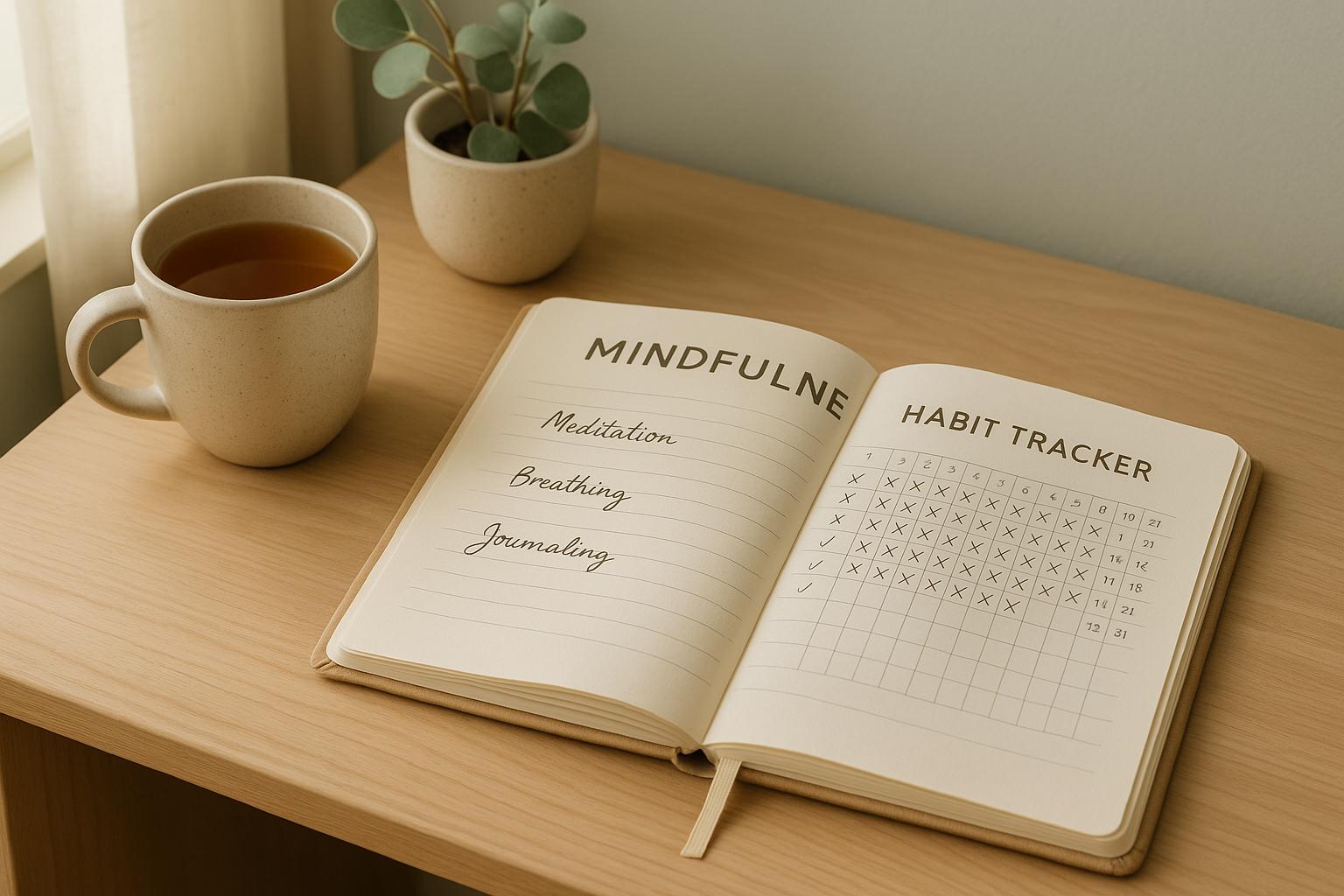
A rewarding part of mindfulness is noticing how it transforms your daily life. Try jotting down a quick note at the end of each day about your stress level, focus, or mood. After eight weeks of consistent practice, many report better focus and emotional balance. Even informal tracking can help build momentum and reinforce your habit.
"Mindfulness skills develop through repetition, not intensity." - Mind-AID study
By keeping tabs on your progress, you’ll stay motivated and notice the subtle, positive shifts mindfulness brings.
Using The Mindfulness App for Guidance

If you’re unsure how to start, guided tools can simplify the process. Guided meditations are especially helpful for focusing your attention and easing into a mindfulness routine.
The Mindfulness App is a great resource, offering over 500 guided meditations, sleep stories, and structured courses in 12 languages. Whether you have just 2 minutes during a busy day or 20 minutes before bed, there’s something to fit your schedule. You can try the app with a free 14-day trial to explore its premium features and find what works best for you.
"The more you practice mindfulness exercises, the easier and more natural they may feel." - Mayo Clinic Staff
Conclusion and Key Takeaways
Recap of Mindfulness Benefits
Mindfulness can lead to noticeable shifts in both the brain and body. Studies reveal that after just 8 weeks of consistent practice, the amygdala - the brain's stress center - shrinks, while the prefrontal cortex, responsible for focus and decision-making, becomes more robust. These changes contribute to lower blood pressure, improved sleep, and greater emotional resilience. Beyond the physical and mental benefits, mindfulness helps reclaim moments often lost to autopilot. The evidence highlights the value of starting small and building from there.
Why Starting Small Matters
You don't need to carve out a huge block of time to get started. Research shows that even 10 minutes a day can make a difference in reducing anxiety and depression. Small, intentional pauses - whether while cooking, commuting, or tidying up - are easier to sustain than committing to a lengthy, infrequent session.
"It wasn't a situation where you could say 'any exposure to training is helpful.' It required regular practice to benefit." - Amishi Jha, Neuroscientist and Author
The key is consistency. A single mindful breath each morning can be more impactful than an ambitious hour-long practice that never happens.
Final Thoughts on Everyday Mindfulness
Everyday activities, like washing dishes or walking to the car, can become moments of mindfulness. By applying the techniques discussed, you can turn ordinary routines into meaningful practices. Start with one simple habit, remain curious, and let your mindfulness practice grow naturally. Incorporating these small, mindful moments into your day can lead to lasting change.
For those seeking structured guidance, The Mindfulness App offers over 500 guided meditations, sleep aids, and courses in 12 languages. With sessions as short as a few minutes, it's designed to fit any schedule. Plus, a free 14-day trial lets you explore what works best for you.
"Mindfulness means paying attention in a particular way: on purpose, in the present moment, and nonjudgmentally." - Jon Kabat-Zinn
The present moment is always within reach - choose to be present.
FAQs
What’s the easiest task to start practicing mindfulness with?
Take something you already do every day - like brushing your teeth or making your bed - and turn it into a mindfulness practice. For one week, try doing this activity with your full attention. Notice every detail: the feel of the toothbrush in your hand, the texture of the bristles, or the smoothness of the sheets as you straighten them.
If your mind starts to drift, don’t worry - just gently guide your focus back to the task at hand. By anchoring mindfulness to an existing habit, you can seamlessly incorporate it into your day without needing to carve out extra time.
How can I stay mindful when I’m stressed or in a rush?
When stress or urgency takes over, consider practicing micro-mindfulness - short, intentional moments to help recalibrate your mind. One effective approach is the STOP method: pause for a moment, take a few deep breaths, observe your thoughts and physical sensations without judgment, and then continue with a clearer, more focused mindset.
Another helpful technique is sensory grounding, such as the 5-4-3-2-1 method. This involves anchoring yourself in the present by engaging your senses - identify five things you can see, four you can touch, three you can hear, two you can smell, and one you can taste. It's a simple way to shift your attention and regain a sense of calm.
How do I remember to practice mindfulness throughout the day?
To bring mindfulness into your daily routine, try "habit stacking." This involves linking mindfulness practices to activities you already do. For example, after pouring your morning coffee or shutting your laptop, take three deep breaths. Transitions work well, too - pause for a moment when walking through a doorway or use red lights while driving as a reminder to take a mindful breath. For extra guidance, The Mindfulness App provides over 500 tracks to help you incorporate these small but meaningful moments into your day.