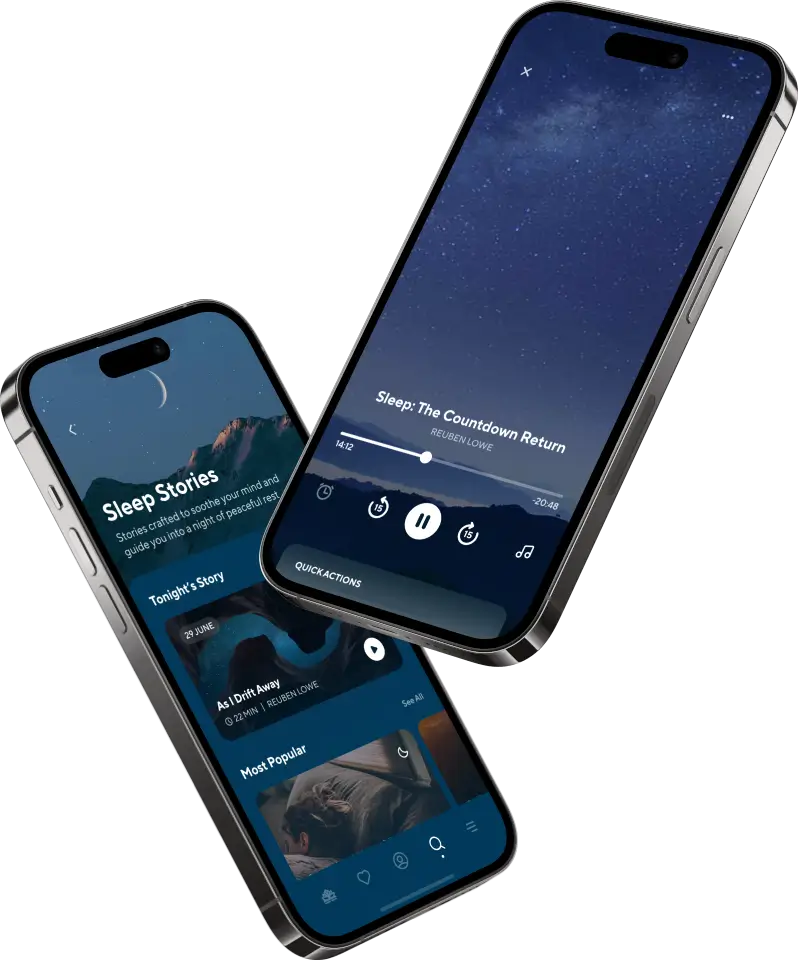


Did you know nearly 47% of your day is lost to distractions? That’s time spent on autopilot, leading to missed details, stress, and poor focus. Mindfulness can help you reclaim that time by improving focus, reducing stress, and increasing workplace satisfaction.
This guide breaks down simple practices you can use throughout your day - from mindful breathing in the morning to gratitude journaling at night. These techniques, like the 3-Breath Reset or setting daily intentions, fit seamlessly into your routine and take just minutes. For example, a hospital network saw a 40% boost in employee satisfaction and fewer sick days after introducing a 10-minute daily mindfulness practice.
Key Takeaways:
- Morning: Start with mindful breathing, body scans, and setting intentions.
- Midday: Use task transitions, 3-Breath Reset, and single-tasking during breaks.
- Meetings: Practice mindful listening and begin with a minute of silence.
- Evening: Reflect with gratitude journaling, body scans, and Loving-Kindness Meditation.
- Tools: Apps like The Mindfulness App offer guided meditations and sleep aids.
Small, consistent steps can make a big difference. Start today with just one practice and notice how it transforms your focus and well-being.

Daily Mindfulness Practices for the Workplace: Morning to Evening Guide
Mindfulness at Work: Evidence-Based Methods for Handling Stress and Burnout | All Things Work
sbb-itb-bea8dce
Morning Mindfulness Routine
When you wake up, your brain experiences a surge in cortisol, the stress hormone that prepares your body for action. This happens because thinking about the day ahead can activate your fight-or-flight response, even before you’ve left your bed. A morning mindfulness routine can break this cycle by replacing stress with calm and focus, helping you start your day on the right note.
The idea is simple: stay present. These practices are designed to keep your mind from racing into anxious thoughts and instead build a sense of clarity and focus.
Breathing Exercises to Start Your Day
Before you even glance at your phone, take two minutes to focus on breathing exercises while still lying in bed. If your mind starts to wander toward upcoming meetings or tasks, gently acknowledge those thoughts and return your attention to the rhythm of your breath. This simple act helps clear mental fog and prepares you to approach your day with more focus.
For something more structured, try the 3-2-4 Exaggerated Breath technique: inhale deeply through your nose for 3 seconds, hold it for 2 seconds, and then exhale slowly through your mouth for 4 seconds. This breathing pattern promotes relaxation and lowers cortisol levels. Research suggests that practicing mindful breathing for just 15 minutes a day over one week can significantly improve your mindfulness.
While mindful breathing focuses your mind, adding a body scan to your morning routine can deepen your awareness of physical tension.
Body Scans for Awareness
A five-minute body scan can serve as a stress checkpoint. Start at the top of your head and work your way down to your toes, noticing any tension or discomfort along the way. Eve Ekman, Senior Fellow at the Greater Good Science Center, emphasizes the value of this practice:
"By tuning into physical sensations, people can often find a measure of relief from spiraling thoughts and show up more present in stressful situations."
This practice helps you pinpoint where your body is holding stress - whether it’s in your shoulders, jaw, or even your breathing - so you can address it before it builds up during the day. In fact, a study involving around 4,000 participants found that focus ratings increased from an average of 3.38 to 3.71 after engaging in short mindfulness practices like body scans.
Setting Daily Intentions
Once you’ve grounded yourself physically, shift your attention to mental clarity by setting a daily intention. This step takes less than a minute but can have a lasting impact. An intention isn’t the same as a to-do list - it’s more about deciding how you want to approach your day. For instance, you might choose something like, “I will stay patient in difficult moments” or “I will focus on active listening.”
This simple practice helps you align your actions with your long-term goals instead of just reacting to whatever demands pop up in your inbox. By starting your day with intention, you engage your prefrontal cortex, the part of your brain responsible for decision-making and emotional control. This sets the stage for a day full of purpose and thoughtful action.
| Practice | Duration | Primary Benefit |
|---|---|---|
| Mindful Breathing | 2–5 Minutes | Reduces cortisol and boosts oxygen levels |
| Body Scan | 5 Minutes | Identifies physical stress points |
| Intention Setting | 1 Minute | Aligns actions with broader goals |
Midday Mindfulness Practices
After setting the tone with your morning routine, take a purposeful midday pause to combat waning focus and rising stress. This mental drift can sap your energy, making even simple tasks feel like uphill battles. The key isn’t to push through the slump - it’s to pause intentionally. These midday practices help maintain the focus you cultivated earlier, keeping your day on track.
Mindful Transitions Between Tasks
Jumping from one task to another without pause piles on mental clutter, dragging stress from one activity into the next. Instead, use transitions as intentional resets - brief pauses to clear your mind and refocus. Think of it as stepping off the "daily treadmill", as one expert describes it. For example, when walking between meetings, notice the sensation of your feet hitting the floor or the feel of the air against your skin. If you’re switching from a video call to writing a report, spend 30 seconds focusing on the sound of your keyboard and the sensation of typing.
Even interruptions can become mindfulness reminders. Let notifications prompt you to take one deep breath. This simple act engages your parasympathetic nervous system, which helps lower stress hormones like cortisol and improves focus.
3-Breath Practice for Stress Relief
When stress creeps in, try the 3-Breath Reset. Sit upright with your feet flat on the ground, and take three deliberate breaths. With each breath, notice the air entering your lungs, relax any tense muscles, and set a quick intention. This takes less than 20 seconds but can help you regain clarity.
Studies show that mindfulness exercises can significantly reduce stress. Users reported an 11% drop in stress after just 10 days, and a 32% decrease after 30 days. Focus also improved by 14% after four weeks of consistent practice, and a single 15-minute session reduced mind-wandering by 22%.
After completing a short breathing exercise, take your break to fully disconnect and focus on a single activity.
Single-Tasking During Breaks
Don’t let your lunch break turn into another multitasking session. Eating while answering emails or scrolling through your phone keeps your brain in overdrive, denying it the chance to recharge. Instead, dedicate your break to one activity - whether it’s savoring the first few bites of your meal or enjoying a brief walk. This kind of mindful eating not only aids digestion but also helps your mind reset.
The goal isn’t to clear your mind entirely but to be fully engaged in what you’re doing. Michele Lyman of Serenity Yoga and Wellness explains:
"The human brain wasn't built to handle long periods of focused time because it's wired to take in tons of information at all times for our survival."
Short, intentional breaks prevent mental fatigue and can even spark creative solutions that elude a hyper-focused mind. By incorporating these practices, you’ll sustain mindfulness throughout the day, keeping stress levels manageable and productivity steady.
Mindfulness in Meetings and Interactions
Distractions in meetings can derail collaboration and hinder effective decision-making. When focus wavers, teamwork suffers, and productive discussions become harder to achieve.
Mindful Listening in Conversations
Listening isn’t just about hearing words - it’s about being fully present. It requires focus, which means staying tuned into the speaker, and awareness, or the ability to notice and let go of distractions as they pop up. Dr. Ellen Langer, a Harvard psychologist, describes mindfulness as:
"the simple process of actively noticing new things"
Rather than operating on autopilot, mindful listening involves engaging deeply with what someone is saying.
Before jumping into a conversation, take 1 to 3 minutes to sit quietly or practice mindful breathing. This brief pause helps you show up with your full attention. During the discussion, anchor yourself by noticing physical sensations and using your breath to stay relaxed and present. If your mind starts to wander, gently bring it back to the speaker. Jonathan Fisher, a cardiologist and mindfulness teacher, explains:
"When we practice giving others our full attention, we strengthen bonds and make new discoveries"
In meetings, starting with intentional silence can set the tone for focused collaboration.
Starting Meetings with a Minute of Silence
A one-minute pause at the start of a meeting can reset and refocus participants. This brief silence - about 10 deep breaths - helps everyone let go of prior distractions and become fully present. Sebastian Kade, author and tech entrepreneur, shares:
"The meeting starts with a calmer tone because everyone has an opportunity to let go of their stresses and bring their attention to the present moment"
For example, SAP introduced a mindfulness program where over 10,000 employees completed training under Chief Mindfulness Officer Peter Bostelmann. By incorporating a "minute to arrive" in meetings, the company saw a 200% ROI through improved engagement and reduced absenteeism. Similarly, Intel’s "Awake@Intel" program, led by Lindsay Benjamin, reached over 7,000 employees between 2012 and 2019, with participants reporting a consistent two-point improvement in focus and meeting engagement.
To bring this practice to your meetings, add a "Mindful Minute" as the first agenda item for groups of three or more. The meeting leader can guide participants to place their feet on the ground, sit upright, close their eyes, and take a deep breath. During this moment, encourage everyone to reflect on how they’ll contribute to the discussion. Using a one-minute timer can ease any initial awkwardness, and a gentle transition like "OK, let’s dive in" helps shift smoothly into the meeting.
This mindful approach isn’t just for in-person meetings - it can also transform how we handle digital communication.
Practicing Presence in Emails and Messages
Approach emails and messages with intention. Before typing, pause to clarify your purpose: Are you solving a problem, offering support, or recognizing someone’s effort? This moment of reflection ensures your responses are thoughtful rather than reactive. Avoid checking emails first thing in the morning, when stress hormones are naturally higher. When you do open your inbox, mindfulness can help you prioritize tasks and filter out distractions. As Rasmus Hougaard, founder of the Potential Project, puts it:
"Mindfulness in action is a great alternative to the illusory practice of multitasking"
Another helpful practice is scheduling meetings to end five minutes before the hour. This small adjustment gives participants a chance to reset before their next commitment. It’s a simple way to extend the mindfulness cultivated in face-to-face interactions to the rest of your workday.
End-of-Day Reflections
Just like starting your day with intention can set the tone, wrapping it up with a thoughtful routine can help you find balance and closure. Without a clear way to wind down, your mind can end up stuck replaying tasks and worries. These simple practices can help you let go of work-related stress and signal to your brain that the workday is officially over.
Gratitude Journaling
Take a moment to jot down three specific positive moments from your day. This practice shifts your mindset from stress to a sense of abundance. Instead of vague statements like "I'm grateful for my job", focus on the details: "I'm grateful my co-worker brought me soup when I was sick". The more specific you are, the deeper the emotional impact. Jen Fisher, Chief Well-being Officer at Deloitte, highlights the benefits:
"When we embrace and practice gratitude regularly, it has the power to measurably improve our overall happiness and well-being all while benefiting those on the receiving end".
Interestingly, research suggests that journaling three times a week might be even more effective than doing it daily - it keeps the practice meaningful rather than routine. You can also try the "subtraction" technique: imagine what your life would be like without certain people or opportunities. This can help you truly appreciate them. Don’t forget to include self-gratitude - acknowledge your own efforts and wins at work. It’s a great way to boost your confidence, especially on challenging days.
Once you've reflected on the positives, transition into releasing physical tension with a calming body scan.
Body Scans for Relaxation
A body scan is a mindfulness exercise that helps you release built-up tension by focusing on different parts of your body, from head to toe. To start, lie down, close your eyes, and take a few deep breaths. Begin at your toes, noticing sensations like warmth or tingling, and then gradually move your attention upward through your body. This process helps you let go of tension step by step.
In a study involving 4,000 participants, practicing this type of mindfulness increased average calmness ratings from 3.27 to 3.63 on a 5-point scale. Eve Ekman, Senior Fellow at the Greater Good Science Center, explains:
"Becoming more aware of these signals is like developing an 'early warning system' for our emotions".
Body scan sessions can last anywhere from 5 to 30 minutes. If your mind starts wandering to your to-do list, gently bring your focus back to the last body part you were scanning.
Once your body feels more at ease, you can move into cultivating warmth and compassion with Loving-Kindness Meditation.
Loving-Kindness Meditation
End your day on a note of kindness - both for yourself and others. Silently repeat phrases like, "May I be peaceful. May I be safe. May I rest tonight." This practice fosters feelings of warmth and goodwill, which research shows can help build resilience and emotional flexibility. In the same study of 4,000 participants, "friendliness" ratings - measuring kindness toward oneself and others - increased from an average of 3.34 to 3.92 out of 5 after practicing Loving-Kindness meditation.
Pair this with a digital sunset: turn off your electronic devices one hour before bed to reduce blue light exposure and give your mind time to unwind. You can also try visualizing the closure of your day’s tasks, allowing yourself to mentally set them aside until tomorrow. As you prepare for rest, use a simple mantra like "Work is done. Now I return to myself." This helps you shift your focus from productivity to being fully present.
Using The Mindfulness App Throughout Your Workday
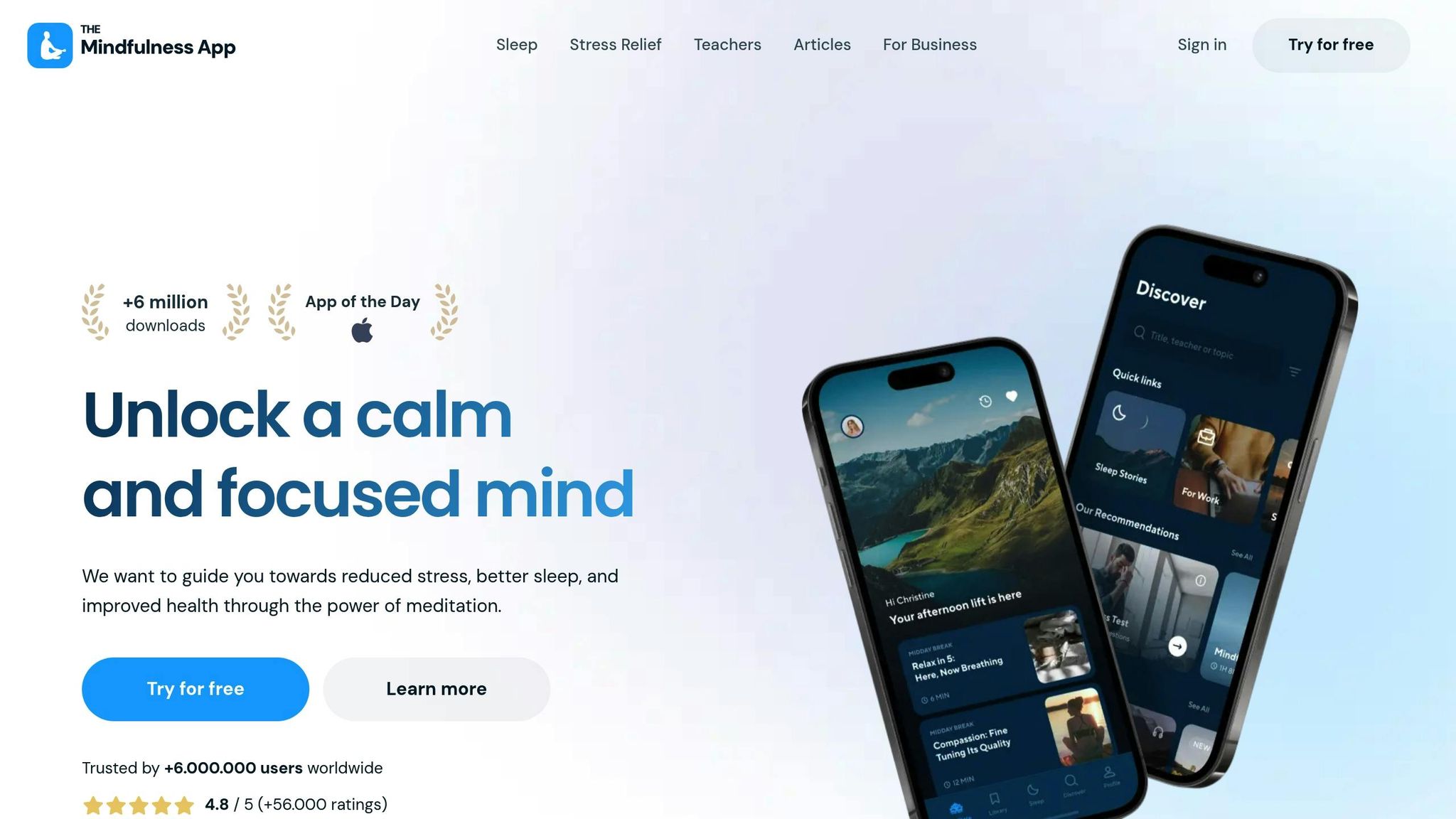
The Mindfulness App is like having a personal mindfulness coach in your pocket, helping you weave moments of calm and focus into your morning, midday, and evening routines. With over 500 tracks crafted to fit into your workday, it’s there for you - whether you need a quick mental reset between meetings or a way to relax after a long, demanding day.
Guided Meditations for Work Breaks
Finding time for mindfulness during a busy workday can feel impossible, but the app makes it easy with guided meditations that last anywhere from 1 to 10 minutes. These short sessions are perfect for quick breaks, allowing you to refocus without derailing your schedule. For example, sessions like "Standing Desk Moves" offer simple physical resets, while "Pause To Check In" helps you regain mental clarity during hectic periods.
Want to stay consistent? Set an hourly timer as a gentle nudge to take a one-minute mindfulness pause. And after a productive day, you can smoothly transition into relaxation with the app’s sleep support tools.
Sleep Stories for Better Rest
When it’s time to wind down, the app’s sleep stories are a perfect way to shift from work mode to rest mode. These calming narrations replace screen time with soothing audio, helping you relax after your end-of-day practices like body scans or loving-kindness meditations. For deeper recovery, explore the personalized sleep plans tailored to your needs.
By prioritizing a peaceful transition to nighttime, you’re setting the stage for better rest and a more mindful tomorrow.
Personalized Mindfulness Programs
If you’re looking to dive deeper, The Mindfulness App offers guided courses that span 7 or 14 days, focusing on areas like stress management, improving concentration, or building mindfulness habits over time. With features like daily check-ins and progress tracking, you can monitor your growth and adjust your routine as needed. Plus, with content available in 12 languages and offline access, you can stick to your practice whether you’re at home, commuting, or enjoying a quiet moment in the park.
Wrapping It Up
Mindfulness at work doesn’t have to take up much of your time. As Rasmus Hougaard, Founder of The Potential Project, explains:
"Mindfulness is not about living life in slow motion. It's about enhancing focus and awareness both in work and in life."
The techniques shared here - from quick two-minute breathing exercises in the morning to brief pauses between tasks - are designed to fit effortlessly into your daily routine. These small adjustments can weave mindfulness into every part of your day, helping you stay focused and resilient.
Did you know that people spend nearly 47% of their waking hours on autopilot? That’s almost half the day lost to distraction. Simple mindfulness practices can break this cycle by sharpening focus and improving awareness - helping you notice when your mind wanders and gently redirecting it. This doesn’t just improve concentration; it also reduces stress by balancing cortisol levels, lowers the chance of errors, and encourages creativity by clearing mental clutter. A 2018 study in a hospital network revealed that teams practicing 10 minutes of daily mindfulness reported nurses missing 2.5 fewer sick days per year, along with a 40% increase in employees experiencing high job satisfaction. These results mean better well-being, stronger workplace relationships, and more energy at the end of the day.
The key is to start small. Choose one or two practices from this guide and stick with them for 14 days. Whether it’s pausing for a minute every hour or reflecting silently during your commute, consistency matters more than how much time you spend. Tools like The Mindfulness App can help with guided sessions and personalized programs that fit your schedule, making it easier to stay on track.
FAQs
How can I build a mindfulness habit when I’m too busy?
Start by weaving short mindfulness practices into your day. Techniques like the 4-4-6 breathing method (inhale for 4 seconds, hold for 4, exhale for 6), quick body scans, or even mindful eating can take just a few minutes. These small moments make mindfulness feel manageable. You can also try taking mindful pauses during everyday tasks - like focusing on your breath while waiting in line or tuning into your senses during a coffee break. Setting a daily intention is another simple way to stay grounded and present, even when life gets hectic.
What’s the quickest mindfulness practice I can do at work?
Mindfulness at work doesn’t have to take a lot of time. In fact, some practices take just a few seconds and can help ease stress almost instantly. For example, try deep breathing using the 4-4-8 technique: inhale for 4 seconds, hold for 4 seconds, and exhale for 8 seconds. Another option is a quick body scan - simply pause and notice physical sensations in your body. These mini exercises, lasting only 3 to 10 seconds, are simple to fit into your routine and can sharpen your focus without interrupting your day.
How can I get my team to try a mindful minute in meetings?
Starting each meeting with a brief pause can set the tone for a more focused and productive discussion. Encourage your team to try a "mindful minute." The meeting leader might simply say, "Let’s take a minute", giving everyone the chance to close their eyes or focus on their breath. This quick practice helps ease tension, promoting a calmer mindset and better emotional readiness for the conversation ahead.