
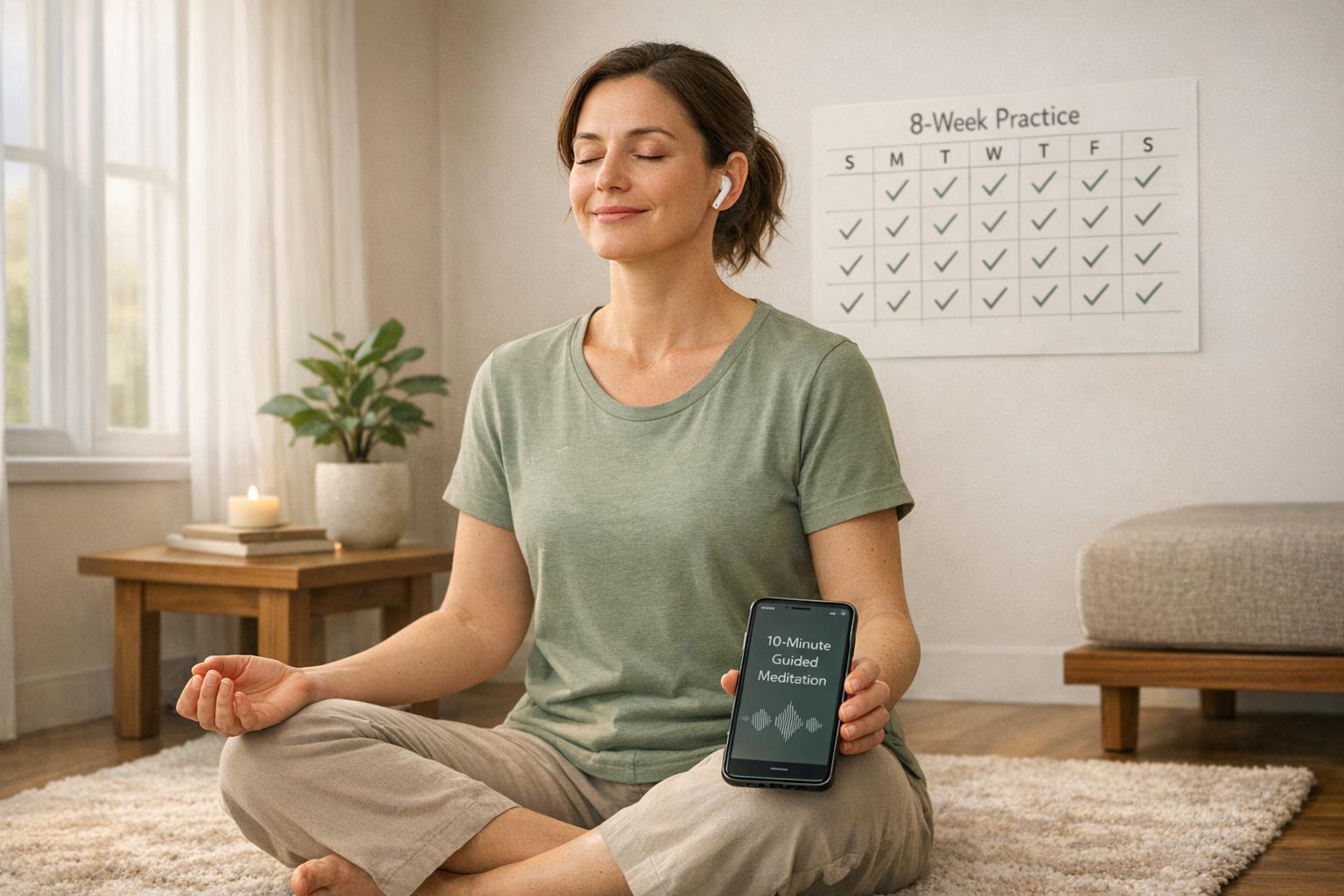
Guided meditation is an effective tool to manage stress, backed by research. It combines mindfulness techniques with verbal instructions to help you focus and relax. Studies show that even short, daily sessions can lower stress levels, improve mood, and enhance overall well-being. Here's what you need to know:
- What it does: Reduces cortisol, activates the parasympathetic nervous system, and improves emotional regulation.
- How it works: Combines focused attention with relaxation techniques to break stress cycles.
- Proven results: Research highlights stress reductions of 26% or more in programs lasting 4–12 weeks.
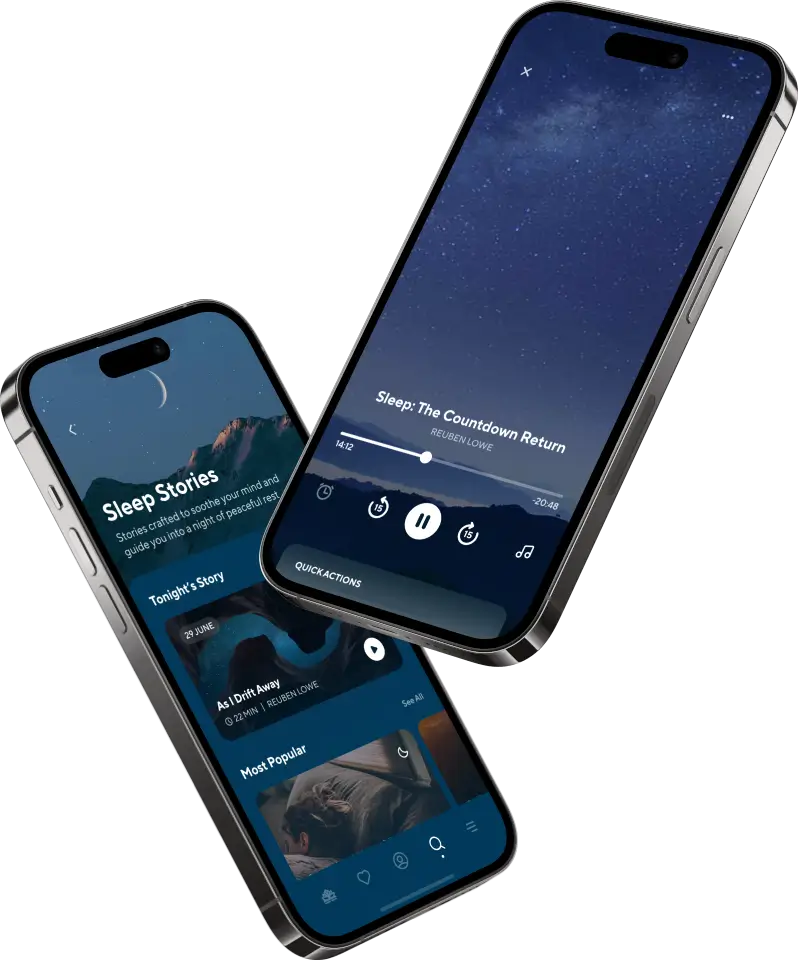
- Accessible options: Apps like The Mindfulness App offer flexible, guided sessions as short as 5 minutes.
Guided meditation is easy to incorporate into your day and can lead to noticeable stress relief with consistent practice.

Guided Meditation & Stress Reduction: Key Research Stats
How Meditation Actually Changes Your Brain (Backed by Science!)
sbb-itb-bea8dce
What Research Says About Guided Meditations and Stress Reduction
Research consistently highlights the effectiveness of guided meditation - whether offered in person or through apps - for reducing stress over periods of 4 to 12 weeks. Below, we break down findings from systematic reviews, randomized controlled trials (RCTs), and app-based studies.
Findings from Systematic Reviews and Meta-Analyses
A meta-analysis published in PLOS Medicine reviewed 136 RCTs involving 11,605 participants. It found that guided meditation significantly reduced stress, with a standardized mean difference (SMD) of -0.45. The analysis also noted improvements in anxiety and depression. Stress relief benefits often persisted for 1 to 6 months after completing a program, with 4 to 12 weeks being the sweet spot for stable outcomes .
Galante and colleagues from the University of Cambridge offered this perspective:
"Mindfulness reduces anxiety, depression, and stress, and increases well-being, but we cannot be sure that this will happen in every community setting." - Galante et al., University of Cambridge
Evidence from Randomized Controlled Trials
RCTs provide further insights into the impact of guided meditation. For example, a March 2023 study in PLOS One involved 161 overweight adults with moderate stress. Participants in an 8-week digital meditation program reported a 26% reduction in perceived stress, compared to just an 8% reduction in the control group.
Another multi-site RCT spanning 37 locations and 2,239 participants demonstrated that four self-guided mindfulness exercises effectively reduced stress. Among these, a body scan exercise showed the most pronounced effect (d = -0.56).
From July 2023 to January 2024, a study at the University of Tokyo evaluated an 8-week smartphone-based meditation program for 209 working women. Results showed notable reductions in perceived stress (b = -2.00, p = .01), depressive and anxiety symptoms (b = -1.24, p = .02), and improvements in life satisfaction (p = .005). Lead researcher Ryu Takizawa, MD, PhD, summarized:
"The app was effective in reducing perceived stress, depressive and anxiety symptoms, and trait anger (reaction), and in improving life satisfaction among working women." - Ryu Takizawa, MD, PhD, University of Tokyo
These findings underline the effectiveness of guided meditation programs, particularly when delivered digitally.
Studies on App-Based Guided Meditation
App-based meditation has moved beyond novelty status to become a well-researched intervention. A clinical trial at the University of California San Francisco (May 2018–September 2019) involved 1,458 medical center employees using a meditation app for 10 minutes daily over 8 weeks. The study reported a significant reduction in perceived stress (Cohen d = 0.85), with benefits lasting up to 4 months (Cohen d = 0.71). Participants also experienced reduced job strain and burnout.
As noted in JAMA Network Open:
"The findings suggest that a brief, digital mindfulness-based program is an easily accessible and scalable method for reducing perceptions of stress." - JAMA Network Open
A 2026 meta-analysis comparing online and in-person mindfulness interventions found nearly identical outcomes for student stress reduction. Online programs achieved an SMD of -0.56, while face-to-face programs yielded an SMD of -0.64. Reflecting on these results, Wang and colleagues from Xiangtan Institute of Technology stated:
"Online mindfulness may serve as a viable and similarly effective alternative to traditional mindfulness for stress reduction among college students." - Wang et al., Xiangtan Institute of Technology
Apps like The Mindfulness App demonstrate how digital guided meditations can transform clinical findings into practical stress-relief tools for everyday life.
The table below summarizes outcomes from key app-based studies:
| Study Population | Duration | Stress Outcome | Secondary Benefits |
|---|---|---|---|
| General elevated stress | 20–30 days | Significant PSS-10 reduction | Improved HRV & sleep quality |
| Working women | 8 weeks | b = –2.00 (perceived stress) | Reduced trait anger & depression |
| Medical center employees | 8 weeks | Cohen d = 0.85 (PSS) | Reduced burnout & job strain |
| Single body scan exercise | 1 session | d = –0.56 | Short-term anxiety reduction |
How Guided Meditations Reduce Stress: Key Mechanisms
Guided meditation helps reduce stress by bringing about specific psychological and physical changes.
Attention and Emotional Regulation
One way guided meditation eases stress is by training your attention. Stress often traps the mind in a cycle of repetitive worries - a process called rumination. Guided meditation breaks this loop by offering a focal point, steering attention away from these unhelpful thought patterns.
This concept ties into the Monitor and Acceptance Theory (MAT), which highlights two key skills: monitoring (staying aware of the present moment) and acceptance (observing thoughts without reacting to or judging them). Dr. Ulrich Kirk from the University of Southern Denmark explains it well:
"Attention monitoring and acceptance skills together act to improve negative affect and stress-related health outcomes."
The acceptance aspect is particularly impactful. By adopting a neutral "observer" mindset, people can notice stressful thoughts without being consumed by them - effectively reducing psychological stress . These mental shifts also set the stage for physical changes during meditation.
Brain and Body Responses to Meditation
This focus on attention triggers physical responses that help ease stress. For instance, during just 10 minutes of guided meditation, the body activates the parasympathetic nervous system, shifting from a "fight-or-flight" mode to a "rest-and-digest" state. This is shown by lower heart rates (p = 0.011) and increased heart rate variability (HRV) (p = 0.029).
Regular practice also lowers cortisol, the stress hormone released by the hypothalamic-pituitary-adrenal (HPA) axis. Over time, long-term meditators show structural changes in the brain, such as increased activity in the superior frontal gyrus and right hippocampus - areas that are often negatively affected by prolonged cortisol exposure. The table below highlights how guided meditation impacts key physiological markers:
| Physiological Marker | Response to Guided Meditation | Mechanism |
|---|---|---|
| Heart Rate | Decreases | Parasympathetic activation |
| Heart Rate Variability (HRV) | Increases | Improved autonomic flexibility |
| Cortisol Levels | Decreases | HPA axis regulation |
| Sympathetic Nervous System Activity | Reduced reactivity | Lower stress response |
How Guided Structure Supports Stress Relief
The guided format itself plays a big role in reducing stress. For beginners, unguided meditation can feel overwhelming, especially when it’s unclear where to direct focus. A guided session provides structure, acting as an anchor to reduce mind wandering - a frequent source of stress .
Programs with a step-by-step approach are particularly effective. For example, a study at UCSF involving 1,458 employees found that participants following an app-based meditation program - starting with foundational sessions and moving to stress-specific ones - saw a significant drop in Perceived Stress Scale (PSS) scores. The average reduction was -5.84, compared to just -1.45 in the control group. Those practicing 5 to 9.9 minutes daily achieved even better results, with a PSS score difference of -6.58. As Rachel M. Radin, PhD, from UCSF noted:
"Mindfulness delivered via self-guided smartphone apps may offer convenient alternatives, with the benefit of standardization of instruction, and participants can control how they access treatment."
The structure of guided meditation not only simplifies the process but also ensures effective attention training. This makes it easier for individuals to incorporate meditation into their routines, tailoring the practice to their stress management needs.
How to Practice Guided Meditation Effectively
Session Length, Frequency, and Program Duration
When it comes to guided meditation, consistency is more important than how long each session lasts. Research shows that daily sessions of just 5–9.9 minutes can reduce PSS (Perceived Stress Scale) scores by 6.58 points. For lasting benefits, an 8-week program is generally recommended, though noticeable improvements can begin as early as 4 weeks.
Types of Guided Meditation for Stress Relief
The style of meditation you choose can also play a big role in how effectively it reduces stress. A study involving 2,239 participants found that the body scan technique had the most immediate impact on stress reduction, with an effect size of d = –0.56. Here’s a quick overview of common guided meditation types and their benefits:
| Meditation Type | Primary Approach | Key Benefit |
|---|---|---|
| Body Scan | Focusing on bodily sensations sequentially | Best for short-term stress relief |
| Mindful Breathing | Using the breath as a focus point | Enhances mood and emotional control |
| Loving-Kindness | Encouraging positive emotions and acceptance | Decreases anger and boosts life satisfaction |
| Mindful Walking | Paying attention to movement | Helps with short-term stress relief |
If you're looking for quick stress relief - like before a big presentation or after a tough day - try body scan or mindful breathing exercises. For deeper emotional benefits over time, loving-kindness meditation might be the better fit.
Common Barriers and How to Overcome Them
Even with proven techniques, it’s easy to face obstacles when trying to stick to a meditation routine. One of the most common challenges? Feeling like there’s not enough time. In a UCSF study, participants typically practiced about 5.20 minutes daily - falling short of the 10-minute goal - and many needed follow-up reminders via email, text, or phone to stay engaged.
"Learning to practice mindfulness in a shorter time than traditional protocols typically require is a valuable asset for people for whom longer time commitment for mindfulness is a capacity- or motivation-based deterrent." – Nature Human Behaviour
The good news is that even a 5-minute session can make a difference. To stay consistent, consider using app-based reminders, taking short introductory courses, or weaving mindfulness into everyday tasks like eating or commuting. Apps like The Mindfulness App can provide helpful nudges and variety to fit meditation into even the busiest schedules.
How to Personalize Your Guided Meditation Practice
Once you understand how guided meditation can ease stress, the next step is tailoring it to fit your specific needs. Stress affects everyone differently, so your meditation practice should reflect your unique stress triggers.
Choosing the Right Practice for Your Stress Type
Stress comes in many forms, and meditation techniques work best when matched to the kind of stress you’re experiencing. For example:
- Physical tension (like tight shoulders or a clenched jaw): Try body scan techniques to relax and release that tension.
- Interpersonal or self-critical stress: Loving-kindness meditation can help foster compassion for yourself and others.
Research backs this up. A study involving 2,239 participants found that body scan exercises were the most effective single technique for short-term stress relief, with a mean difference of 0.27 compared to control groups. Another study with 209 working women in Japan showed that an 8-week program - including loving-kindness meditation in the final two weeks - significantly reduced perceived stress (b = −2.00) and boosted life satisfaction (b = 1.47).
If you’re unsure where to start, tools like the PSS-10 (Perceived Stress Scale) can help identify whether your stress stems more from work overload or relationship challenges, guiding you toward the right meditation style.
Of course, finding the right technique is just the first step. The real benefits come from making meditation a regular part of your life.
Building a Consistent Meditation Habit
When it comes to meditation, consistency beats perfection every time. Even short, daily sessions can make a noticeable difference. Research suggests that just 10 minutes a day is enough to see results. For instance, an 8-week study with 89 STEM graduate students at the University of Florida found that participants who meditated for 10 minutes daily saw depression scores drop by 35.04% and anxiety scores by 41.39% compared to a control group.
Structure also matters. Starting with simple breath-focused sessions, then progressing to body scans and eventually loving-kindness meditation, can help you build skills gradually. This step-by-step approach was key to the success of the Japan study mentioned earlier. Mobile apps can also provide the structure and flexibility needed to keep your routine on track.
Using Mobile Apps for Guided Meditation
Mobile apps make it easier to stick with meditation by offering structured programs, adjustable session lengths (typically 5 to 30 minutes), and content tailored to specific goals like stress relief, better sleep, or emotional balance.
"Mobile apps offer a practical solution when in-person mindfulness programs are inaccessible, boosting consistency and engagement." - npj Mental Health Research
However, keeping up with app-based meditation can be a challenge. Engagement often drops significantly after two weeks, and the median dropout rate for mindfulness apps is 23.4%. To counter this, use built-in reminders and follow a structured course rather than jumping between random sessions.
For example, The Mindfulness App offers over 500 guided tracks in 12 languages, allowing you to personalize your practice to your stress type. A 14-day free trial gives you a chance to explore its features before committing. By aligning app tools with your stress needs, you can create a meditation routine that’s both effective and sustainable.
Conclusion: What the Research Tells Us About Guided Meditation
Guided meditation has been shown to be an effective way to reduce stress. A large study highlights that even short, daily sessions can lead to noticeable stress reduction, with the effects lasting up to four months. This makes it a practical tool for managing everyday stress.
In addition to stress relief, guided meditation enhances focus and triggers the parasympathetic response, which helps lower anxiety and physical stress indicators. The research consistently supports the idea that even a small, regular practice can lead to steady improvements over time.
Another key insight is that the format - whether online or in-person - doesn’t impact its effectiveness. Recent studies reveal that online programs achieve results nearly identical to face-to-face sessions, with an SMD of -0.56 for online formats compared to -0.64 for in-person ones.
The takeaway? A simple, consistent meditation routine can deliver measurable benefits. Just five to ten minutes daily, especially when paired with an 8-week structured program, can make a difference. Apps like The Mindfulness App, offering over 500 guided meditations in 12 languages, make it easier than ever to maintain a regular practice.
FAQs
How quickly will guided meditation reduce my stress?
Mindfulness meditation has been found to help reduce stress in a short amount of time. Research suggests that consistent daily practice can lead to noticeable improvements in stress and coping abilities within as little as two weeks. Even a single meditation session can provide immediate emotional relief and physical relaxation.
The best part? You don’t need to dedicate hours to see results. Just 10 minutes a day can make a meaningful difference. Apps like The Mindfulness App offer guided meditations and courses to help you integrate this practice into your daily routine and take control of stress more effectively.
Which guided meditation type is best for my kind of stress?
Research highlights that body scan meditation can help ease short-term stress by addressing physical tension, such as a clenched jaw or stiff shoulders. For a quick sense of calm, breathing exercises - like audible exhales - are a great option, as they can activate the vagus nerve to promote relaxation. Tools like The Mindfulness App provide guided meditations, including body scans and breathing techniques, making it easier to discover what works best for managing your stress.
How do I stick with a daily practice if I keep skipping sessions?
Consistency is key, not perfection. Begin with just 1 to 5 minutes a day - this small commitment helps reduce the mental hurdle. Try habit stacking by linking meditation to something you already do, like brushing your teeth. Missed a session? Don’t beat yourself up or fall into an all-or-nothing trap. Just pick up where you left off and aim for steady progress.