
Mindfulness in 2026 is about creating clear, actionable goals that fit into your daily life. Research shows that structured goal-setting increases success rates by 90%, while most resolutions fail without a plan. Here’s how to make mindfulness a lasting part of your routine:
- Reflect on 2025: Review your past mindfulness habits to identify what worked and what didn’t.
- Set Specific Goals: Use the S.M.A.R.T. framework to define clear, measurable steps (e.g., "Meditate for 10 minutes every morning").
- Focus on One Area: Prioritize a single need, like reducing stress or improving sleep.
- Break Goals into Habits: Start small, like pairing deep breaths with brushing your teeth.
- Track Progress: Use tools like journals or apps to monitor your efforts and adjust quarterly.
Consistency matters more than perfection. Even five minutes a day can make a difference. Pair mindfulness with other mental health tools, and remember to be kind to yourself as you work toward your 2026 goals.
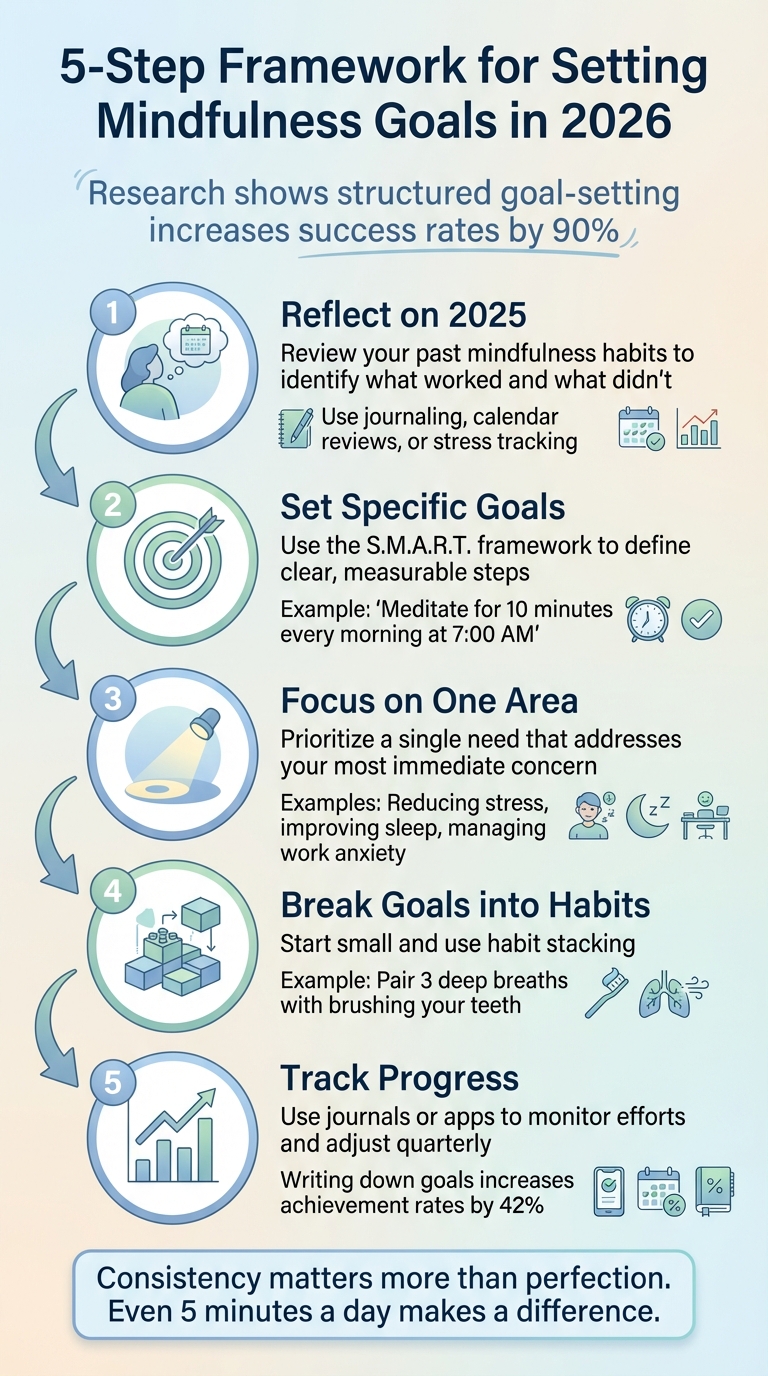
5-Step Framework for Setting Mindfulness Goals in 2026
Define Your Mindfulness Vision for 2026
Reflect on Your 2025 Mindfulness Journey
Take a moment to look back on your mindfulness practices in 2025. Journaling can be a great way to capture the highlights - your achievements, challenges, and recurring patterns. Ask yourself questions like, "What was my biggest accomplishment?" or "Which habits truly helped me stay grounded?" You might also find it helpful to browse through your calendar or photo gallery to recall how you spent your time and which activities brought you a sense of calm and focus. Even tracking something as simple as your daily stress levels can offer valuable insights. Use what you learn to set goals for 2026 that are both realistic and flexible.
Create Mindfulness Goals That Adapt
Based on your reflections from 2025, aim to set goals that build on the habits you’ve already formed. For 2026, focus on goals that feel achievable and actionable. Instead of aiming for big, sweeping changes, start small. For example, if you want to reduce stress, you could begin with just five minutes of daily breathing exercises. Writing these goals down can make them feel more tangible and boost your chances of sticking to them. Remember, goals don’t have to be set in stone. As Courtney E. Ackerman, MA, explains (with insights reviewed by Jo Nash, Ph.D.), "Mindfulness is a training of the mind that requires perseverance, self-compassion, and flexibility across techniques". Let your goals evolve as you do.
Pick One Key Focus for the Year
Choose one area to prioritize in 2026 - something that addresses your most immediate need. This could be anything from managing work-related stress to improving your sleep quality. For instance, if stress from your job feels overwhelming, you might focus on stress management techniques. Or, if poor sleep is affecting your energy and mood, make sleep improvement your primary goal. By concentrating on one area, you can create a ripple effect that positively influences other parts of your life.
a year to change EVERYTHING 🪄 2026 WILL BE YOUR YEAR (mindset & habits)
Create Mindfulness Goals That Fit Your Life
Shape your mindfulness goals to align with your daily life and routines, making them practical and meaningful.
Use a Goal-Setting Framework That Works
The S.M.A.R.T. framework - Specific, Measurable, Achievable, Relevant, Time-bound - is a great way to turn vague intentions like "be more mindful" into actionable steps. For example, instead of a broad goal, try something like: "Meditate for 10 minutes every morning at 7:00 AM to help reduce work stress". Start by asking yourself why this goal matters to you personally - this connection to your motivation is key. You can begin with something as simple as mindful breathing to help you focus. When crafting your goals, stick to positive language. For instance, say, "I intend to embrace calm and peace," rather than framing it as, "Stop being stressed". Once you've clarified your intentions, break them down into smaller, daily habits to make them easier to achieve.
Turn Goals Into Daily Habits
Once you've set your goals, break them into small, achievable steps. Tackling a big goal all at once can feel overwhelming, so divide it into manageable pieces. If your aim is to meditate daily, start with just five minutes. You can also try habit stacking - pairing a new mindfulness practice with an existing routine. For example, take three deep breaths right after brushing your teeth in the morning. To build consistency, set a daily minimum you can stick to, no matter how busy life gets.
"I always tell my yoga students that consistent practice is more important than the length of any single practice. If you only do yoga for ten minutes a day but do it consistently, that's going to bring more benefit into your life than taking an hour class occasionally".
Create Mindfulness Goals for Different Areas of Life
Mindfulness isn't just about meditating; it can touch every part of your life. Setting goals across different areas helps you stay balanced and avoid burnout. The Seven Dimensions of Wellbeing framework highlights key areas: physical, intellectual, environmental, vocational, social, emotional, and spiritual health.
- For physical wellbeing, commit to a five-minute nightly body scan.
- For emotional wellbeing, jot down three things you're grateful for each evening.
- In your vocational life, take two-minute breathing breaks between meetings to refocus.
- For social wellbeing, practice mindful listening by putting your phone away and giving your full attention during conversations.
Focusing on just two or three areas that need the most attention right now can make mindfulness feel more manageable and effective. Balancing these dimensions can help you feel more centered and fulfilled.
Create Your Daily and Weekly Mindfulness Routine
Turn Yearly Goals into Daily Practices
Bring your 2026 mindfulness goals to life by weaving them into your daily routine. Set specific times for each practice - like a 10-minute meditation at 7:00 AM or a quick five-minute mindful walk during your lunch break. If you're aiming to wake up earlier for morning mindfulness, try adjusting your alarm by 10–15 minutes each day; within 2–4 weeks, your body will adapt. Start small - focus on one or two habits at first. Once they feel natural, you can gradually add more. Think of mindfulness as a non-negotiable part of your day. From there, build a routine around core practices.
Add Core Mindfulness Practices to Your Schedule
Once you've set aside time, incorporate three key mindfulness practices that fit seamlessly into your day. Begin your morning with 2–5 minutes of breath-focused meditation to clear your mind and set your intentions. Midday, take a mindful five-minute walk to recharge your energy and refocus. In the evening, try a body scan exercise to release any tension you've accumulated throughout the day. To make mornings smoother, prep the night before - lay out your workout clothes or set up your meditation space to eliminate unnecessary stress.
Use The Mindfulness App for Daily Consistency
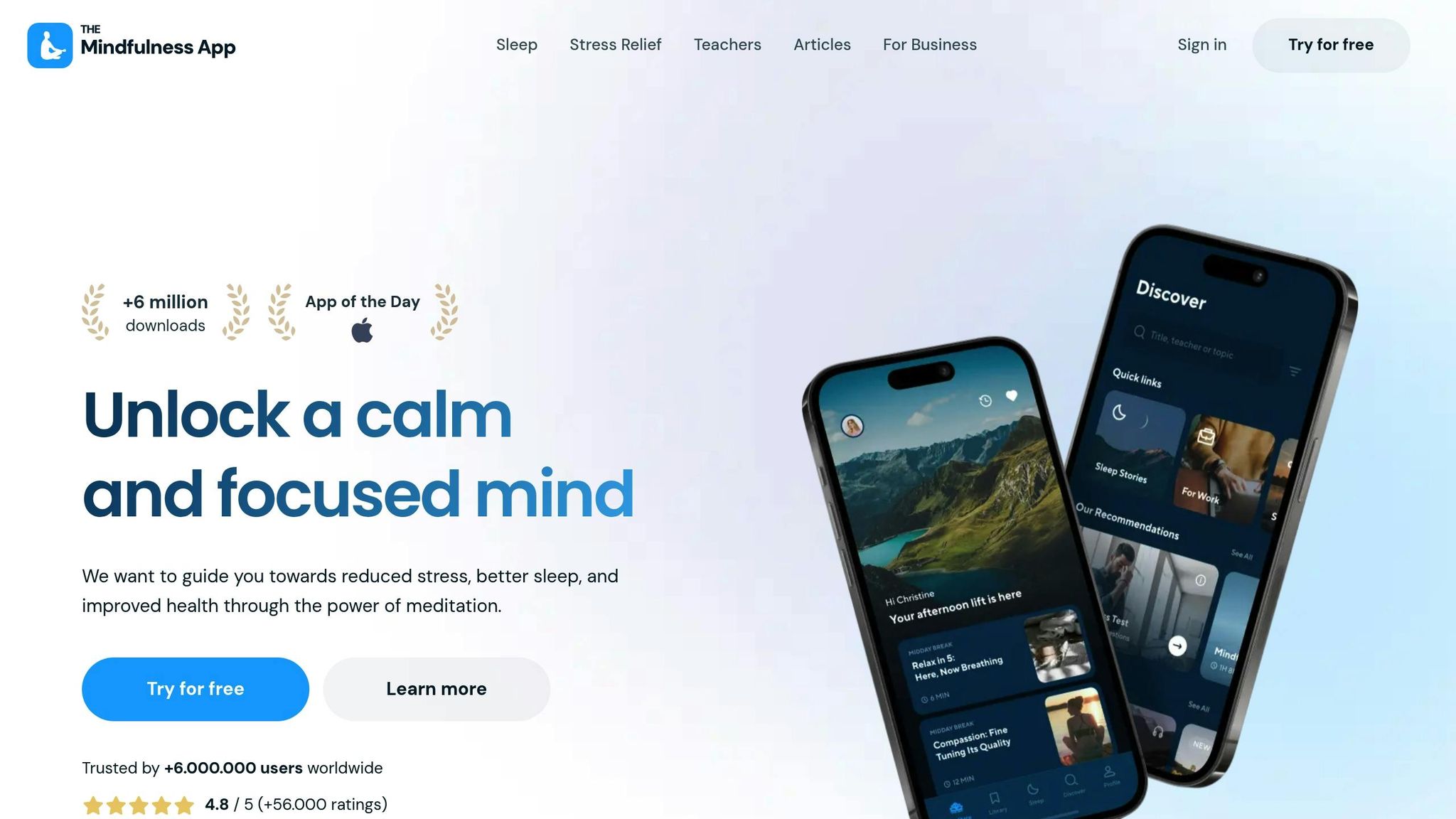
The Mindfulness App makes it easy to stick to your routine, offering over 500 guided meditations available anytime. Use the Reminders feature to get a nudge at your chosen times - for example, 7:00 AM for your morning practice or 9:00 PM to wind down before bed. Sessions range from 3 to 99 minutes, so you can find one that fits your schedule. Bookmark your favorite meditations and enable Daily Notices to stay consistent. Plus, track your progress with personalized stats and connect it to the Apple Health App for an integrated experience. With a 14-day free trial, you can explore the library and find what works best for you.
sbb-itb-bea8dce
Monitor and Adjust Your Progress Through 2026
Track Your Mindfulness Progress
Keeping tabs on your mindfulness journey can be simple yet incredibly rewarding. A short journal entry each evening can help you note progress and observe shifts in your mood or stress levels. You could also use a basic mood log, rating your mental clarity or emotional state on a scale from 1 to 10. Research highlights that people who revisit their goals regularly and lean on support systems tend to achieve more success than those who don’t. To keep your goals top of mind, write them down and place them somewhere visible. Over time, revisit and adjust these goals to match the changes life throws your way.
Review and Adjust Goals Every Few Months
Every three months, take a step back and evaluate your mindfulness goals. Pick specific dates - like March 1st, June 1st, September 1st, and December 1st - to reflect on what’s working and what might need tweaking. Life is fluid, and your goals can evolve with it. The Calm Editorial Team puts it well: "As you evolve, so do your intentions. They can be revised and refined to reflect your own life story, adapting to your current state of being and aspirations. This flexibility is what makes intention setting such a powerful tool for personal development and self-awareness." If your schedule changes, adjust your meditation routines accordingly. Ask yourself: Are these goals still meaningful? Do they align with my current priorities? Staying flexible ensures your intentions remain a source of growth rather than stress.
Use In-App Features for Progress Tracking
Digital tools can complement your personal tracking efforts by adding structure and accountability. Apps like The Mindfulness App offer more than just guided meditations - they also provide features to help you monitor your progress over time. Use these tools alongside your personal notes to reflect on your journey. By regularly reviewing your guided sessions and tracking your practice, you can turn abstract goals into tangible milestones.
Maintain Your Mental Health While Working Toward Goals
Be Kind to Yourself
Treat yourself with the same kindness you'd offer a close friend. Progress isn’t always a straight path, and perfection is an impossible standard. If you miss a meditation session or find your focus slipping, respond with understanding rather than criticism. Studies show that practicing self-compassion can significantly boost your chances of long-term success, especially when you encounter setbacks. Instead of framing goals negatively - like "I need to stop being so stressed" - try a positive spin, such as "I want to bring more calm and peace into my life". This subtle shift in language helps you focus on what you’re striving for rather than what you’re trying to avoid. A gentle, encouraging mindset makes it easier to adjust your routines when times get tough.
Modify Goals During Difficult Times
Life doesn’t always cooperate with our plans, but that doesn’t mean you have to abandon your mindfulness practice. On days when your energy is low or your schedule is packed, scale back instead of giving up altogether. If a 20-minute meditation feels overwhelming, try a quick five-minute breathing exercise instead. Breaking your larger goals into smaller, manageable steps that fit your current situation helps you stay connected to your practice without adding unnecessary stress. Adjusting your goals to match your capacity ensures consistency, even if it looks different from what you originally envisioned. This flexibility not only supports mindfulness but also nurtures your emotional well-being, setting the stage for the next steps.
Combine Mindfulness with Other Mental Health Support
Mindfulness is most effective when paired with other tools for mental health. Think of it as one part of a larger strategy that includes therapy, regular check-ups, or support groups. To enhance your practice, you might incorporate mood-tracking journals, compassion coaching, or community-based activities like group meditation sessions.
"The research is clear: Community is a major predictor of well-being".
Don’t underestimate the importance of rest and quality sleep - they’re essential for emotional balance and for getting the most out of your mindfulness efforts. If you’re navigating mental health challenges, mindfulness can be a helpful component, but it shouldn’t be the only tool in your toolkit.
Conclusion
Setting mindfulness goals for 2026 takes a mix of patience and flexibility. The strategies outlined here emphasize that success starts with picking one primary focus, breaking it into small, daily habits, and creating a routine that works with your life - not against it.
Research backs this up, showing that writing down and revisiting your goals regularly can boost your chances of achieving them by up to 42%.
The Mindfulness App can be a helpful companion, offering reminders and tracking your progress to keep you on track. Your mindfulness practice in 2026 should grow and shift with your life - scaling back during challenging times isn’t failure; it’s about meeting yourself where you are. These tools are here to help you adjust and keep moving forward.
"Remember, intention and goal setting is a practice that becomes clearer and easier the more we do it".
Start small. Check in with yourself every few months. Celebrate your effort, not just the results.
You don’t need to have everything perfectly planned by January 1st. What matters most is showing up, day by day. Pair your mindfulness practice with other mental health resources if needed, and remember: slow, steady progress always outlasts short bursts of perfection.
Your journey toward mindfulness in 2026 begins with one breath, one moment of awareness. The rest will unfold naturally as you continue.
FAQs
What’s the best way to track my mindfulness progress in 2026?
To keep tabs on your mindfulness journey in 2026, start by setting specific milestones that feel meaningful to you. Regularly take time to reflect on your progress - whether it’s through a mindfulness app, a journaling app, or even a simple notebook. Track your daily or weekly practices and jot down any noticeable shifts in your focus, stress levels, or overall sense of well-being.
Make sure to celebrate the small victories along the way. These moments of acknowledgment can keep you motivated. As you grow, don’t be afraid to tweak your goals to better align with where you are. This adaptable approach can help you weave mindfulness into your routine and make it a lasting habit throughout the year.
How can I incorporate mindfulness into my daily life?
To weave mindfulness into your daily life, begin by establishing a routine that feels natural to you. This might mean dedicating a few minutes each day to meditation or simple deep breathing exercises. You can also bring mindfulness to everyday activities, like eating or walking, by paying close attention to the sensations, sounds, and experiences happening in the moment.
Other helpful approaches include practicing active listening during conversations, making it a habit to express gratitude, and setting mindful intentions as you start your day. Taking short, intentional breaks to step away from screens and reflect can also help you feel more centered and less overwhelmed. The trick is to start small, focusing on habits that fit seamlessly into your lifestyle.
What should I do with my mindfulness goals when life feels overwhelming?
When life gets overwhelming, it’s okay to adjust your mindfulness goals to fit your current needs. Start by breaking them down into smaller, easier steps that feel doable. Focus on what feels most meaningful right now, and don’t be afraid to take a step back if it feels like too much.
Take time to regularly check in with yourself and reevaluate your goals. Life changes, and your goals can change with it. Even setting aside just a few minutes a day for mindfulness can have a positive impact. Be gentle with yourself and acknowledge every bit of progress, no matter how small - it all counts.