


Cleaning doesn’t have to be a mindless chore. By practicing mindfulness, you can turn everyday tasks into moments of calm and focus. Mindful cleaning involves paying attention to your actions, senses, and breathing while performing household chores. This approach not only helps you stay present but also reduces stress, improves concentration, and brings a sense of clarity to your day. Here's a quick summary of the 10 ways to incorporate mindfulness into your cleaning routine:
- Set an Intention: Begin with a purpose, like creating a peaceful space or practicing gratitude.
- Focus on Breathing: Sync your breath with your movements to stay grounded.
- Engage Your Senses: Notice textures, sounds, and scents while cleaning.
- Turn Movements into Meditation: Pay attention to repetitive motions like wiping or sweeping.
- Observe Thoughts: Acknowledge distractions without judgment and refocus on the task.
- Wash Dishes Mindfully: Feel the warmth of water and the texture of soap.
- Vacuum and Sweep with Awareness: Use the rhythm of these tasks to stay present.
- Fold Laundry with Care: Notice the fabric’s texture and practice gratitude for your belongings.
- Clean the Bathroom with Presence: Focus on the transformation as you scrub and rinse.
- Use Guided Support: Apps like The Mindfulness App can provide meditations to enhance your practice.
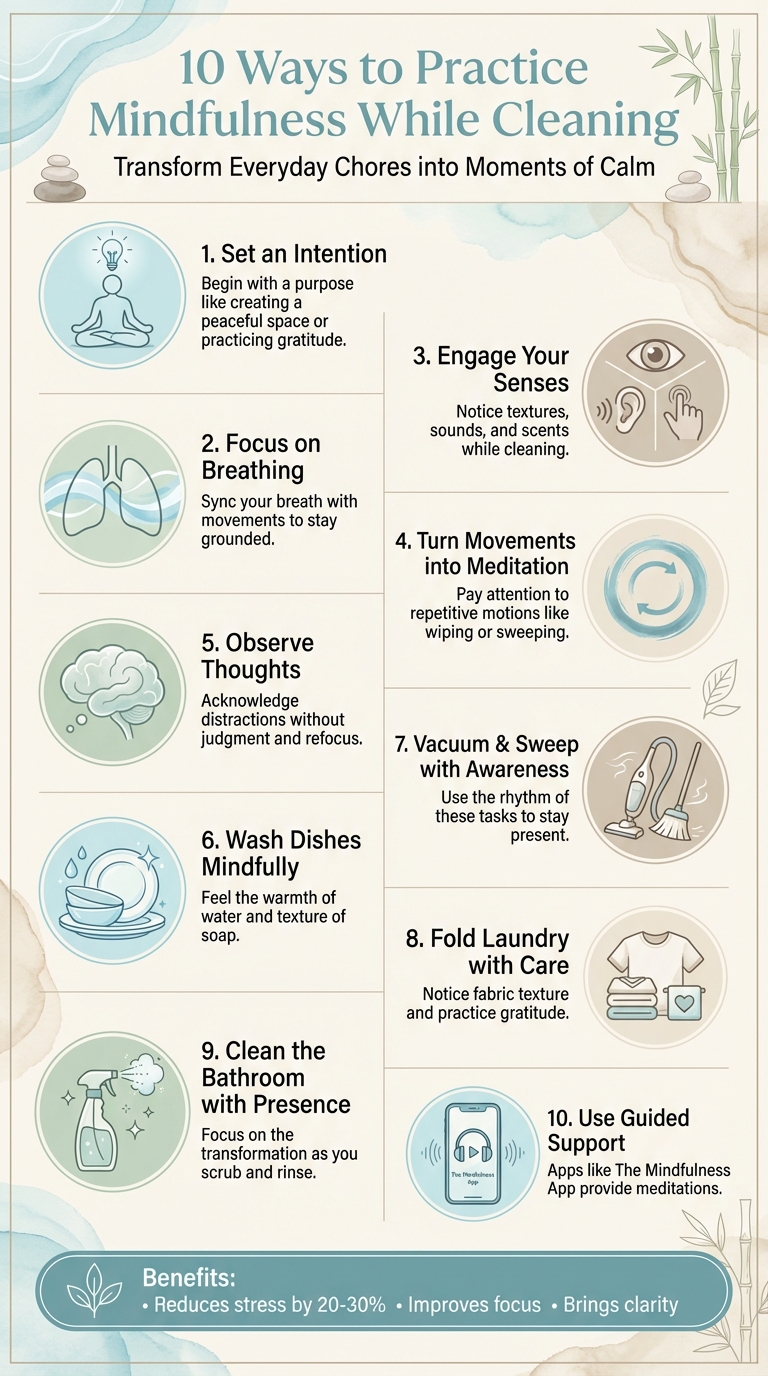
10 Ways to Practice Mindfulness While Cleaning
Mindful Cleaning Meditation
Getting Ready for Mindful Cleaning
Before diving into cleaning, take a moment to pause. This small act transforms what might feel like a rushed chore into an intentional form of self-care. Start by setting a clear intention - something as simple as, "I will clean with focus to create a sense of calm", or "I’m cleaning to show gratitude for my home". This mental commitment lays the groundwork for a more mindful and centered cleaning experience.
Once your intention is in place, prepare your environment to encourage mindfulness. Eliminate distractions - turn off the TV or put your phone on silent. If it helps, set the mood with soft music, light a scented candle, or dim the lights. Before you begin, take three or four deep breaths to ground yourself in the present moment. These small adjustments can make a big difference in how you approach the task.
Start with a single area - perhaps the kitchen counter or one bathroom - and focus on it for 10 to 20 minutes. By narrowing your attention to one space, you avoid feeling overwhelmed and can fully engage in the process.
As you clean, approach the task with curiosity. Notice the textures of the surfaces, the sound of water running, or how dirt disappears under your cloth. If your mind starts to wander, don’t stress. Simply acknowledge the thought and gently bring your focus back to the physical sensations of cleaning. This practice of non-judgmental awareness is what makes cleaning a genuinely mindful activity.
1. Set an Intention Before You Begin
Setting an intention is about deciding the purpose or feeling you want to bring to your cleaning routine. For instance, you might think, "I'm cleaning to create a peaceful space where I can unwind after work", or "This is my time to slow down and show kindness to myself." By doing this, cleaning shifts from being just another chore to a mindful activity that nurtures your emotional well-being. This approach helps you stay grounded in the present moment, which is a key aspect of mindfulness. Whether you aim to feel calm, energized, or focused, your intention becomes a gentle reminder to guide you back whenever your mind starts to wander or frustration sneaks in. Experts suggest that this practice can lower stress, improve focus, and bring a sense of purpose to everyday tasks.
Here’s a simple way to set your intention:
- Take 30 to 60 seconds to stand or sit quietly, breathing deeply three to five times to center yourself.
- Say a short affirmation, such as, "I'm cleaning to create calm."
- Choose a sensory cue, like focusing on your breath, to help you return to the present if you get distracted.
You can tailor your intention to the task at hand. For example, while washing dishes, you might think, "As I wash each dish, I'm expressing gratitude for the meals my family and I share." This connects everyday chores to values like family, health, or comfort, making them feel more meaningful.
Keep your intentions simple and forgiving. Instead of striving for perfect mindfulness, try something lighthearted, like, "I'll do my best to stay present when I remember", or "I'm just trying out a more relaxed way to clean today." If your mind drifts, notice it without judgment and gently bring your focus back to your intention.
2. Pay Attention to Your Breathing
Your breath is a constant companion, anchoring you to the present moment. By focusing on your natural breathing rhythm, you can shift your attention away from tomorrow’s worries or yesterday’s conversations. This simple act can turn everyday tasks - like scrubbing counters or mopping floors - into a calming, meditative experience that soothes your nervous system and sharpens your focus.
Before you dive into cleaning, start with three to five deep breaths. Inhale slowly through your nose for a count of four, hold it briefly, and then exhale through your mouth. This small pause helps you step out of autopilot mode and into a more relaxed, aware state. As you begin cleaning, keep part of your attention on your breath. Notice the cool air entering your nostrils, the gentle rise and fall of your chest, or the soft expansion of your belly.
You can even sync your breathing with your movements to create a meditative rhythm. For instance, inhale as you push the vacuum forward and exhale as you pull it back. When washing dishes, breathe steadily while feeling the warmth of the water on your hands. This mindful connection between breath and motion transforms routine chores into moments of calm and clarity.
It’s natural for your mind to wander - don’t worry when it happens. If your thoughts drift to daily concerns, simply guide your focus back to your breathing without any self-criticism. This gentle return to breath is an essential part of the practice.
If you notice tension building or feel yourself rushing through a task, try slowing your exhale for a few breaths. This small adjustment activates your body’s relaxation response, helping you stay grounded even during less pleasant chores, like scrubbing the bathtub or cleaning out the fridge.
Let your breath be the foundation for mindfulness, enriching each cleaning movement with a sense of calm and presence.
3. Notice What Your Senses Experience
Once you've practiced mindful breathing, take it a step further by tuning into what your senses pick up while cleaning. Your senses have a unique way of pulling you into the present moment. By consciously paying attention to what you see, feel, hear, and smell, you move away from autopilot and become fully engaged. Instead of letting your mind spiral into tomorrow's plans or worries, you can center yourself in the small, tangible details - like the warmth of dishwater or the gleam of a freshly wiped counter.
Start by focusing on just one sense. For instance, if you're washing dishes, notice the texture of the soap and the temperature of the water. Pay attention to the differences in how plates and glasses feel in your hands or the sounds they make. If you're vacuuming, feel the vibration of the handle, listen to the steady hum of the motor, and watch the clean lines forming on the carpet.
One teacher shared how she used mindful sweeping with the mantra: "I sweep the floor with attentiveness, and I sweep my mind", to calm herself before class.
If you encounter something unpleasant - like an overpowering smell or an uncomfortable sensation - acknowledge it without judgment. Then, make adjustments if needed: open a window, switch to a milder cleaning product, or wear gloves. And if your thoughts start to wander, gently bring your focus back to a sensation, whether it’s the feeling of your feet on the floor, the sound of water running, or the sight of dust disappearing from a surface.
Engaging your senses in this way transforms cleaning into a series of mindful pauses. By immersing yourself in the textures, sounds, and sights of your tasks, you can break free from cycles of worry. Often, you’ll find that you feel more relaxed and centered by the time you’re done.
4. Use Cleaning Movements as Meditation
Repetitive cleaning tasks can take on a meditative quality when you shift your focus from the end goal to the process itself. Instead of rushing through chores, slow down and pay attention to each stroke, push, or pull. This simple change can turn an everyday activity into a soothing practice that quiets your thoughts and keeps you grounded in the present.
Start with tasks that naturally create a steady rhythm. For instance, when wiping down a kitchen counter, notice how each pass of the cloth clears away crumbs or spills. Feel the pressure of your hand against the surface. Sweeping or vacuuming in straight, deliberate lines allows you to follow the flow of the motion, while scrubbing a sink in circular movements can be paired with your breath - inhale as you extend, exhale as you press. By aligning your movements with your breathing, you deepen your focus and create a calming rhythm.
Keep your attention on the movement itself. If your thoughts start to wander, gently label the distraction as "thinking" and bring your focus back to the sensations - like the texture of the cloth, the sound of the vacuum, or the weight of the broom. This mindful repetition mirrors traditional meditation, transforming your cleaning routine into a peaceful, grounding ritual.
5. Notice Your Thoughts and Feelings
It's completely normal for your mind to wander while you're cleaning. The goal isn't to block out thoughts but to observe them without judgment and gently bring your focus back to the task at hand. If you catch yourself thinking about tomorrow's meeting or replaying a conversation from yesterday, simply acknowledge it and refocus on the physical sensations of cleaning.
Here's a helpful approach: as you're wiping down a surface and a thought like "I have too much to do" pops up, pause and mentally label it as "thinking." If frustration or boredom starts to creep in, notice it too - "There's frustration" - without trying to shove it aside or criticize yourself for feeling that way. Take a deep breath, then shift your attention back to the texture of the cloth in your hand or the sound of the water running. By labeling these thoughts and feelings, you create space for a deeper sense of mindfulness during your cleaning routine.
Another tool to anchor your attention is a simple mantra. Repeating a calming phrase can help you stay present and centered.
This practice is very different from trying to suppress thoughts. Suppressing thoughts can actually increase stress, while observing them calmly allows them to pass, like clouds drifting across the sky. Research even suggests that mindfulness can reduce stress levels by 20–30% by keeping you grounded in the present moment.
sbb-itb-bea8dce
6. Wash Dishes with Full Attention
Turning dishwashing into a mindful practice can transform a routine chore into a calming ritual. This task, rich in sensory details, offers the perfect chance to slow down and focus entirely on the present moment. Instead of rushing through it while thinking about what’s next, take these few minutes to immerse yourself in the experience.
Before you begin, take a moment to pause. Breathe deeply a couple of times and set a simple intention: "For the next few minutes, I will focus on washing dishes." This brief pause can help you shift into a more mindful state.
As you wash, pay attention to the details. Feel the warmth of the water running over your hands. Notice the smooth texture of soap, the weight of each dish, and the soft grip of the sponge. Listen to the sounds around you - the splash of water, the gentle clatter of dishes, and the quiet squeak of the sponge against a glass. These small observations help anchor you in the moment.
Move through the process deliberately. Pick up a dish, scrub it, rinse it, and place it in the rack. Try syncing your breathing with your movements: inhale as you apply soap, exhale as you rinse. If your mind starts to wander, gently bring your attention back to the sensations of your hands and the rhythm of your actions.
If you find yourself feeling bored or resistant, try shifting your perspective. Think of this task as an act of care - for yourself, your home, and even the meal you just enjoyed. You might also take a moment to feel grateful for the clean water at your fingertips and the comfort of a kitchen to care for. This small shift in mindset can make a big difference.
7. Sweep and Vacuum with Awareness
Sweeping and vacuuming aren’t just chores - they can be moments of quiet reflection. With their repetitive, rhythmic motions, these tasks lend themselves perfectly to a form of moving meditation. Buddhist teacher Michael Stone once suggested to a high-school teacher that she sweep the classroom floor before students arrived - even if it wasn’t dirty - so she could "sweep her mind." This simple act can help bring clarity and calm.
Before you begin, take a moment to pause. Breathe deeply two or three times, grounding yourself in the present. You’ve already set your intentions earlier, so now let the sensory details guide your focus. Feel the broom's weight in your hands, notice how your arms move in harmony, and listen to the soft sound of the bristles against the floor. Watch as the dust or crumbs gather. Each of these sensory details helps anchor your attention, pulling you back whenever your mind starts to wander.
Vacuuming offers a similar opportunity for mindfulness. Pay attention to the hum and vibration of the machine, the resistance as you push and pull, and the patterns forming on the carpet or floor. Try syncing your breathing with your movements - inhale as you push forward, exhale as you pull back. Notice the visible progress as the space becomes cleaner, reinforcing your sense of focus and accomplishment. This mindful approach can naturally carry over to other tasks, helping you maintain a steady, calm rhythm throughout your cleaning routine.
If you catch yourself tensing your jaw or shoulders while you work, take a moment to relax those areas. The goal isn’t to get everything spotless - it’s to stay present, aware of your movements, and connected to the moment. With each stroke of the broom or pass of the vacuum, you’re not just tidying your space - you’re clearing mental clutter, one mindful motion at a time.
8. Fold Laundry with Care
Folding laundry might feel like a never-ending chore, but it’s actually a great chance to practice mindfulness. The steady, repetitive motions - smoothing out wrinkles, creating neat creases, and stacking clothes - can naturally guide you into a meditative rhythm, similar to sweeping or vacuuming. Instead of rushing through, slow down and give your full attention to each piece.
This task offers its own sensory experience. Pay attention to the textures and temperatures in your hands: the softness of a cotton towel, the crisp smoothness of a sheet, the roughness of denim, or the coolness of air-dried fabrics. Take a moment to enjoy the clean scent of detergent. Listen to the soft rustle of fabric as you fold and the gentle sound of each piece being placed in a pile.
Try combining your movements with your breath. Inhale as you pick up and smooth out an item, exhale as you fold and set it down. If your mind starts to wander, notice the thought without judgment and gently bring your focus back to the feeling of the fabric. Research shows that paying attention to the present moment during everyday tasks can lead to greater life satisfaction and less mind-wandering. By fully engaging in the process, folding laundry becomes a calming ritual filled with awareness and connection to the task at hand.
You can also use this time to practice gratitude. Silently thank your clothes for keeping you warm or comfortable. Appreciate the convenience of having clean laundry, access to a washer and dryer, and a space to care for your belongings. Shifting your perspective in this way can turn a mundane chore into a meaningful act of appreciation. Studies on household activities have shown that as little as 20 minutes of focused housework, including folding laundry, can lower anxiety and stress levels by up to 20%.
9. Clean the Bathroom with Presence
Cleaning the bathroom might not be at the top of anyone's list of favorite activities, but it’s a surprisingly effective way to practice mindfulness. The process is filled with sensory experiences - the warmth of the water, the feel of the tiles, the scent of the cleaning products, and the visible transformation from dirty to spotless. Instead of rushing through the task or letting your thoughts drift to everything else you need to do, try focusing fully on each step: scrubbing, rinsing, and wiping. Each action can become a mini meditation, bringing you back to the here and now.
Start by taking a brief pause at the bathroom doorway for 30–60 seconds. Set a simple intention, like "I'm cleaning to create a calm and welcoming space" or "I'll use this time to slow down and breathe." Take a few deep breaths - three to five is a good number - and let yourself settle into the moment. This small ritual can help you approach cleaning with a sense of purpose and mindfulness.
As you work, engage your senses fully. Feel the cool metal of the faucet, notice the fading toothpaste marks in the sink, and observe the way soap scum lifts away as you scrub the tub. When wiping mirrors, pay attention to how streaks disappear, leaving behind a clear reflection. Each moment offers a chance to stay present and connected.
If you find yourself feeling irritated or bored, try to notice those emotions without judging them. You can mentally label what you’re feeling - whether it’s “frustration” or “distraction” - then gently redirect your focus to your breath or the task at hand. This simple practice of noticing and returning can help build mindfulness skills over time and even reduce stress.
As you clean, take a moment to feel grateful for your bathroom and the role it plays in your daily life - from refreshing showers to moments of self-care. If you’d like some extra support staying present, The Mindfulness App offers short guided meditations focused on breath awareness and everyday mindfulness. These can be a helpful way to center yourself before or after cleaning, making the experience even more grounding.
10. Use The Mindfulness App for Guided Support

Cleaning can often pull your attention in different directions. While you've already explored mindfulness techniques on your own, adding guided support can take things to the next level. The Mindfulness App provides access to over 500 tracks, including guided meditations, mindfulness courses, and breathing exercises. These tools are designed to help you stay present, even during everyday tasks like household chores.
Guided audio can be particularly helpful when your mind starts to wander. For instance, before diving into a 20–30 minute cleaning session, you could listen to a short 3–5 minute breathing meditation to set your focus. Then, as you tackle tasks like washing dishes or sweeping, play a 7–10 minute body-awareness track in the background. This simple shift can transform mundane chores into an opportunity for mindfulness.
You can even tailor the type of meditation to the chore at hand. A breath-focused track works well while washing dishes, helping you notice the feel of the soap and the temperature of the water. For sweeping or vacuuming, a movement meditation can help you sync your breath with each motion. And when folding laundry, a gratitude or loving-kindness meditation encourages you to focus on the feel of the fabric and reflect on the people who'll wear the clothes.
The app also makes it easy to stay consistent. Features like daily reminders and the ability to save favorite tracks mean you can create a routine that fits your schedule. For example, you could set a notification for 7:30 p.m. to remind you to meditate before your nightly kitchen cleanup. Plus, the app works offline, so you can use it while vacuuming the basement or organizing the garage, even without Wi-Fi. With millions of users, it's a practical tool for busy lives - whether you're in a small studio, a shared apartment, or managing a bustling household.
If you're just starting out, ease into it with one chore and one short track this week. For example, try a 5-minute breathing exercise before wiping down the kitchen counters. Pay attention to how the guided voice brings you back to the present moment. Over time, incorporating these tracks into your cleaning routine can make mindfulness a natural part of your day.
Conclusion
Cleaning mindfully can turn ordinary household chores into moments of calm and clarity. By paying attention to your breath, tuning into your senses, and moving with purpose, you can transform these tasks into a kind of meditation. This shift not only makes cleaning less of a chore but also helps you focus, quiets your mind, and brings a sense of gratitude for maintaining your space.
Incorporating these mindful habits into your daily routine can lead to noticeable changes. Every corner of your home offers an opportunity to practice presence - whether you're washing dishes, folding laundry, or sweeping the floor. These simple acts can help clear not just physical clutter but mental clutter too, creating a more tranquil environment.
Why not start small? Choose one task this week - maybe wiping down the counters or sweeping the entryway. Before you begin, set a clear intention, take a few deep breaths, and notice the sensations as you work. Afterward, reflect on how you feel. You might even jot down a quick note about your mood or stress level before and after cleaning. Over time, you may notice a greater sense of calm and accomplishment.
If you'd like extra guidance, check out The Mindfulness App. With over 500 guided meditations, sleep stories, and courses, it can help you extend the peace you find during mindful cleaning into other parts of your day.
FAQs
How can I stay mindful while cleaning in a busy home?
To practice mindfulness while cleaning in a bustling household, pay attention to the physical sensations of the task. Notice the texture of the sponge in your hand or the warmth of the water as you wash. Pair your actions with slow, purposeful breaths to keep yourself grounded. If you're interrupted, try to embrace it as part of the experience and calmly bring your focus back to the task without letting frustration creep in. If you need a little extra help, guided meditations can be a great way to cultivate mindfulness, even in the middle of a busy day.
Why is it helpful to set an intention before cleaning?
Setting an intention before you start cleaning can bring a sense of purpose and even calm to the task. It keeps you focused, promotes mindfulness, and helps ease stress by turning what might feel like a mundane chore into a meaningful activity. This small shift can make cleaning feel less like a duty and more like an act of self-care that clears both your space and your mind.
How can I bring mindfulness into other everyday activities?
You can weave mindfulness into your everyday life by tuning into your senses, your breath, and the present moment. Take cooking, for instance - pay attention to the vibrant colors of the vegetables, the aroma of spices, or the texture of each ingredient as you prepare your meal. If you're out for a walk, notice how your feet connect with the ground or listen closely to the sounds of nature or passing cars. Even during a daily commute, you can practice mindfulness by observing the scenery around you or simply focusing on steady, deep breaths.
Another great way to build mindfulness into your routine is through guided meditations. These provide a helpful framework to keep you anchored in the present, turning even the most ordinary tasks into moments of calm and clarity.

.jpeg)