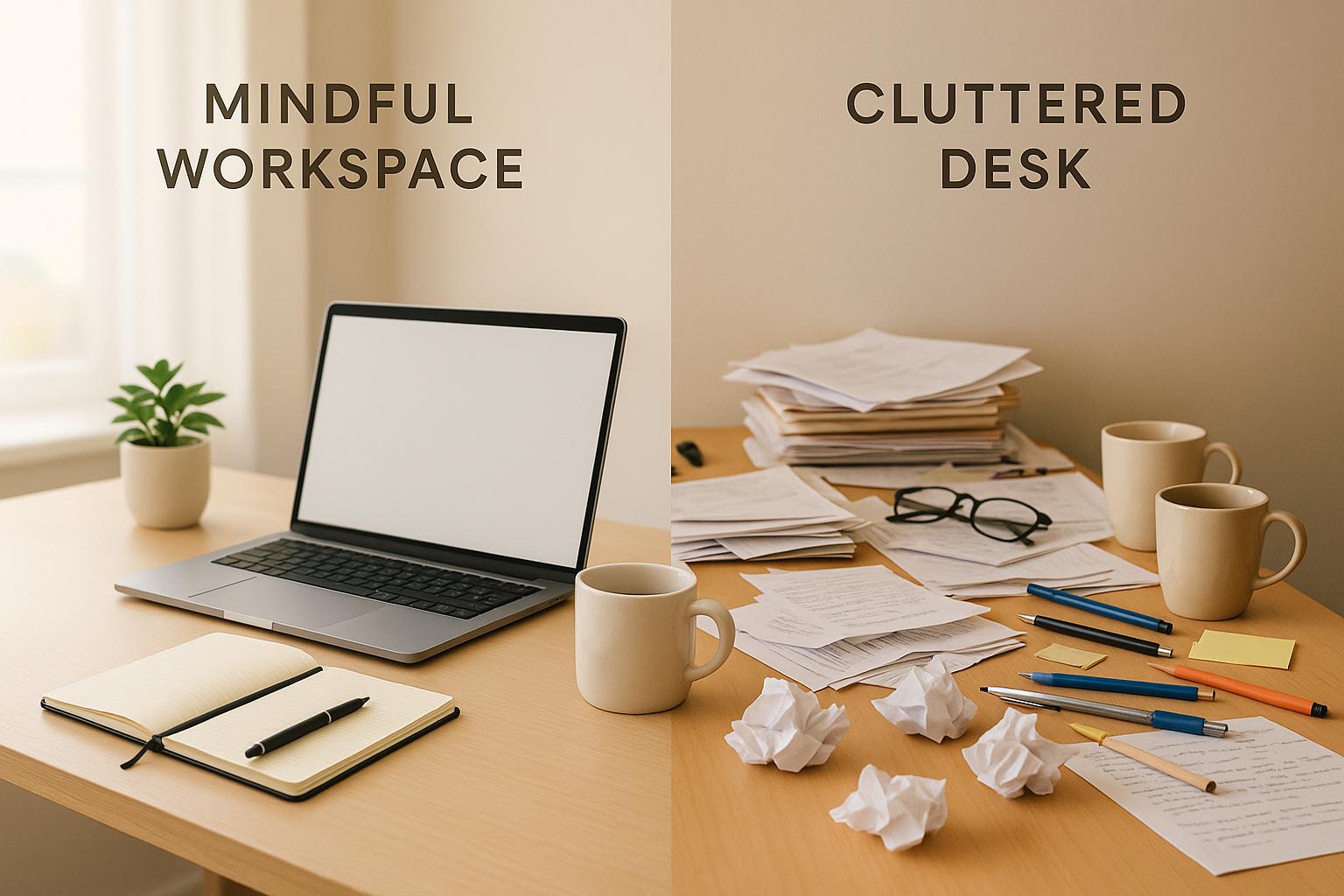


Switching careers can be tough - emotionally and mentally. Mindfulness offers practical tools to help you manage stress, stay focused, and make thoughtful decisions during this time of change. Here’s what you’ll learn:
- Why mindfulness works: It calms anxiety, reduces decision fatigue, and helps you focus on the present.
- Techniques to try: Simple quick mindfulness tools like the 5-5-5 breathing method, thought-labeling, and mindful journaling can ease the process.
- Building resilience: Mindfulness helps you handle setbacks, quiet self-criticism, and maintain motivation through uncertainty.
- Easy daily habits: Short practices like a three-breath check-in or grounding exercises fit into even the busiest schedules.
Mindfulness won’t eliminate challenges, but it can help you approach them with clarity and balance. Let’s explore how these strategies can support you during career transitions.
How to Manage Career Transitions
sbb-itb-bea8dce
What Mindfulness Is and How It Helps During Change
Mindfulness is all about focusing on the present moment without passing judgment. Dr. Rachel Beanland, Physician Coach and Founder of Resilience Physician Coaching, describes it as "the practice of focusing and concentrating on an activity without judgment. It involves being fully present in the moment and paying attention to what you are doing". Instead of letting your thoughts take over, mindfulness encourages observing them calmly - without clinging to them or letting them dictate your actions.
When you're navigating a career change, your brain's usual predictive patterns are thrown off. This disruption forces your mind to work harder, trying to make sense of unfamiliar situations, which can feel overwhelming. Mindfulness helps by creating what researchers call "pockets of stability". These are intentional moments where you ground yourself in the present, preventing your thoughts from spiraling into worst-case scenarios. These small, steadying practices work alongside daily mindfulness routines to help you face the unique challenges of career transitions. These “anchors” set the stage for practical mindfulness techniques that follow.
How Mindfulness Reduces Anxiety
When uncertainty hits, your body’s natural response is to activate the sympathetic nervous system, triggering a fight-or-flight reaction. This leads to a faster heartbeat and a rush of cortisol. Mindfulness can step in to break this cycle by calming the amygdala, the part of the brain responsible for detecting threats, and activating the prefrontal cortex, which helps with thoughtful decision-making for professionals. Even simple actions, like naming your emotions - saying "I notice anxiety" - can provide enough mental distance to respond thoughtfully instead of reacting impulsively.
How Mindfulness Builds Resilience
Resilience doesn’t mean avoiding tough emotions - it’s about facing them without letting them take over. Mindfulness encourages acceptance, helping you recognize feelings like fear or exhaustion without turning them into overwhelming stories. Research shows that self-awareness can reduce stress during transitions by 23%. By practicing mindfulness, you develop the flexibility to adapt when things don’t go as planned. Asking yourself questions like, “Is this feeling about what I’m doing, or who I am?” creates space to separate temporary challenges from your deeper sense of self. This mental clarity helps you stay grounded and move forward with confidence.
Mindfulness Techniques You Can Use During Career Transitions

Essential Mindfulness Techniques for Career Transitions
Navigating career changes can be emotionally and mentally taxing, but mindfulness techniques can help ease the process. These practices are simple, actionable, and designed to support you when you need them most.
Present-Moment Awareness to Handle Uncertainty
When uncertainty starts to overwhelm you, grounding yourself in the present can help. One effective method is the 5-5-5 breathing technique: inhale for 5 seconds, hold your breath for 5 seconds, and exhale for 5 seconds. This simple exercise activates your parasympathetic nervous system, which can ease stress in less than a minute.
Another grounding tool is the five-things exercise: pause and name five things you can see around you. This shifts your focus away from anxious thoughts and back to the present moment. You can also set a recurring reminder on your phone for a quick mental check-in. When it goes off, ask yourself, "What am I feeling right now?" or "Is this feeling about what I’m doing, or who I am?" These questions help you separate your professional performance from your personal identity, preventing your sense of worth from being overly tied to your job title.
For deeper clarity, meditation can help you manage the emotional ups and downs of career transitions.
Meditation for Clarity and Focus
Meditation is a powerful tool for managing stress and making clear-headed decisions. One technique to try is thought-labeling: as thoughts arise, observe them and gently label them without diving into their narrative. This practice reminds you that thoughts are fleeting and don’t define you.
Another approach is breath awareness, where you focus on the rhythm of your breathing. This can help you break free from endless "what if" scenarios that often accompany career changes. Research even shows that using a mindfulness app for just 10 days can boost life satisfaction by 7.5%, and practicing consistently for 30 days can improve mental resilience by 11%.
You might also explore practices like body scans or progressive muscle relaxation, where you tense and release different muscle groups. These techniques signal safety to your brain, helping to calm worry.
A simple yet impactful practice is the three-breath check-in. Three times a day, take three slow breaths and ask yourself, "What am I feeling right now, and what do I need?" This builds emotional awareness and helps you respond to challenges thoughtfully.
Meditation pairs well with reflective journaling, which can deepen your understanding of your experiences.
Mindful Journaling for Reflection
Combining mindfulness with journaling can provide clarity and insight during career transitions. Writing engages different parts of your brain than thinking alone, making it a useful tool for problem-solving and self-discovery. Professionals who reflect regularly often report better performance and greater career satisfaction.
Start small by dedicating 5 to 15 minutes a week to journaling. Focus on both the positive and challenging aspects of your work experiences. Use prompts like, "What do I hope to gain from this change?" or "How can I leverage my strengths?". Another helpful exercise is a values alignment check: list three core values - such as autonomy, growth, or helping others - and reflect on how these values exist beyond your job title. This practice can anchor your identity to deeper principles, offering stability during uncertain times.
"Career reflection journaling serves as a bridge between where you are now and where you want to be professionally." - Reflection.app
For a daily practice, try writing one line of gratitude, one line about a challenge, and one intended action. To keep your journal balanced, counter every difficulty you document with a positive achievement or moment of progress. You can also create an identity inventory: list five personal strengths, like being a creative thinker or a great listener, that are independent of your professional role. These exercises can bring clarity and confidence as you navigate career transitions.
Building Emotional Resilience Through Mindfulness
Navigating a career transition can be emotionally draining. Rejection emails, self-doubt, and the pressure to prove yourself can take a toll on even the most confident individuals. Mindfulness offers practical tools to help you maintain emotional balance and keep moving forward without losing your sense of self. Let’s dive into how mindfulness can help counter self-critical thoughts and sustain motivation during these challenging times.
Managing Self-Criticism
During a career transition, your inner critic often becomes louder. You might find yourself thinking things like, "I'm not qualified for this", or "I'll never figure this out." Mindfulness helps you step back and recognize these thoughts as just that - thoughts, not facts.
One way to combat self-criticism is to separate your performance anxiety from your self-worth. For instance, anxiety about a project deadline is task-related, while thoughts like "I'm not good enough for this role" are tied to deeper identity fears. Recognizing this distinction can help you address the true source of your stress.
Here are a few mindfulness-based techniques to try:
- Evidence Inventory: Write down three specific reasons why you're capable of success. Keep this list on your phone and review it whenever self-doubt creeps in.
- Role vs. Self Exercise: Ask yourself, "Is this feeling about what I'm doing, or who I am?" This question can help you identify whether you're dealing with situational stress or something more personal.
- 3-Minute Check-In: Pause for a moment to name the emotion you're feeling without judgment. This simple act can help you determine whether you're facing task-based stress or deeper fears about your identity.
Research backs up the effectiveness of these techniques. Professionals with strong self-awareness and self-management skills report 23% less stress during career transitions. Another helpful practice is the competence timeline, where you reflect on three past successes. Reminding yourself of your ability to adapt in the past can boost your confidence in handling current challenges.
Staying Motivated During Long Transitions
Long periods of uncertainty can sap your motivation, especially when progress feels slow or invisible. Mindfulness can help you stay grounded and focused, preventing your thoughts from spiraling into worst-case scenarios.
Start by reframing your inner dialogue. Replace phrases like "I'm failing" with "I'm learning", or "I can't do this" with "This is challenging." By changing your language, you shift your mindset from defeat to growth.
The emotion-thought-action sequence is another powerful tool. When faced with a difficult moment, pause to identify the emotion you're feeling, observe the thoughts it generates, and think about the action you're inclined to take. For example, after receiving a rejection notice, you might feel anxious, think "I'll never get hired", and feel like giving up. Recognizing this pattern allows you to choose a more constructive response, such as reaching out to your network or refining your application materials.
To maintain motivation, it's also essential to cultivate identity anchors - activities that remind you of who you are outside of your career. Spend time on hobbies, connect with friends, or simply cook a meal. These practices reinforce the idea that your worth isn’t tied to your job title or productivity. Embracing different aspects of your identity, like being a friend or a hobbyist, builds the emotional strength you need when your professional life feels uncertain.
"The challenge isn't the career transition itself - it's maintaining emotional balance while everything around you changes." - Sarah Thompson, Author
Finally, don’t underestimate the basics: prioritize sleep, drink plenty of water, and take short movement breaks. These small habits can help you maintain mental clarity and steady motivation throughout your transition.
Adding Mindfulness to Your Daily Routine During Career Transitions
Fitting mindfulness into an already packed schedule can feel daunting - especially when you're juggling job applications, networking, and learning new skills. But here's the thing: it doesn’t have to take hours. Sarah Thompson from Ahead App Blog puts it perfectly:
"Consistency beats duration every time."
In fact, research suggests that short, daily mindfulness practices - just 10 minutes a day - are often more effective for busy professionals than occasional longer sessions. These small habits can help reduce stress and create a sense of balance during career transitions.
Quick Mindfulness Practices
The trick to building a mindfulness habit is to tie it to something you already do every day. This is where habit stacking comes in. For example:
- Mindful First Sip: While your coffee brews, take 90 seconds to focus on its warmth, aroma, and taste. Skip the urge to check your phone during this time.
- Desk-Based Body Scan: As your computer boots up, spend 60 seconds mentally checking for tension in your jaw, neck, shoulders, and back.
Need something even quicker? Try the Three Breath Break. With just 30 seconds, you can interrupt stress by taking one breath to notice your mental state, a second to release tension, and a third to set an intention for the next task.
For moments of heightened anxiety - like during networking calls or job applications - the 5-4-3-2-1 Grounding technique can help bring you back to the present. Identify five things you see, four you can touch, three you hear, two you smell, and one you can taste. And for high-pressure situations like interviews, the 5-5-5 Breathing technique - inhaling for 5 seconds, holding for 5, and exhaling for 5 - can help calm your nerves.
Even before sending an emotional email or tackling a cluttered inbox, pausing for just three breaths can help you engage your prefrontal cortex, reducing impulsive reactions.
Using The Mindfulness App
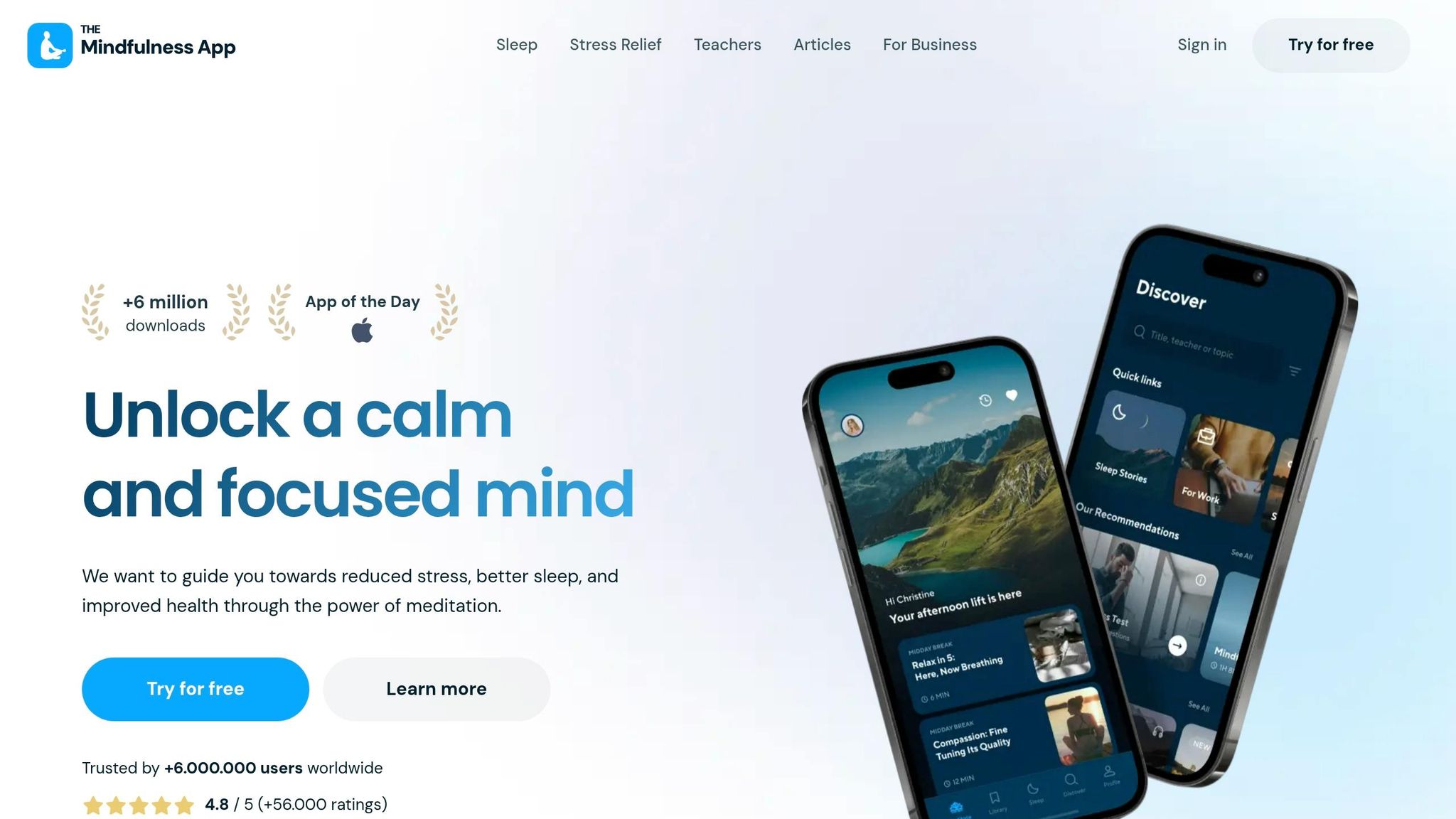
If you're new to mindfulness or struggle with staying consistent, guided tools can make all the difference. The Mindfulness App offers over 500 guided tracks, including meditations, sleep stories, and courses tailored for stress management and personal growth. With sessions as short as 5 minutes, it’s easy to fit mindfulness into your commute, lunch break, or even the moments between meetings.
The app’s features are designed to help mindfulness become a lasting habit. You can download tracks for offline use, access content in 12 languages, and set reminders for quick 3-minute mental check-ins to catch stress before it spirals. Transition rituals - like a 5-minute breathing exercise - can also help you mark the start and end of your workday, giving your brain some structure during uncertain times.
Plus, with a 14-day free trial, you can explore its premium library without committing long-term. This structured approach can provide the clarity and emotional stability you need during career transitions, helping you navigate change with greater ease.
Conclusion
Career transitions can be daunting, but mindfulness offers tools to help you manage the uncertainty. Techniques like the 5-5-5 breathing method can soothe your nervous system, countering the fight-or-flight response that often accompanies these changes. Cognitive reframing, on the other hand, helps shift your mindset from reacting impulsively to approaching challenges with a clear, strategic perspective.
Mindfulness not only eases anxiety but also fosters resilience and mental clarity. It allows you to separate external pressures from your inner sense of purpose, helping you align your career decisions with your personal values.
"Think of them as your career transition superpowers - one keeps you calm, the other keeps you clear."
– Sarah Thompson, Author and Self-Awareness Specialist
The techniques outlined in this guide - whether it's the Three-Breath Check-In, the 5-senses grounding exercise, or mindful journaling - are designed to fit into even the busiest routines. You don’t need to carve out hours in your day; just a little consistency can make a big difference. By taking time to breathe, reframe, and reflect, these practices can empower you to navigate your transition with confidence.
For additional support, consider integrating guided mindfulness into your daily life. The Mindfulness App offers over 500 guided meditations and courses specifically designed for stress management and personal growth. With a 14-day free trial, you can explore its extensive resources and discover how mindfulness can help you stay grounded, focused, and resilient during this pivotal time.
FAQs
How long does mindfulness take to work during a career change?
Mindfulness has the power to ease stress and bring mental clarity almost immediately. But when you're navigating something as significant as a career change, the real benefits often unfold after weeks of steady practice. By dedicating time to mindfulness exercises regularly, you'll find it easier to stay focused and handle the uncertainties that come your way with greater ease.
Which mindfulness exercise helps most right before an interview?
A brief guided meditation aimed at calming your mind and easing anxiety can be incredibly helpful before an interview. Taking just two minutes for mindfulness can clear your thoughts, sharpen your focus, and leave you feeling more prepared and self-assured.
How do I stay mindful when my job search feels like nonstop stress?
Mindfulness can be a game-changer when navigating the stress of a job search. A simple technique like box breathing can work wonders: inhale for 4 counts, hold your breath for 4 counts, exhale for 4 counts, and pause for another 4 counts before repeating. This method can calm your nerves almost instantly.
Guided meditations are another excellent tool. They can help you process your emotions, clear mental clutter, and feel less overwhelmed. Making mindfulness a regular part of your routine can keep you grounded, reduce stress, and help you maintain emotional balance as you tackle the challenges of your job search.