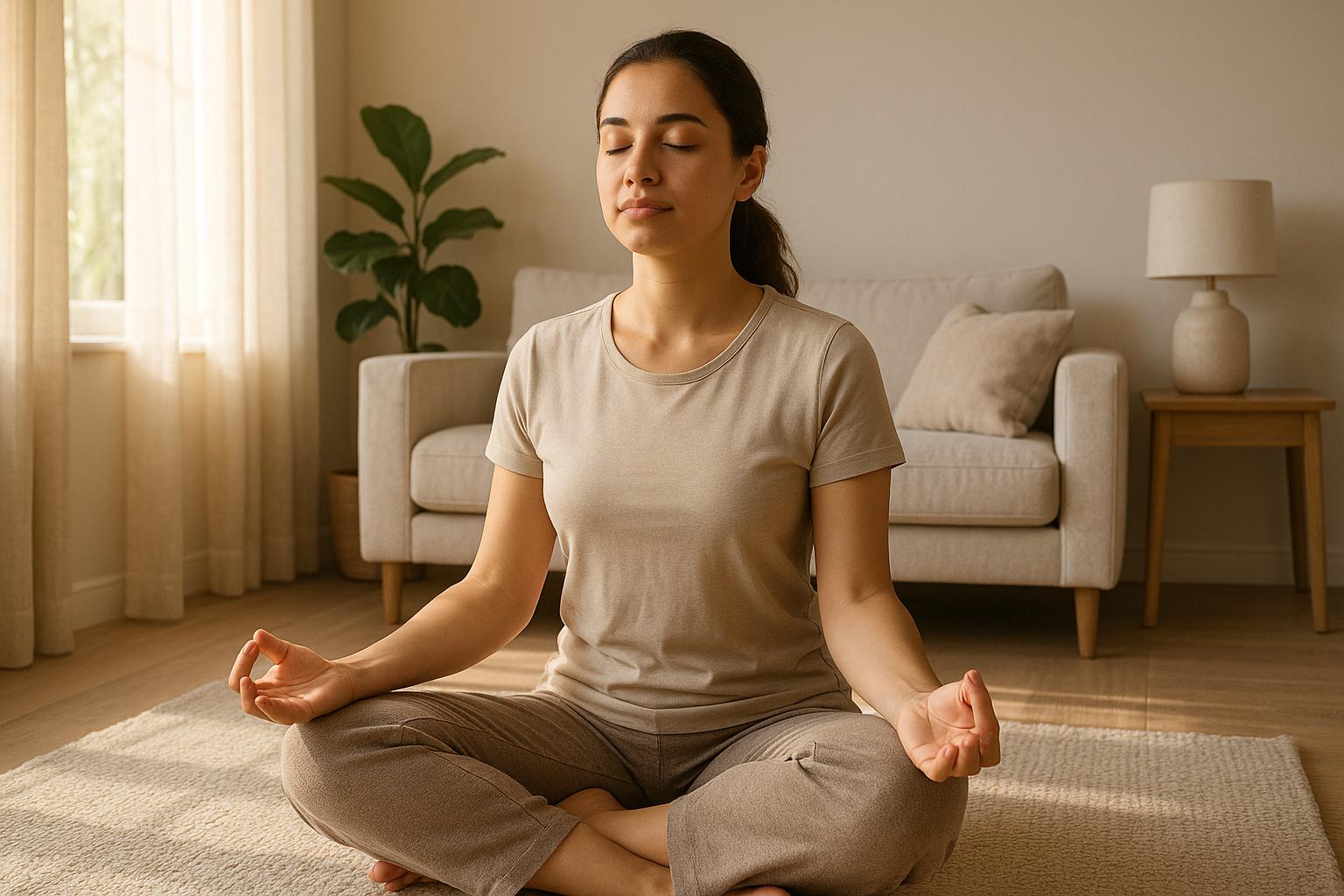

Mindfulness helps you manage stress, understand emotions, and respond calmly to challenges. By staying present and aware, you can reduce anxiety, improve sleep, and strengthen relationships. Research shows mindfulness lowers cortisol, calms the brain's fear center, and enhances emotional control. Simple practices like mindful breathing, body scans, gratitude journaling, and loving-kindness meditation can fit into your daily routine, taking just 5–15 minutes. Tools like The Mindfulness App offer guided sessions and trackers to help you stay consistent. Start small - just a few minutes a day can make a big difference in how you handle life's ups and downs.
20 Minute Guided Meditation to Build Emotional Resilience | Experience Inner Peace and Clarity
How Mindfulness Strengthens Emotional Resilience
Mindfulness changes how we respond to stress by calming the amygdala and improving control through the prefrontal cortex. This creates a helpful pause between what happens to us and how we react. Let’s explore how mindfulness reduces stress reactivity, improves emotional regulation, and sharpens cognitive flexibility.
Lowering Stress Reactivity
The amygdala is like your brain’s alarm system, triggering the fight-or-flight response when it detects danger. The problem is, without mindfulness, it can overreact to everyday challenges - like a tough email from your boss or a disagreement with a loved one. Mindfulness helps quiet that overreaction by strengthening the connection between the amygdala and the prefrontal cortex. This connection allows you to pause, assess, and respond calmly instead of reacting impulsively. Studies show that people who practice mindfulness often report better psychological well-being and less distress. In fact, mindfulness directly links well-being with greater resilience, making it a powerful tool for managing stress.
Strengthening Emotional Regulation
Emotional regulation is about recognizing and understanding your feelings, then responding in a healthy way. The American Psychological Association highlights mindfulness as a way to improve self-control, increase tolerance for uncomfortable emotions, and sharpen focus and flexibility. When feelings like anxiety, anger, or sadness arise, mindfulness gives you the mental space to process them without letting them take over. Over time, this practice makes tough emotions feel more manageable and less overwhelming.
Mindfulness doesn’t just calm your stress - it also helps you handle emotions more effectively.
Increasing Cognitive Flexibility
Cognitive flexibility is your ability to adapt, solve problems, and see things from different perspectives. Mindfulness enhances this skill by improving focus and freeing you from rigid thought patterns. With a clearer mind, you can approach challenges with fresh ideas and creative solutions. Research even shows that mindfulness boosts resilience and mental well-being, particularly during uncertain times, like navigating work-family conflicts. This mental flexibility makes it easier to bounce back from setbacks, whether it’s adjusting to a new job or tackling personal hurdles with a fresh approach.
Mindfulness Exercises to Build Resilience

4 Daily Mindfulness Exercises to Build Emotional Resilience
Now that we've seen how mindfulness can bolster resilience, let's explore four practical exercises you can start using today. These simple practices take just 5–15 minutes and fit seamlessly into even the busiest schedules. They turn mindfulness principles into actionable steps, helping reinforce the resilience strategies discussed earlier.
Daily Mindful Breathing
Set aside 5 minutes each day for mindful breathing. Find a comfortable position - either sitting or lying down - with your spine upright but relaxed. Close your eyes or soften your gaze, and focus your attention on your breath. Notice the sensation of air flowing through your nostrils, chest, or belly. When your mind inevitably wanders, gently guide your attention back to your breath without judgment. This practice not only helps calm your nervous system but also improves your ability to manage emotions throughout the day. For extra guidance, you can try structured sessions offered by The Mindfulness App.
Body Scan Meditation
In this exercise, either lie down or sit comfortably and gradually direct your focus to different parts of your body, starting from your toes and moving upward. Pay attention to sensations in your feet, legs, hips, abdomen, chest, hands, arms, shoulders, neck, face, and head. Pause at each area and observe any tightness, warmth, or tingling - without trying to change anything. This 5–15 minute practice helps you recognize early signs of stress, like a clenched jaw or tense shoulders. By noticing these signals early, you can take steps - like breathing deeply or stretching - to manage stress before it escalates.
Gratitude Journaling
Spend 5 minutes each evening jotting down three specific things that went well during your day. These can be small moments, like enjoying a warm cup of coffee, receiving help from a colleague, or taking a peaceful evening walk. Write down why each of these moments felt meaningful. This habit encourages optimism and helps you focus on problem-solving. Research links gratitude journaling to improved well-being, reduced anxiety, and greater mental flexibility. To stay consistent, consider using tools like the Mindfulness Habit Tracker from The Mindfulness App, which launched on December 13, 2025.
Loving-Kindness Meditation
Take 5–10 minutes to practice loving-kindness meditation. Begin by focusing on yourself, then extend your thoughts to a loved one, a neutral person, someone you find difficult, and finally to all living beings. Silently repeat phrases like: "May I be safe. May I be healthy. May I be peaceful. May I live with ease." Gradually extend these wishes to others, aiming to cultivate feelings of warmth and goodwill. Research shows this practice strengthens emotional regulation, reduces depression risk, and enhances relationships by fostering compassion. For instance, after a conflict, practicing loving-kindness toward someone you find challenging can help you respond calmly, enabling resolution and reducing emotional isolation. Over time, this practice creates a sense of inner peace and safety that can counterbalance distress, anger, and fear.
sbb-itb-bea8dce
Adding Mindfulness to Your Daily Routine
Building on earlier exercises, incorporating mindfulness into your daily life strengthens emotional resilience over time. The best part? Mindfulness doesn’t require carving out extra hours or making major schedule changes. Instead, you can weave small, intentional moments into your day. For example, set a phone reminder to take a 1-2 minute pause during natural breaks, like before meals or meetings. These brief but consistent practices can help calm the amygdala, leading to more measured and composed reactions over time.
For busy parents, mindfulness can fit right into your routine. Try a one-minute deep breathing exercise before a meeting, do a quick body scan while tucking your child into bed, or practice mindful walking during school drop-offs. The focus isn’t on doing it perfectly - it’s about showing up consistently. If you miss a day, don’t be hard on yourself. Experts from the Search Inside Yourself Leadership Institute emphasize that staying motivated often comes from recognizing the benefits, such as recovering from stress more quickly and pausing before reacting impulsively.
To make mindfulness even more accessible, digital tools like The Mindfulness App can be incredibly helpful. This app features over 500 exclusive tracks tailored to various schedules and needs. With a 4.8/5 rating from more than 56,000 users and over 6 million downloads, it’s clear that people find it valuable. It even offers offline access, making it ideal for commutes, flights, or areas with spotty internet. Plus, the Mindfulness Habit Tracker helps you monitor your progress and identify patterns in your practice.
As Sara from Sweden shared: "The Mindfulness App is the best. I sleep much better after meditating in the evening and feel so much more rested in the morning!"
Another helpful tool is the Mindful Awareness Checklist, which can guide you in identifying stress triggers throughout your day. This allows you to apply mindfulness techniques exactly when they’re needed most. The app also offers a 14-day free trial, giving you the chance to explore its premium library, including meditation styles, sleep stories, and courses, to find what suits your lifestyle best.
Michael from the USA notes: "Excellent app to keep you on your meditation program. I can HIGHLY recommend! So many options within the app to choose from."
Mindfulness is a skill that thrives on regular practice, especially during challenging times. By integrating these techniques into your existing routine - rather than treating them as extra tasks - you can cultivate the emotional resilience discussed throughout this guide, all while managing the busy life you already lead.
Conclusion
Emotional resilience isn’t something you’re just born with - it’s a skill you can build over time. As we've discussed, mindfulness plays a key role in strengthening resilience by helping to reduce stress, improve cognitive flexibility, and support overall mental well-being. Studies consistently reveal that regular mindfulness practice leads to lower anxiety, better emotional regulation, and greater adaptability, even in demanding fields like healthcare and education. These findings highlight how mindfulness techniques can be seamlessly integrated into daily life to enhance emotional strength.
The exercises we’ve covered - like mindful breathing, body scans, gratitude journaling, and loving-kindness meditation - aren’t about clearing your mind or striving for perfection. Instead, they’re tools to help you become more aware of your thoughts and emotions, giving you the space to respond intentionally rather than react impulsively. These small but powerful practices can help you pause, reflect, and bounce back from challenges more effectively in every area of life.
You don’t need to carve out hours of your day to get started. Begin with just 5 minutes - take a few mindful breaths during your commute or write down three things you’re grateful for at the end of the day. These small steps can reinforce the resilience strategies we’ve explored. For guided support, consider using tools like The Mindfulness App, which offers over 500 tracks and a 14-day free trial. With features like a Mindfulness Habit Tracker and offline access, it’s easy to stay consistent - whether you’re on the go, at your desk, or unwinding before bed.
FAQs
How does mindfulness help with stress management?
Mindfulness helps manage stress by encouraging relaxation, sharpening emotional awareness, and enabling a better response to stress triggers. When you focus on the present moment, it can ease overthinking and support the development of healthier ways to cope with challenges.
Practices like meditation or deep breathing play a key role in this process. They can reduce stress hormones, improve concentration, and strengthen emotional resilience. With consistent practice, these habits can bring a stronger sense of calm and stability to your everyday life.
What are some easy mindfulness exercises to help me get started?
A helpful starting point is mindful breathing: spend a few minutes focusing on your breath, paying attention to the feeling of each inhale and exhale. Another effective technique is a body scan meditation - slowly shift your attention to different parts of your body, letting go of any tension along the way. If you’re looking for extra support, consider using a mindfulness app with guided meditations and other tools to assist your practice. These simple habits can go a long way in strengthening emotional resilience.
How can I make mindfulness a part of my busy day?
Even with a busy schedule, weaving mindfulness into your day doesn’t have to be complicated. Start with small steps, like taking a moment during breaks to focus on mindful breathing - just a few deep breaths can make a difference. Or, try mindful eating by paying close attention to the flavors, textures, and sensations of your meals. Short guided meditations are also a fantastic way to reset your mind, and they’re easy to squeeze into even the tightest routines. Apps like The Mindfulness App provide quick and accessible tools to help you embrace mindfulness, no matter how hectic your day gets.