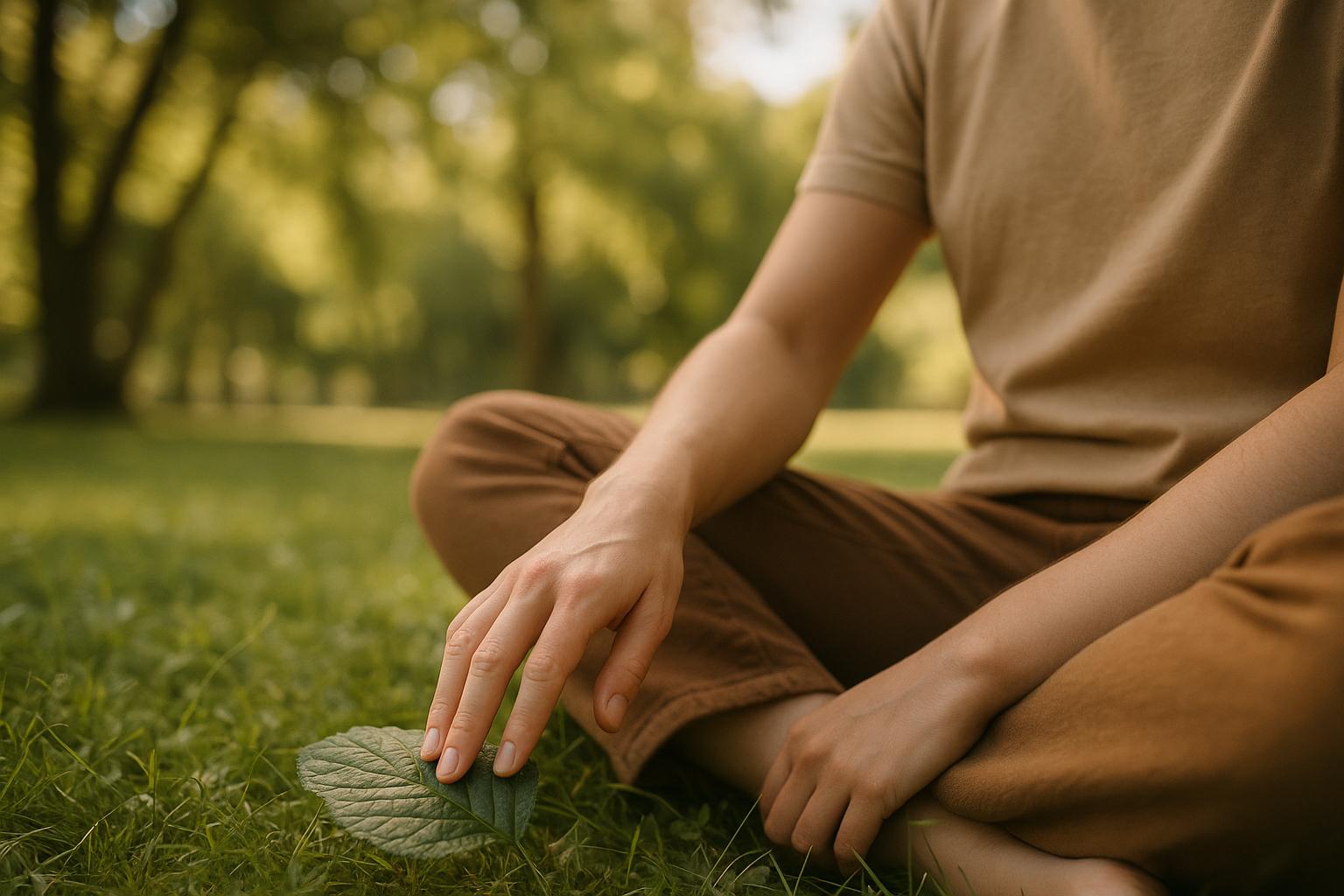


Want to feel calmer and more present while walking? Mindful walking turns a simple daily activity into a practice that benefits your mind and body. By focusing on your steps, breathing, and surroundings, you can improve stress levels, mood, and even physical health.
Here’s what you’ll learn:
- How mindful walking differs from regular walking.
- Proven health benefits like reduced stress and better blood pressure.
- Step-by-step tips to make mindful walking a habit.
- Techniques and mindfulness practices for both beginners and advanced practitioners.
Mindful walking doesn’t require extra time or equipment. Whether you’re strolling in a park or walking to your car, it’s about being fully present with each step. Let’s dive into how you can start today.
Benefits of Mindful Walking
Stress Reduction and Relaxation
Mindful walking helps calm the nervous system by shifting it from a "fight-or-flight" mode to a "rest-and-digest" state. This change slows the heart rate and reduces physical tension. The setting of your walk plays a key role in stress relief. For example, a study conducted at Walter Reed National Military Medical Center (September 2018 to November 2019) revealed that participants walking a 1.2-mile woodland path experienced a 53% drop in saliva cortisol levels, compared to a 37% reduction when walking an urban route. They also saw a 104% increase in heart rate variability (RMSSD), a marker of relaxation. Simply put, walking in nature offers deeper stress relief than city sidewalks.
Emotional Regulation and Mood
Mindful walking helps break free from draining mental patterns. Paying attention to sensations like your breath or the feel of your feet on the ground interrupts cycles of rumination and autopilot thinking. Research shows this practice creates an "upward spiral", where increased mindfulness during a walk boosts positive emotions, which in turn help sustain mindfulness.
Behavioral Health Therapist Benjamin Perko from the Cleveland Clinic explains it well:
"Like a drumbeat, rhythmic movement can physiologically get us back to a baseline where we're able to focus on the task at hand and be more mindful of what's happening in the moment."
Mindful walking also enhances creative thinking. Studies link it to improved divergent thinking, which supports better problem-solving. Beyond mental health, this practice benefits the body as well.
Physical Health and Low-Impact Exercise
Mindful walking isn't just good for the mind - it also offers physical advantages. It can improve balance, strengthen ankle stability, enhance posture, and support cardiovascular health. For individuals with chronic conditions, the benefits are even more pronounced. In one study, people with type 2 diabetes who practiced mindful walking saw greater improvements in HbA1c levels, blood pressure, and arterial stiffness compared to those who walked traditionally.
The mental health benefits are equally impressive. A meta-analysis of 75 randomized controlled trials involving over 8,600 participants found that walking significantly reduces symptoms of depression and anxiety. Its effects were comparable to practices like yoga, tai chi, and even cognitive behavioral therapy. Committing to just 30 minutes of mindful walking three times a week is enough to see noticeable improvements in both physical and mental well-being.
Guided Walking Meditation: Mindful Walk in Nature
How to Practice Mindful Walking

Mindful Walking Variations: Which Style Is Right for You?
Step-by-Step Guide to Mindful Walking
Start your mindful walking practice by standing still for a minute or two. Take this time to observe your natural breathing and let your hands rest comfortably. This pause serves as a signal to yourself that this walk is meant to be intentional and mindful.
As you begin to move, break each step into four distinct phases: lifting (heel rising), moving (swinging the foot forward), placing (touching the ground), and shifting (transferring your weight). This method, inspired by the Theravada tradition, slows your movements enough to help you fully notice each part of the process. Gradually, expand your awareness from your feet to your entire body, and then to the sounds, smells, and sights around you.
If your mind starts to wander, gently bring your focus back without frustration. Here are some helpful tips:
- Maintain a soft gaze about 6–8 feet ahead, rather than looking down at your feet.
- Sync your breathing with your steps - for example, take two to three steps as you inhale and three to five as you exhale.
- Count your steps from one to ten, then repeat, to help steady a restless mind.
Conclude your walk just as you started - by standing still for a moment. Notice the sensation of being grounded before transitioning to the rest of your day.
Once you're familiar with these techniques, the next step is to find an environment that supports your practice.
How to Choose the Right Environment
The beauty of mindful walking is that it doesn’t require a specific setting. Whether it’s a hallway, a backyard, a city sidewalk, or a quiet park, the key is choosing a space where you feel safe and relatively at ease.
For beginners, indoor spaces can be particularly helpful. With fewer distractions, it’s easier to focus on internal sensations. Walking barefoot or in thin socks indoors can enhance your awareness, as the floor’s texture provides extra sensory feedback. To stay focused, set up a short "lane" of about 10 paces and walk back and forth, instead of wandering aimlessly.
Outdoor spaces, on the other hand, bring their own benefits. Studies on "green exercise" show that physical activity in natural environments, like parks or wooded trails, can improve mood and reduce anxiety more effectively than exercising indoors. If you have access to a park or a tree-lined path, take advantage of it. In urban areas, the environment itself becomes part of the practice - notice the hum of traffic, the smell of coffee from a nearby café, or the feel of the pavement underfoot. Acknowledge these elements as part of your awareness without judgment.
Once you’ve found a suitable environment, you can experiment with different styles of mindful walking to see what works best for you.
Variations of Mindful Walking
Mindful walking is flexible and can easily fit into your routine, whether you have a dedicated practice or want to bring mindfulness into everyday moments.
Formal practice involves setting aside 10–30 minutes to walk with no destination or errands in mind. You typically walk a short, straight path back and forth, focusing entirely on the act of moving. Informal practice is less structured - you simply bring mindful awareness to your everyday walks, such as heading to your car or walking from one room to another. Both approaches help develop mindfulness skills.
Here’s a quick overview of mindful walking variations:
| Variation | Best For | Key Focus |
|---|---|---|
| Formal (lane walking) | Beginners, deep concentration | Internal sensations, four-step breakdown |
| Informal (daily walks) | Busy schedules | Breaking out of autopilot during routine movement |
| Nature-based (forest bathing) | Stress relief, mood improvement | Engaging with natural surroundings |
| Kinhin (Zen circle walking) | Structured mindfulness | Slow, deliberate movement with proper posture |
| Breath-synchronized walking | Managing anxiety or restlessness | Matching steps to your breathing rhythm |
For those with limited mobility, these mindfulness principles can be adapted through chair yoga. By focusing on upper body movements and mindful breathing, you can cultivate the same sense of presence and awareness.
sbb-itb-bea8dce
Adding Mindful Walking to Your Daily Routine
How to Build a Consistent Habit
Finding time is often the biggest challenge when starting a new habit. Mark Bertin, MD, explains it well:
"Whether moving between floors of a building, on a city street, or in the woods, it is an opportunity to guide ourselves out of the distracted autopilot we live in."
One way to make mindful walking part of your day is to tie it to activities you already do. Think about walking from the parking lot, heading to the break room, or taking a quick lap during lunch. Even 2–3 minutes of focused attention during these routine walks can help you build the habit over time.
Before you start walking, take a moment to set an intention. Pause and consciously decide to stay present instead of letting your mind wander to your to-do list. That simple decision transforms an ordinary walk into a mindful experience.
Adjusting Mindful Walking for Different Needs
Once you’re in the rhythm of mindful walking, you can tweak the practice to fit your goals. If you’re looking for stress relief, try syncing your breathing with your steps - inhale for three steps, exhale for three. This rhythmic breathing helps calm your nervous system and shift your body out of stress mode.
For those dealing with anxiety or emotional challenges, focus on labeling each movement - lifting, moving, placing, shifting. This technique helps ground your attention in your body and away from racing thoughts. If you feel overwhelmed, pause for a moment, stand still, and reset before continuing.
If you have physical limitations, you can still bring mindfulness into movement. Practices like chair yoga allow you to focus on upper body movements and breath instead of walking. The key is staying present with your body, no matter how you move.
Using The Mindfulness App for Support

Structured guidance can make it easier to stay consistent. The Mindfulness App offers guided walking meditations and more than 500 tracks in 12 languages, covering topics like stress management, sleep, and personal growth. For beginners, the app’s audio guides are a great way to stay focused without needing to memorize techniques.
The app also features mindfulness courses ranging from single-day introductions to 10-day programs, offering a step-by-step approach to deepen your practice. In fact, a 2013 study found that adding just 10 minutes of walking meditation to regular sessions significantly reduced psychological stress and improved quality of life. With a 14-day free trial of the premium library, you can explore these resources and build a foundation for your routine before deciding to continue long-term.
Overcoming Challenges and Staying Safe
Common Challenges and How to Handle Them
For beginners, a wandering mind can be one of the biggest hurdles. The key is to notice when your focus drifts and gently guide it back. This process of returning is at the heart of the practice. As Ajahn Chah wisely put it:
"When the attention wanders, stand still and then gently bring it back. This returning is the practice itself."
If boredom creeps in, try switching up your focus. On one day, listen closely to the sounds around you. On another, sync your steps with your breathing. Changing techniques like this keeps things fresh while staying true to the practice’s purpose.
Feeling self-conscious in public spaces is another common challenge. To ease this, maintain a natural pace - it helps you stay grounded and less focused on others. If the discomfort persists, start in a private space like your backyard, a quiet room, or even a hallway until you feel more confident.
Beyond these internal challenges, there are practical steps to ensure safety and comfort during your practice.
Staying Safe and Comfortable
Safety starts with simple, mindful choices. Keep your gaze soft and directed about 6 to 10 feet ahead of you, rather than staring at your feet. This approach not only keeps you aware of your surroundings but also reduces visual distractions.
Footwear matters too. Indoors, thin-soled shoes or even socks can heighten your sensory connection. Outdoors, choose supportive shoes that match the terrain to ensure stability. In urban areas, stay alert by listening for traffic and observing changes around you. As Mark Bertin, MD, explains:
"Paying attention in this way, we stay safe by remaining fully aware of whatever is around. On any walk, hike, run, or other physical activity, without effort we may mentally check out - or we can practice awareness instead."
Even the act of turning around can become part of your mindfulness. When you reach the end of a path, slow down, turn intentionally, and use that moment to refocus your attention.
Managing Difficult Emotions During Practice
Emotions can surface unexpectedly during mindful walking, and it’s helpful to have tools to handle them. The pause technique is one such tool: stop, feel your feet on the ground, take deep, slow breaths, and resume once you feel centered. This mirrors the earlier advice on gently refocusing when distractions arise. If emotions feel overwhelming, shift your attention to external sensations - the texture of the ground, the temperature of the air, or nearby sounds. This sensory focus provides an anchor for your mind.
For persistent, intrusive thoughts, try labeling them silently. Words like "worrying", "planning", or "remembering" can help you acknowledge the thought without judgment, making it easier to return your focus to your steps. Benjamin Perko, a behavioral health therapist at Cleveland Clinic, offers this reminder:
"Distraction is a symptom of life. It's a symptom of what we're going through and it's part of what makes us human."
Simple grounding phrases like "Just this" or "Here, now" can also help you stay present with each step. The goal isn’t to suppress emotions but to remain present with them, allowing them to come and go without pulling you away from the moment.
Conclusion
Mindful walking offers an easy way to bring more awareness into your daily life by learning how to start a daily mindfulness practice. It doesn’t demand special gear, a gym membership, or extra time. As Jon Kabat-Zinn beautifully puts it:
"Walking meditation is not about getting somewhere on foot. Instead, you are being with each step, fully here, where you actually are."
By turning your everyday steps into mindful daily rituals, you can enhance both mental and physical well-being. Studies back this up: a 2024 randomized controlled trial found that just 20 minutes of walking meditation daily for six weeks significantly reduced occupational stress in healthcare professionals. Similarly, research from 2018 revealed that mindful walking lowered blood pressure more effectively than regular walking.
Whether it’s a short walk to your car, a quick loop around the block, or a leisurely stroll with your dog, these moments can become opportunities to practice mindfulness. If you’re looking for extra guidance, The Mindfulness App offers over 500 guided meditations and courses in 12 languages, with a free 14-day trial to get started.
Take a step, notice the moment, and embrace being present.
FAQs
How is mindful walking different from a normal walk?
Mindful walking shifts the act of moving from one place to another into an experience of intentional presence. Instead of letting your mind wander or juggling thoughts as you walk, this practice encourages you to tune into the moment. Pay attention to the rhythm of your breath, the way your body balances with each step, or the feeling of your feet meeting the ground. By focusing on these sensations, walking becomes more than just a physical activity - it turns into a moving meditation that helps anchor you, no matter where you are.
How long do I need to practice to feel benefits?
Consistent mindful walking, even in short bursts, can bring real benefits. Research indicates that just 10 minutes a day can lower stress and boost overall well-being in as little as 30 days. If you up that to two 10–15 minute sessions daily, you might notice changes within 2–3 weeks.
The key is sticking with it. Even short five-minute walks can strengthen focus and help stabilize emotions over time. Need a little support? Tools like The Mindfulness App can help you stay on track with your daily practice.
Can I do mindful walking if I have limited mobility?
Yes, mindful movement is absolutely possible even with limited mobility. For individuals who use a wheelchair, focusing on the sensations in your arms and hands as you move can be a powerful way to practice mindfulness. If walking isn’t an option, you can apply similar mindfulness techniques to activities like chair yoga or other upper-body movements. These practices encourage mindfulness and presence, offering benefits similar to traditional walking meditation.
.jpeg)