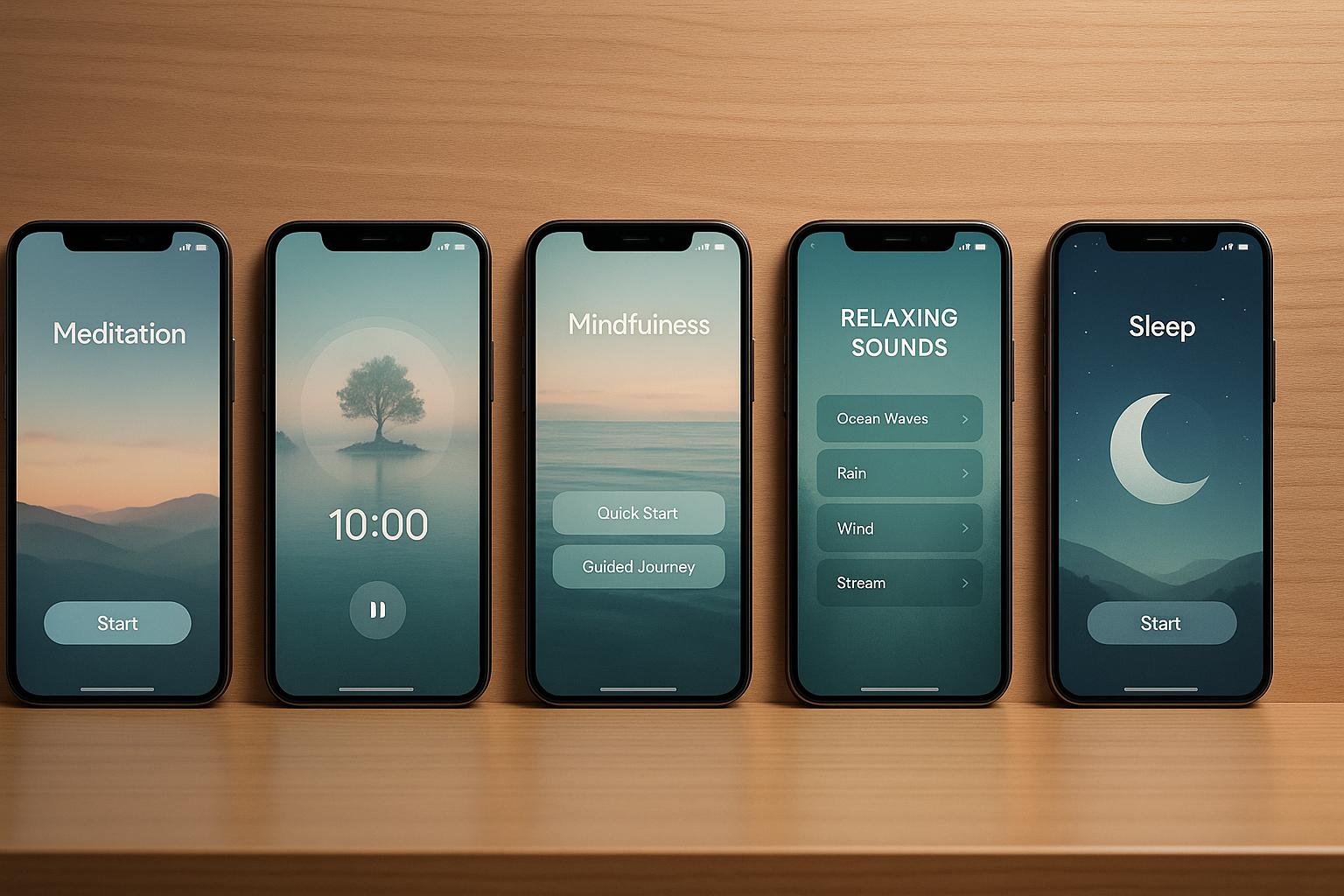


Mindful breathing is a simple way to reduce stress, improve focus, and enhance emotional control. By paying attention to your natural breath, you can activate your body's relaxation system and calm your mind. Here’s a quick overview of how to integrate it into your day:
- Morning: Start your day with 3 slow breaths before checking your phone or while waiting for your coffee to brew.
- Work Breaks: Take 3 deep breaths to reset during busy moments or try the 4-4-6 pattern before a big meeting.
- Evening: Use the 4-7-8 technique or slow breathing to relax before bed and improve sleep quality.
Even 1 minute of mindful breathing can make a difference. Start small, stay consistent, and pair it with daily habits like brushing your teeth or sitting at your desk. Tools like reminders or apps can help you stay on track. Your breath is always with you - use it to find calm and clarity.
Mindfulness in Motion: 4-7-8 breathing for anxiety | Ohio State Medical Center

sbb-itb-bea8dce
What Is Mindful Breathing?
Mindful breathing involves deliberately focusing on the natural rhythm of your breath without altering it or judging it. It’s about noticing the sensations: the rise and fall of your chest, the cool air entering your nostrils, and the subtle pause between inhales and exhales. This simple act can spark measurable changes in both your brain and body.
Unlike deep breathing, which actively changes your breath to bring quick relief, mindful breathing is all about observing your natural rhythm without trying to control it.
"Mindful breathing is not a technique you add to your life. It is a faculty of attention you restore to what is always already present." - Sagely Suggestions
The breath serves as an ideal anchor to the present moment. It’s always there, steady and neutral - unlike thoughts or memories, which can easily pull you in different directions.
The Science Behind Mindful Breathing
The effects of mindful breathing on the body and brain are fascinating. When you focus on your breath, you activate the prefrontal cortex, which governs decision-making and emotional regulation, while calming the amygdala, the part of the brain that detects threats. This balance helps you feel more in control and less reactive.
Additionally, slightly slowing your breath increases carbon dioxide levels, which acts as a natural vasodilator. This allows more oxygen-rich blood to flow to your brain and heart. The practice also stimulates the vagus nerve, which helps initiate the body’s "rest and digest" response, promoting relaxation.
Benefits of Mindful Breathing
The benefits of mindful breathing are well-documented. A 2023 meta-analysis of 12 randomized controlled trials, involving 785 participants, showed that breath-focused practices significantly reduced self-reported stress levels. Another large-scale study published in Nature Human Behaviour tested 2,239 participants across 37 sites, confirming that mindful breathing was more effective than other active control methods for reducing short-term stress.
Consistent practice offers a wide range of benefits, including:
- Sharper focus: Redirecting your attention back to your breath enhances attentional control over time.
- Improved emotional regulation: Calming the amygdala helps you respond more thoughtfully in stressful situations.
- Better sleep: Conscious breathing encourages physical relaxation, promoting the release of melatonin, which signals your body to prepare for sleep.
- Reduced anticipatory anxiety: Breathing at around six breaths per minute has been shown to lower "beta power" in the brain, easing anxiety about uncertain situations.
One often-overlooked benefit is the development of metacognitive awareness - the ability to notice your thoughts without becoming consumed by them. Each time your mind drifts and you gently guide it back to your breath, you strengthen the skill of seeing thoughts as temporary events rather than absolute truths. Dr. Melissa Young, an Integrative Medicine Specialist at Cleveland Clinic, explains:
"The mind is active, so you can't actually make it stop thinking. Part of learning these techniques is to become aware of when your mind is wandering."
This awareness, when cultivated regularly, lays the foundation for meaningful change. With these benefits in mind, the next section will explore how to seamlessly integrate mindful breathing into your daily life.
How to Practice Mindful Breathing
You don’t need any special tools or experience to get started. Just carve out a few minutes of your day and focus your attention.
Step 1: Create a Comfortable Space
Find a position that feels good - whether sitting upright with your back relaxed or lying down. Let your hands rest naturally on your knees or in your lap. If sitting isn’t your thing, lying down works perfectly fine.
Step 2: Try the Breathing Technique
Diana Winston, Director of Mindfulness Education at UCLA's Mindful Awareness Research Center, explains it simply:
"The most basic way to do mindful breathing is simply to focus your attention on your breath, the inhale and exhale."
Start by taking a slow, deliberate breath: inhale through your nose for 3 seconds, hold it for 2 seconds, and exhale through your mouth for 4 seconds. After that, let your breathing settle into its natural rhythm. Focus on an anchor point, like the cool sensation of air at your nostrils, the movement of your chest, or the rise and fall of your belly. If your mind starts to wander, gently notice it without judgment - maybe label it as "thinking" - and bring your focus back to your breath.
Once you’ve got the hang of the technique, it’s time to decide how long you want to practice.
Step 3: Choose the Right Duration
Even a short session can make a difference - 10 minutes of mindful breathing has been shown to improve mental clarity and reduce stress. If you’re new to this, start small with just 60 seconds or 5 minutes.
Here’s a guide to help structure your practice as it develops:
| Practice Stage | Recommended Duration | Primary Goal |
|---|---|---|
| Micro-Practice | 3 breaths or 1 minute | Quick reset for the nervous system during busy moments |
| Beginner (Weeks 1–2) | 5–10 minutes | Building awareness of your breath and learning to let go of judgment about distractions |
| Intermediate (Weeks 3–4) | 10–15 minutes | Improving focus and becoming more aware of distractions |
| Established (Weeks 5–8) | 15–25 minutes | Helping reduce reactive thought patterns in everyday life |
The key is to keep it manageable and stress-free. If you ever feel overwhelmed, cut the session short - even 30 seconds of mindful breathing can help. Guy Fincham, Founder of the Breathwork Lab at Brighton & Sussex Medical School, emphasizes:
"The aim is to remove layers of stress, not create more. Breathing should never be forced or strained."
Adding Mindful Breathing to Your Daily Routine

Mindful Breathing Daily Routine: Morning, Work & Evening Guide
Now that you’ve got the basics down, it’s time to bring mindful breathing into your everyday life. The best part? You don’t need to clear extra time in your schedule - mindful breathing can fit right into what you’re already doing.
Morning Routine
Start your day on a calm and focused note. A 2017 study in Frontiers in Psychology revealed that diaphragmatic breathing can lower cortisol levels and improve attention. This shift helps move your body from a reactive "fight or flight" mode to a more relaxed and centered state.
A simple way to begin is by pausing before you check your phone. Sit on the edge of your bed and take three slow breaths, inhaling through your nose and exhaling through your mouth. Want to take it a step further? Try the Kettle Pause - while waiting for your water to boil, practice Box Breathing: inhale for 4 counts, hold for 4, exhale for 4, and hold for 4 again. It only takes a couple of minutes.
"Feelings come and go like clouds in a windy sky. Conscious breathing is my anchor." - Thich Nhat Hanh
To make this habit stick, try pairing it with something you already do, like brushing your teeth. This way, mindful breathing becomes second nature, setting a calm tone for the rest of your day.
Work Breaks
Keep that morning calm going by weaving mindful breathing into your work breaks. With endless meetings and notifications, mental fatigue can creep up fast. A quick reset is easy: close your laptop, plant your feet firmly on the ground, and take three deep breaths. For an extra grounding effect before big presentations or calls, try the 4-4-6 pattern - inhale for 4 counts, hold for 4, and exhale for 6.
Research shows that even 10 minutes of mindfulness during the workday can reduce stress and boost focus. You can also physically disconnect for a moment by flipping your phone face down or shutting your laptop. These small actions create mental space, helping you recharge before diving back into work.
Evening Wind-Down
End your day with a breathing exercises for anxiety relief to prepare your body for rest. Many adults in the U.S. get less than 7 hours of sleep, but a consistent evening breathing practice can help improve sleep quality.
Start 15–30 minutes before bed. The 4-7-8 technique - inhale for 4 seconds, hold for 7, and exhale for 8 - has a soothing effect on both body and mind. A 2022 study found that slowing your breathing to around six breaths per minute before bed can enhance sleep stability, especially for those with insomnia. For an added layer of relaxation, combine 5–10 minutes of slow breathing with a body scan. Lie in bed and focus on sensations from your head to your toes.
If you’d like some extra guidance, check out The Mindfulness App. It offers over 500 tracks, including sleep stories and mindfulness courses in multiple languages. Plus, you can try it free for 14 days to get started.
Building a Consistent Practice
Starting a new habit is one thing, but sticking with it day after day? That’s where the real challenge lies. Mindful breathing is no exception. The good news? Small, steady efforts will always outshine sporadic, lengthy sessions.
Start Small and Stay Consistent
Studies suggest that practicing mindfulness for just 12 minutes a day, 5 days a week can improve your focus under stress. If that feels like a lot, start with just 3–5 minutes daily. Even a brief, consistent practice creates a solid foundation.
The key is frequency, not duration. For example, taking three conscious breaths ten times a day can benefit your nervous system more than a single 30-minute session once a week. One easy way to build this habit is through habit stacking - pair mindful breaths with something you already do. Try taking a slow exhale before starting your car or a mindful breath each time you walk through a doorway. These small, practical cues help weave mindfulness into your daily routine.
"The most important moment in your meditation practice is the moment you sit down to do it." - Sharon Salzberg, Author and Meditation Teacher
And don’t worry if your mind wanders - that’s part of the process. Just notice it and gently refocus.
Use Tools for Support
A little structure can make a big difference. Apps like The Mindfulness App offer features like time- or location-based reminders to help you stay on track, even on busy days. With over 500 guided tracks in 12 languages and integration with Apple Health, it’s designed to meet you where you are in your practice - whether you’re just beginning or looking to deepen your routine. Over 6 million users have logged more than 180 million mindful minutes using the app. You can even try it free for 14 days to see if it fits your needs.
Physical cues work well too. A sticky note on your desk, a yoga mat in a visible spot, or a simple phone alarm can act as gentle reminders to pause and breathe. These small tools help anchor mindful breathing into your everyday life.
Track Progress and Celebrate Milestones
Progress with mindful breathing might not always be obvious, but it’s there. For instance, a 2024 study found that practicing mindfulness for 10 minutes a day over 30 days improved well-being and reduced depression compared to a control group. Similarly, practicing 5–10 minutes daily, at least 5 days a week for a month, has been linked to reduced cortisol levels and slight improvements in heart rate variability.
Instead of striving for perfection, look for subtle signs of progress - falling asleep more easily, staying composed during tough conversations, or noticing physical tension before it builds up. As neuroscientist Amishi Jha from the University of Miami explains:
"The goal is not to chase scores. The point is to bring the trained capacities into their daily activities."
Try logging your mood before and after each session. It’s a simple way to track progress and keep your motivation strong.
Conclusion: Start Your Mindful Breathing Practice Today
Mindful breathing doesn’t require anything beyond your attention. Breathing is something you already do - it’s just about bringing awareness to it.
Studies suggest that dedicating just 10 minutes a day to mindful breathing can significantly boost your well-being. It’s normal for your thoughts to wander; that’s part of the process. As Amanda McNab, a Licensed Clinical Social Worker at Huntsman Mental Health Institute, explains:
"The goal isn't to clear your mind - it's to notice it." - Amanda McNab
Start right now: take a deep, slow breath in, then exhale gently. Begin with short sessions and gradually increase the duration. With consistent practice over six months, mindfulness can become second nature, bringing a sense of calm and clarity as you build mindful daily rituals.
If you’re looking for guidance, The Mindfulness App is a great resource. It features over 500 guided tracks, reminders to stay on track, and courses in 12 languages. Plus, the 14-day free trial makes it easy to explore. According to their data, 89% of users felt noticeably calmer after just one week of practicing for five minutes a day.
Your breath is always within reach - take a moment to connect with it.
FAQs
Should I change my breathing or just notice it?
Both methods can be effective - it all depends on what you're aiming to achieve. Traditional mindful breathing emphasizes simply observing your natural breath without judgment. You might focus on sensations like the air moving through your nostrils or the rise and fall of your belly as anchors for your attention. If you find it challenging to settle, a bit of gentle breath control can help.
On the other hand, if you're looking for specific physical effects, more active breathing techniques might be the way to go. Regardless of the approach, the real key lies in staying focused and gently bringing your attention back to your breath whenever your mind starts to wander.
What if mindful breathing makes me feel anxious or lightheaded?
If mindful breathing feels uneasy, don't push yourself or strive for perfection. Instead, take a softer approach: keep your eyes open or partially closed, lower your gaze, and shift your attention to external sensations like surrounding sounds or the texture of the floor. You might also experiment with an exhale-focused 'physiological sigh' or simply let your breath flow naturally without trying to control it. If the discomfort continues, it’s okay to take a break and consider reaching out to a professional for guidance.
How do I remember to do mindful breathing during a busy day?
To make mindful breathing a consistent practice, consider setting reminders for short pauses throughout your day, especially between tasks or during transitions. Simple techniques like the 3-Breath Reset or taking just 2–5 minutes to focus on your breath can make a big difference. Starting your morning with mindful breathing or using meditation apps for guidance can further strengthen this habit, keeping you grounded and present, even when life feels hectic.