


Small habits can help couples feel closer and fight less. In one study of 500+ couples, just 2 weeks of mindfulness work was linked with less relationship distress and higher satisfaction.
If I had to sum up this article in one line, it would be this: you do not need long routines - just short, repeatable moments of attention.
Here’s the full snapshot:
- Guided meditation helps both partners slow down and reset
- Mindful listening helps each person feel heard
- Shared breathing can calm tense moments fast
- Daily gratitude adds warmth in under a minute
- Loving-kindness shifts focus from blame to care
- Conflict pauses help stop sharp reactions before they spill out
- Device-free time protects attention in everyday life
- Mindful walks make space for calm connection
A few numbers stand out:
- Couples who turn toward bids for connection do it about 86% of the time, vs. 33% for couples who later divorce
- 10 days of app-based mindfulness practice cut irritability by 27%
- Daily mindfulness habits were tied to 41% fewer conflicts
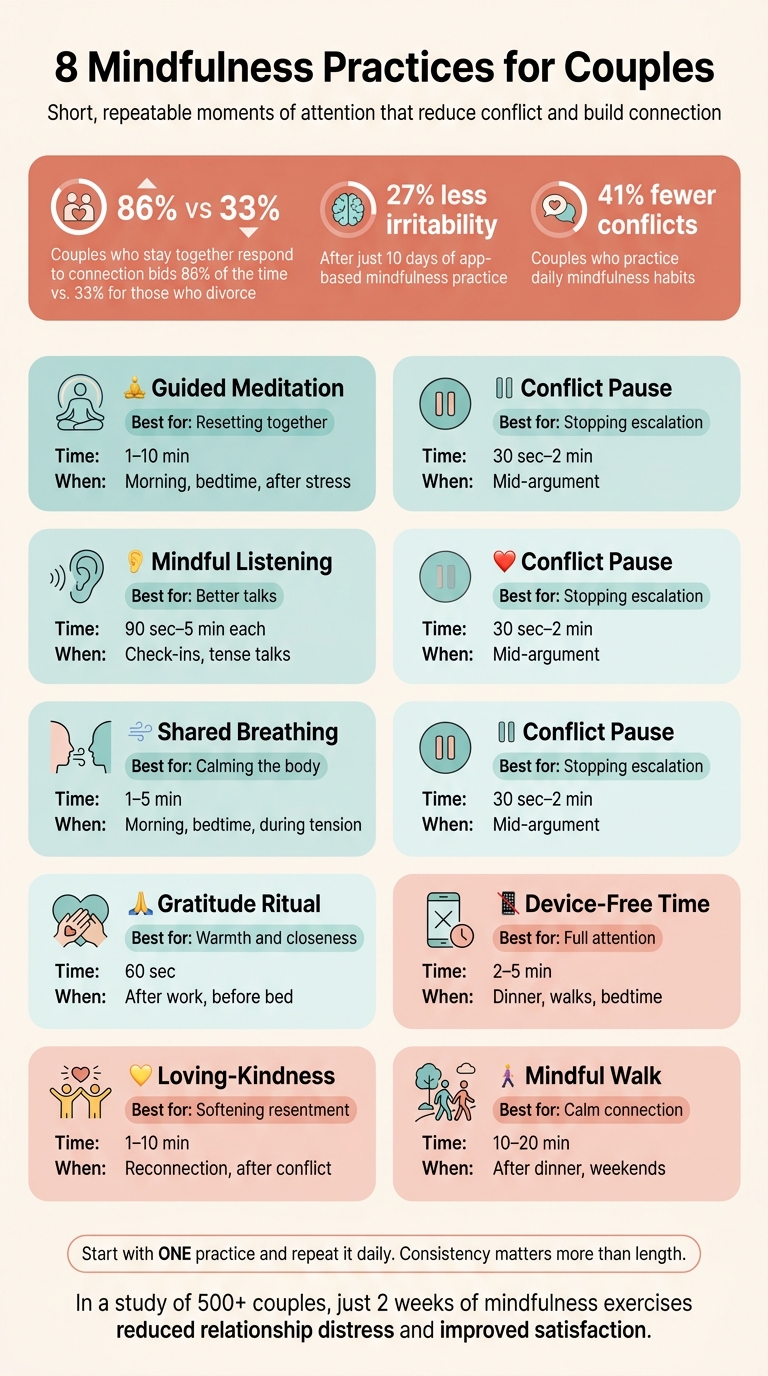
8 Mindfulness Practices for Couples: Quick-Reference Guide
TU09: Minding Your Relationship- Three Mindfulness Exercises to Practice With Your Partner
Quick Comparison
| Practice | Best for | Time | When to use |
|---|---|---|---|
| Guided meditation | Resetting together | 1–10 min | Morning, bedtime, after stress |
| Mindful listening | Better talks | 90 sec–5 min each | Check-ins, tense talks |
| Shared breathing | Calming the body | 1–5 min | Morning, bedtime, during tension |
| Gratitude ritual | Warmth and closeness | 60 sec | After work, before bed |
| Loving-kindness | Softening resentment | 1–10 min | Reconnection, after conflict |
| Conflict pause | Stopping escalation | 30 sec–2 min | Mid-argument |
| Device-free time | Full attention | 2–5 min | Dinner, walks, bedtime |
| Mindful walk | Calm connection | 10–20 min | After dinner, weekends |
Bottom line: if you want a better connection, start with one small practice and do it often. That’s the core idea behind the whole article.
How Mindfulness Helps Couples Stay Connected
Mindfulness in relationships is pretty simple at its core: noticing what’s happening inside you and between you, then responding with care instead of running on autopilot. In day-to-day life, that usually shows up in small choices, not big gestures.
What mindfulness looks like in a relationship
In real life, mindfulness can look like putting your phone down when your partner starts talking. It can mean noticing your own tension before a hard conversation begins, or paying attention to your partner’s tone and body language before you decide what to say next.
It also means noticing small bids for connection and turning toward them. Couples who stay together respond to those bids 86% of the time, compared with 33% for couples who later divorce.
How it supports communication and conflict repair
Mindfulness creates a pause between a trigger and your reaction. That pause gives you a chance to respond in a calmer, more skillful way instead of snapping, shutting down, or getting defensive.
It can also lower negative affect for both partners, even on days when only one person is practicing mindfulness.
Why small daily moments matter
Small daily moments often matter more than long routines. They help a relationship feel close on regular, ordinary days, which is where most of life happens.
A genuine hug, a minute of shared breathing, or a specific word of thanks can go a long way. The practices below turn those ideas into simple daily habits.
1. Using Guided Meditations With The Mindfulness App
A short guided meditation can give both of you a calm reset. The Mindfulness App has 500+ exclusive tracks in 12 languages, so it’s pretty easy to find something that matches where you are right now.
Once you settle into a shared routine, use it for more than simple relaxation. Meditating together can help build presence, empathy, and emotional closeness. Tracks like Loving-Kindness and Body Scan can be especially helpful for that.
Keep it small so it works in normal life. Aim for 5 to 10 minutes in the morning or before bed. If the day gets hectic, even a 1-minute reset can help.
Step-by-step couple format
- Pick a quiet spot where you won’t be interrupted. A living room corner or the backyard can both work.
- Get comfortable sitting or lying down. If it feels natural, match each other’s position.
- Choose a guided track in The Mindfulness App, like a breathing session, a Loving-Kindness meditation, or a Body Scan.
- Close with a check-in by placing a hand over each other’s hearts or sharing one takeaway.
After tension, you can also use the same guided session as a reset before talking things through. Just 10 days of app-based mindfulness practice has been shown to reduce irritability by 27%. The point isn’t to dodge hard feelings. It’s to pause long enough to respond with more care, then come back to the conversation when both of you feel steadier.
2. Mindful Listening Sessions
After the guided meditation, use this practice to carry that calm into an actual conversation. Most couples talk a lot, but listening with your full attention is much less common. Mindful listening means hearing your partner without drafting your reply, defending yourself, or jumping in to fix things. Research from the Gottman Institute shows that couples who practice mindful listening report higher relationship satisfaction. When you listen without an agenda, your partner feels seen instead of managed. That sense of emotional safety supports lasting intimacy and makes repair easier.
Best timing and duration
Start with 90 seconds each. For deeper talks, aim for 2.5 to 5 minutes per person. Pick a steady time when both of you can be present, like after breakfast, after work, or before bed.
Step-by-step couple format
- Set a timer for 90 seconds to 5 minutes per person.
- One partner speaks using I statements while the other listens without interrupting, fixing, defending, or rehearsing a reply.
- The listener reflects with a short summary, such as "What I heard was…" and names the main feeling.
- The listener asks Did I get that right? before switching roles.
After your partner finishes, take three slow breaths before you respond. It sounds simple, but that short pause can stop a hard moment from spiraling. It gives you a beat to settle yourself before you speak.
Conflict-support value
This practice helps most after tension. It creates a pause, notice, name, choose sequence that lets you step back into hard conversations with less reactivity. In plain English, it helps you slow down, understand each other, and come back to the topic with a steadier head. If the talk starts getting heated, pause and breathe together before continuing.
3. Shared Breathing and Body Awareness
When a conversation starts to heat up, pause and reset together with breath and body awareness. Shared breathing helps couples slow down, ease stress, and feel more in sync. When your breathing starts to match, you both tend to settle. A tense moment shifts into a moment of shared focus.
Connection-building benefit
Shared breathing can bring you closer. You can pair it with a 20-second hug to add to the calming effect. Couples who practice daily mindfulness habits like this report 41% fewer conflicts and higher communication satisfaction.
Best timing and duration
A short version works well in the morning for 60 seconds. At night, you can stretch it to 5 minutes.
Step-by-step couple format
Here’s a simple way to do it:
- Sit facing each other and try four-count box breathing: inhale for 4 seconds, hold for 4, exhale for 4, pause for 4.
- For a body-awareness reset, lie side by side and notice three points of contact - your shoulders, hands, or feet. Keep your attention there to stay present with each other.
Conflict-support value
When tension rises, stop talking and take three slow breaths together before you start again. During the pause, place a hand on your partner's shoulder. That small break can lower reactivity and make the next response less guarded.
Once you feel more settled, use that calmer state for a warmer check-in.
4. Daily Gratitude and Appreciation Ritual
After a shared breathing reset, a daily gratitude ritual can help you feel close again. It pulls both of you out of task mode and back into the moment with each other.
Connection-building benefit
Specific appreciation builds warmth and a steadier bond. And it doesn’t take long to make a difference. Research shows that after just two weeks of mindfulness and appreciation exercises, couples report much less relationship distress and higher satisfaction.
The key is being specific. “I appreciated that you handled the repair call” hits with more weight than “you’re great”. One tells your partner what mattered. The other is nice, but vague.
Best timing and duration
Keep it short and make it daily: 60 seconds is enough. After work or before bed tends to work well because those moments already fit into the day. The easier move is to attach it to something you already do.
Step-by-step couple format
Each partner shares one specific thing the other person did and how it helped.
For example:
“I appreciated that you took care of the repair call. It took one thing off my plate, and I felt less stressed.”
Use this as a quick daily reset before you move into tougher conversations.
Conflict-support value
Daily appreciation builds more warmth, less defensiveness, and easier repair. Expressing fondness and admiration is a direct antidote to contempt, the most destructive behavior in relationships. So if a hard talk is coming, start with one specific appreciation to lower defensiveness.
sbb-itb-bea8dce
5. Loving-Kindness Meditation for the Relationship
If gratitude points to what your partner does, loving-kindness turns your attention to who they are.
This practice is also called metta. It starts with yourself and then extends to your partner.
Connection-building benefit
Loving-kindness can help couples actively wish each other well, instead of only trying to think positive thoughts. That small shift matters. It moves your focus away from your own reaction and toward your partner’s well-being, which can build closeness and ease emotional distance.
That’s why this practice works so well when you want more warmth but don’t need to fix the whole issue on the spot.
Best timing and duration
You can keep this short or give it a little more room, depending on the moment. A 60-second reset works well for a quick reconnection, 5 minutes fits daily practice, and 10 minutes can help after conflict.
| Format | Duration | Best Used For |
|---|---|---|
| Silent wishes | 60 seconds | Quick reconnection during busy mornings |
| Spoken mantras | 5 minutes | Deeper intimacy and emotional safety |
| Guided compassion meditation | 10 minutes | Softening defensiveness and conflict repair |
Step-by-step couple format
Do this face-to-face so it feels shared, not like two people doing separate solo exercises in the same room. Sit across from each other and begin with yourself by silently repeating, "May I be safe, healthy, and loved".
Then move to your partner.
- In the silent version, look at your partner and think three wishes: "May you feel safe. May you feel loved. May you feel seen"
- In the spoken version, say those wishes out loud while making brief eye contact, then switch turns
That eye contact can make the moment feel more personal and emotionally present.
Conflict-support value
After tension, this same practice can help both people come back to the conversation with less sharpness. Loving-kindness meditation can lower resentment and build goodwill after a hard moment.
It won’t make the conflict disappear. But it can take some of the edge off, soften defensiveness, and make repair feel a bit more within reach.
6. Mindful Conflict Pause and Emotion Check-In
When a talk starts sliding from tense into reactive, use this reset before you keep going. As stress builds, a mindful pause gives both people a moment to step back, notice what’s happening in the body, and choose a calmer reply. In the middle of an argument, that small gap can help you catch escalation before it spills out. The point isn’t to end the conversation. It’s to keep the conversation usable.
Connection-building benefit
This pause helps because it puts space between the trigger and the reply. That small bit of room can make repair easier. When you name the feeling out loud, the intensity often drops, and the next response is less defensive.
Best timing and duration
The right time to use a pause is as soon as you notice escalation: a tight jaw, a racing heart, shallow breathing, or heat in your face. It works best before the sharp comment, eye roll, or shutdown shows up.
A short pause usually lasts 30 to 90 seconds. A fuller breathing break or emotion check-in usually takes 1 to 2 minutes.
Step-by-step couple format
Use this four-step reset:
- Pause - One partner says "pause", and both people stop talking for a moment and notice body cues.
- Name - Say one plain feeling statement: "I'm feeling defensive" or "I'm overwhelmed".
- Breathe - Take three to five slow breaths together. Inhale for 4, exhale for 6.
- Return - When both of you feel steadier, come back to the main point in one clear sentence each: "I still want to talk about this, but I want to say it differently".
The pause is for regulation, not avoidance.
Conflict-support value
When couples use this often, talks tend to stay calmer and repair can happen faster. It helps both people come back to the issue with less reactivity. Like most relationship tools, this works best when both partners treat it as a shared habit, not a one-off fix.
7. Device-Free Time With Intentional Presence
If the earlier practices help you reset when things get tough, this one helps protect connection in the ordinary parts of the day.
Phones have a way of sneaking into the small moments that keep couples close. Device-free time means giving each other your full attention, even if it's only for a few minutes.
Connection-building benefit
When you put devices away, it's easier to shift from scattered attention to being fully there. The point isn't only to avoid screens. It's to make room for a moment where your partner gets all of you.
Best timing and duration
This works well at dinner, before bed, or during a walk. Start small with 2–5 minutes.
Step-by-step couple format
Use this simple format to make even a short quiet moment feel shared:
- Power down - Move phones, tablets, and laptops to another room.
- Set a timer - Start with just 2–5 minutes so it feels easy to stick with.
- Sit facing each other - Hold hands lightly or keep soft eye contact.
- Take it in - Spend a minute noticing your partner, then each share one appreciation or what the quiet brought up.
A handy mealtime version is the phone stack: both phones go face-down in the middle of the table, and whoever grabs theirs first takes care of a pre-agreed task, like washing the dishes or buying dessert.
Conflict-support value
Device-free presence cuts down on background distraction, which makes it easier to hear each other during tense moments. Couples who practice daily mindfulness report 41% fewer conflicts and more satisfying communication overall.
Once this kind of attention starts to feel normal at home, it becomes much easier to bring that same presence into longer walks, deeper talks, and weekly check-ins.
8. Mindfulness Walks and Sensory Grounding Together
For couples who want a calmer way to reconnect, take that same attention outside. A mindful walk can turn an ordinary walk into time you share on purpose. It helps most when you set a clear intention before you start. The point isn't to fill the time with talk. It's to notice what's happening right now, together.
Connection-building benefit
Mindful walks can help couples move out of task mode and into present-moment awareness - relaxed, alert, and more tuned in to each other. That shift can support warmth, affection, and a stronger sense of closeness.
Best timing and duration
A leisurely 10–20 minute walk is a good target. After dinner works well. A weekend morning can work too. This kind of walk can also help during transition points, like right after work, when your mind is still buzzing from the day.
Step-by-step couple format
Before you head out, agree on one simple rule: this walk is for presence, not logistics or problem-solving.
- Hold hands - Use a light squeeze as a cue to come back to the walk if one of you starts drifting into planning mode.
- Engage your senses - Notice the smell of vegetation, the sound of birds, or the feel of the path under your feet.
- If you talk, keep it brief and sensory; pause often to notice the environment - You might stop at a tree, a bench, or a viewpoint, then keep going.
- End with one appreciation each - At the end, name one thing the walk changed for you, or one thing you appreciated about the walk or each other.
If you want to ground yourselves more deeply, try the 5-4-3-2-1 method during a pause: name 5 things you see, 4 you can touch, 3 you hear, 2 you can smell, and 1 you can taste. It's simple, but it can pull both of you back into the present fast.
Conflict-support value
Walking can ease tension and make it easier to stay present. Those mindful pauses can help build emotional safety, which can make later disagreements feel less charged. Use this walk after work, after conflict, or anytime you both need a reset.
Daily vs. Weekly Couple Mindfulness Routines
After the individual practices above, this guide helps you pick the right rhythm. Now that you’ve seen each practice on its own, this section shows when to use a quick daily reset and when to make room for a longer weekly ritual.
Daily practices for short check-ins
Daily practices make the most sense when time is short and you just want to stay in sync. These short connection rituals usually take 1–10 minutes, but they can still do a lot: a shared breath, one specific appreciation, or one check-in question can help you feel close even on packed days.
There’s a simple idea here: consistency matters more than length. Couples who practice daily mindfulness report 41% fewer conflicts and more satisfying communication. So if your schedule feels jammed, small and steady often beats long and occasional.
Weekly practices for deeper connection
Weekly rituals give you room for the talks and moments that don’t fit into a busy weeknight. A longer guided meditation session, a device-free conversation, or a mindful walk can open up space for deeper conversation and conflict repair - the kind of space daily check-ins usually can’t carry on their own.
These work well when one partner needs more time to process, or when the relationship needs extra care around vulnerability, repair, or reconnection. Think of them as a longer exhale. Not something you squeeze in between chores, but something you make room for.
Comparison table
Use the table below to match the practice to the moment.
| Practice Type | Ideal Use Case | Emotional Intensity | Main Connection Benefit | Best Time to Use |
|---|---|---|---|---|
| Daily Check-In | Busy weekdays | Low to Moderate | Emotional regulation & consistency | After work or dinner |
| Gratitude Ritual | Building positivity | Low | Appreciation & warmth | Before sleep |
| Mindful Listening | Resolving tension | Moderate | Feeling heard & understood | When one partner is stressed |
| Device-Free Time | Reducing distraction | Moderate | Intentional presence | Sunday afternoons |
| Mindful Walk | Shared presence | Moderate | Sensory grounding & shared joy | Weekend mornings or quiet evenings |
| Guided Meditation Session | Weekly reset & bonding | Moderate to High | Deeper conversation | Weekends or after a disagreement |
Use the table as a quick filter: low-effort practices tend to fit weekdays, while longer, higher-intensity practices make more sense on weekends or during repair talks.
How to Make These Practices Stick
Once you’ve matched the practice to the moment, the next step is making it easy to do again. Simple habits tend to last. And when a habit is small enough to repeat, it’s more likely to help your communication over time.
Pair practices with routines you already have
The easiest way to stay consistent is to link a practice to something you already do. That way, you’re not trying to squeeze one more thing into a packed day.
Mindful breathing while the coffee brews. A 20-second hug when one partner walks in after work. A quick appreciation check-in right after dinner. None of these ask for extra time on the calendar. They ask for a small shift in attention during moments that are already part of your day.
| Routine You Already Have | Practice to Attach | Time Needed |
|---|---|---|
| Morning coffee or breakfast | Mindful breathing together | 1–2 minutes |
| Arriving home after work | 20-second hug or brief check-in | 20 seconds to a few minutes |
| After dinner | One specific appreciation each | 60 seconds |
| Before bed | Shared breathing or sleep audio | 5–10 minutes |
| Weekend walk | Sensory grounding or shared silence | 5–10 minutes |
Start with one or two simple practices
Don’t try to do everything at once. Pick one practice and stick with it for a week.
That usually works better than bouncing between five different ideas. In most cases, better communication comes from doing the same small thing often, not from chasing variety.
Keep expectations realistic
Missing a day doesn’t mean the practice failed. Life happens.
The point isn’t perfect consistency. The point is to catch reactivity before it spills into the conversation and makes things worse.
Choose practices based on what you need right now
Start with the part of the relationship that needs the most care right now. If conflict has been coming up a lot, begin with the three-breath reset or the mindful conflict pause. If you’ve been feeling far apart, try a daily appreciation ritual or a device-free evening. If communication feels strained, one mindful listening session a week is enough to get started.
Match the practice to the problem:
- Conflict: three-breath reset or mindful conflict pause
- Distance: daily appreciation ritual or device-free evening
- Strained communication: one mindful listening session each week
Conclusion
Mindfulness tends to help relationships most when it’s short and steady. In a study of 500+ couples, two weeks of mindfulness exercises reduced relationship distress and improved satisfaction.
The goal isn’t a conflict-free relationship. It’s clearer communication, a steadier sense of connection, and faster repair after hard moments. Pick one practice this week and do it, even if it’s a little messy.
FAQs
What if my partner isn’t into mindfulness?
If your partner feels unsure about this, don’t push the word mindfulness or turn it into a big project. It doesn’t have to mean sitting still for formal meditation or putting a label on anything. A simple place to begin is with your own practice. Your steady, calmer presence can shape the tone between you both, especially when conflict starts to heat up.
You can also keep it light and shared. Go for a mindful walk. Do some movement together. Eat a meal without phones, TV, or other distractions. Small moments like these can make the idea feel less intimidating and more natural.
If that seems useful, The Mindfulness App offers a low-pressure way to try guided meditations and courses at their own pace.
Which practice should we start with first?
Start simple and pick one activity to try this week. Breath awareness is a good place to start because it’s easy, and it can help build connection through synchronized breathing.
You can also try a 60-second version of hand-holding, mindful listening, or silent eye-gazing. Keeping the exercise short and low-pressure makes it much easier to start and stick with it.
How do we use mindfulness during a real argument?
Use mindfulness to create a deliberate pause between the trigger and your reaction. Take a breath. Notice what you’re feeling without judging yourself for it.
It also helps to name the emotion in plain words, like “I feel hurt” or “I’m overwhelmed.” That small step can stop the moment from spiraling.
From there, shift into active listening. Let your partner feel heard, acknowledge their feelings, and use I statements to say what you need without turning it into blame.