

Mindful communication at work isn’t just a buzzword - it’s a proven way to reduce errors, improve relationships, and boost team performance. Poor communication causes 70% of workplace mistakes, but mindful practices can change that. By focusing on presence, empathy, and active listening, you can create stronger connections and a more effective workplace.
Key Takeaways:
- Mindful communication means staying present, listening actively, and pausing before responding.
- Teams practicing this approach see 50% higher satisfaction and 35% better problem-solving outcomes.
- Companies like SAP and Intel have shown real results, including reduced stress, improved focus, and better collaboration. These quick mindfulness tools can help manage pressure in real-time.
- Techniques like the HEAR method (Halt, Engage, Anticipate, Reflect) and starting meetings with a "minute-to-arrive" can make a big difference.
- Tools like The Mindfulness App offer guided meditations and courses to help integrate these practices into daily routines for busy professionals.
Ready to improve your workplace communication? Start small - try active listening, take a pause before responding, or introduce mindful moments in meetings.
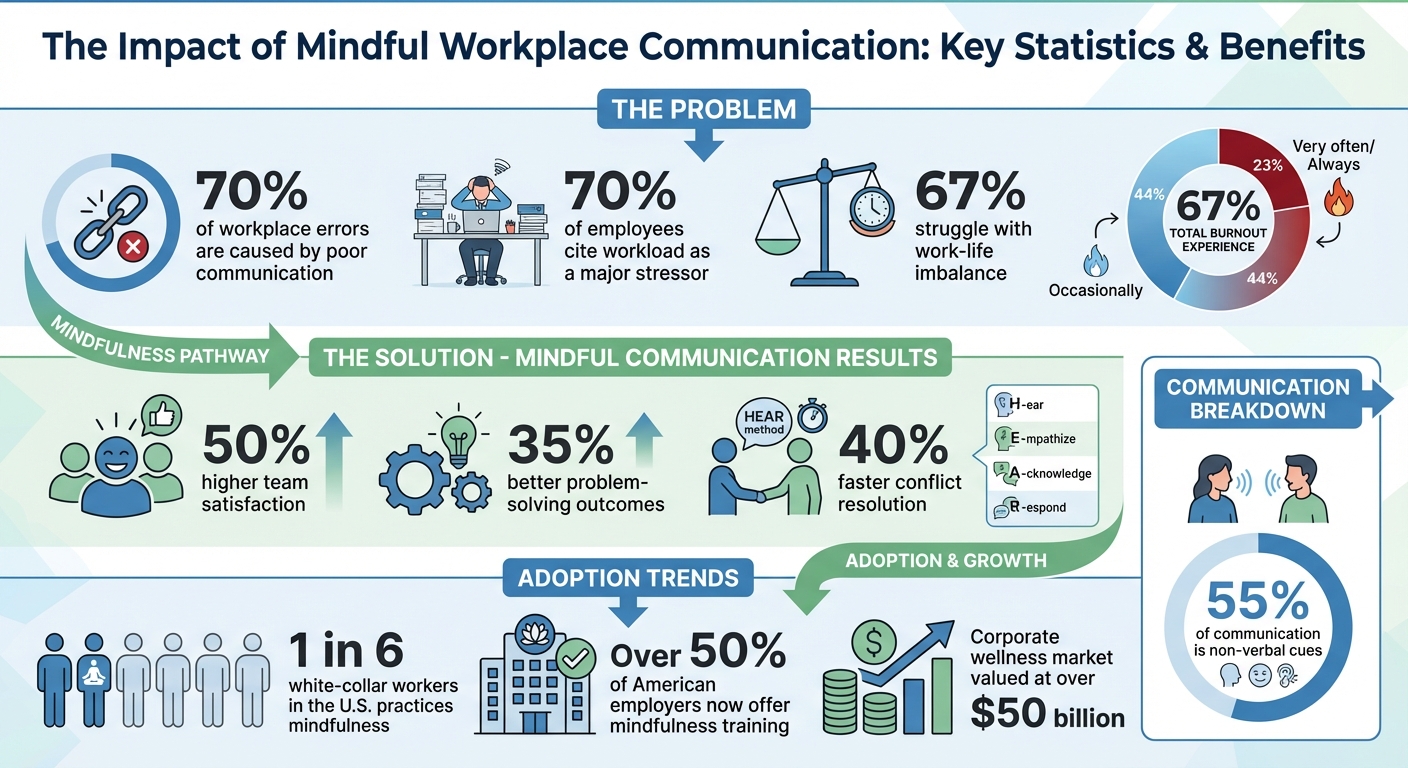
Mindful Workplace Communication Statistics and Benefits
Mindful Communication at Work: An Approach for Creating More Inclusive and Engaged Teams
Benefits of Mindful Workplace Communication
When organizations embrace mindful communication, the rewards go far beyond creating a positive atmosphere. Research shows that teams practicing mindful communication experience 50% higher satisfaction and 35% better problem-solving outcomes. These benefits lead to healthier employees, stronger team dynamics, and fewer conflicts that waste time and energy.
Better Employee Well-Being and Stress Management
Workplace stress is a growing issue. A staggering 70% of employees identify workload as a major stressor, while 67% struggle with work-life imbalance. Mindful communication offers a practical way to address this by helping employees acknowledge their thoughts and emotions without immediately reacting, enabling calmer decision-making under pressure.
This approach enhances coping skills, allowing employees to navigate challenges like coworker disagreements or tough performance reviews without losing control. It also helps individuals recognize early signs of stress and burnout. Organizations that provide mindfulness programs send a clear message: employees are encouraged to prioritize their mental health. For example, setting clear intentions before challenging conversations - such as performance reviews or leadership discussions - can reduce stress and improve focus.
The results speak for themselves. At Aetna, the company partnered with Duke University in 2010 to introduce "Mindfulness at Work" and "Viniyoga Stress Reduction" programs. Participants reported lower stress levels and higher productivity. Meanwhile, nearly 1 in 6 white-collar workers in the U.S. practices mindfulness in some form, and over half of American employers now offer mindfulness training. This has contributed to a corporate wellness market valued at over $50 billion.
These improvements in individual well-being naturally enhance team dynamics.
Stronger Team Collaboration and Engagement
Mindful communication reshapes how teams interact. By encouraging employees to acknowledge and value each other's perspectives, it reduces tension and strengthens team bonds. Techniques like active listening and summarizing key points before responding help minimize errors and speed up problem-solving.
The impact can be surprising. At LinkedIn, mindfulness initiatives, including 30-day meditation challenges, boosted employee confidence in high-pressure situations like presentations.
"Mindfulness programs are becoming a 'talent magnet'... employees express gratitude that the company offers these well-being practices and invests in things that will make them successful."
– Scott Shute, Founder, Mindful Workplace Alliance
At Verizon Media, Global Mindfulness Lead Jason Luk introduced a "minute-to-arrive" practice for meetings. In one instance, even a client under extreme time pressure insisted on keeping the mindful minute, underscoring its value in maintaining focus. The program engaged over 600 employees in its first year.
For remote teams, mindful practices like virtual check-ins and active listening during video calls help employees feel more connected and valued. This is especially important in a time when 23% of employees report feeling burnout "very often" or "always", and 44% experience it occasionally, according to Gallup.
Improved collaboration also sets the stage for resolving conflicts more effectively.
Fewer Workplace Conflicts
Mindful communication doesn’t just improve teamwork - it transforms conflict into an opportunity for understanding. Instead of viewing disagreements as battles to win, mindful communication focuses on the emotions and human connection involved, a skill researchers call "relational agility". This approach reduces defensiveness and creates space for meaningful resolution.
One key technique is cognitive reappraisal, which helps individuals rethink conflicts rather than reacting impulsively. Mindfulness also prevents the tendency to oversimplify colleagues into one-dimensional stereotypes. By engaging with the whole person, it becomes easier to find common ground and resolve issues.
The HEAR method (Halt, Engage, Anticipate, Reflect) is a practical tool for conflict resolution, helping teams resolve disputes 40% faster. Mindful individuals are more likely to use collaborative and compromise-based approaches in negotiations, avoiding dominating or avoidant behaviors. This fosters what researchers call a "conflict-positive" environment - where collaboration thrives and avoidance declines.
At Intel, the "Awake@Intel" program has demonstrated these principles in action. Over 7,000 employees completed a 10-week course combining meditation and group activities, showing measurable improvements in focus and interpersonal skills. Participants consistently reported higher scores on the Mindful Attention Awareness Scale, reflecting their enhanced ability to handle difficult conversations and resolve tensions constructively.
These measurable outcomes show how mindfulness can create healthier, more connected workplaces.
Techniques for Practicing Mindful Communication
Mindfulness in communication doesn’t require a complete overhaul - just small, intentional changes in how you approach conversations, similar to how you might start a daily mindfulness practice. Even subtle adjustments can transform how you connect with others in the workplace.
Staying Present in Conversations
The biggest obstacle to effective communication often isn’t the words being spoken - it’s the non-verbal cues that go unnoticed. These cues make up a staggering 55% of communication. When your attention drifts - whether to craft your response or glance at your phone - you risk missing the essence of what’s being conveyed.
Single-tasking is key to staying engaged. Simple actions like closing your laptop, turning your phone face-down, or focusing solely on the speaker can significantly reduce distractions. Some workplaces even implement digital detox zones - areas or designated times where devices are put away to foster uninterrupted, meaningful interactions.
Another helpful practice is box breathing - a technique where you inhale, hold, exhale, and hold again for four seconds each. This method has been shown to calm the nervous system and sharpen focus. MRI studies reveal that mindful engagement boosts brain activity in areas tied to empathy and understanding while reducing stress-related responses.
For a structured approach, try the HEAR method: Halt, Engage, Anticipate, Reflect. This framework helps teams resolve conflicts faster - up to 40% quicker, according to research. By being fully present, you pave the way for clearer, more collaborative communication.
Once presence is established, the next step is to listen actively and without judgment.
Active Listening Without Judgment
Active listening isn’t just about hearing - it’s about setting aside preconceived notions and focusing on the speaker with genuine curiosity.
Practicing open-minded inquiry can deepen conversations. Instead of framing questions to confirm your own opinions - like, "Don’t you think this is the best option?" - ask something broader, such as, "What factors matter most to you in making this decision?"
Your body language also plays a critical role. Simple gestures like nodding, maintaining an open posture, or leaning slightly forward signal attentiveness and create a sense of psychological safety. This encourages team members to share ideas and voice concerns, preventing small issues from escalating.
Another powerful tool is paraphrasing - rephrasing what you’ve heard in your own words to confirm understanding. For example, in one-on-one meetings, you can use the 3-minute rule, where each person gets three uninterrupted minutes to speak before the other responds. This ensures clarity and mutual respect.
To manage emotional reactions, try reaction surfing. When you feel defensive, imagine the emotion as a wave rising and falling. This brief pause helps you respond thoughtfully instead of reacting impulsively.
Building on active listening, the next step is learning to pause before responding to further enhance communication.
Pausing Before Responding
The pause between hearing and responding is where mindful communication thrives. Many workplace conflicts stem from knee-jerk reactions - immediate replies without considering their impact. A deliberate pause can break this cycle, giving you time to process and respond more thoughtfully.
The 10-second rule is a simple yet effective method. After someone finishes speaking, silently count to ten before replying. This not only ensures they’ve fully expressed themselves but also gives you time to craft a considered response. Teams that practice this report 50% higher satisfaction and 35% better problem-solving outcomes.
In high-stress discussions, pairing a pause with internal questioning can further enhance your response. Ask yourself, "What’s my goal here?" This moment of reflection helps align your reply with your larger objectives rather than letting emotions take the lead.
Some companies have even formalized this pause. For instance, Verizon Media starts meetings with a minute-to-arrive - sixty seconds of silence or deep breathing. This brief practice allows participants to shift focus from previous tasks to the present discussion. Even under tight deadlines, employees report improved focus and collaboration as a result.
sbb-itb-bea8dce
How to Implement Mindful Communication at Work
Learning mindfulness practices is one thing - integrating them into the workplace is another. The great news? You don’t need to overhaul your entire organization. A supportive leadership team, a few enthusiastic advocates, and a willingness to start small can bring mindfulness into daily routines, creating a culture of presence and connection.
Starting Meetings with Mindful Moments
A simple way to introduce mindfulness is by starting meetings with a "minute-to-arrive" practice. Before jumping into the agenda, encourage participants to take 60 seconds to sit quietly. With feet flat on the floor and eyes closed, they can focus on their breath and acknowledge their current feelings. This brief pause shifts the group’s mindset from scattered tasks to a calm, collaborative space.
A pilot program involving over 600 employees showed just how effective this technique can be. Even clients with tight schedules appreciated the practice. Another idea is setting intentions at the start of meetings. Ask participants to silently decide how they want to engage - whether by listening actively, contributing thoughtfully, or staying open to new ideas. This prepares everyone for more meaningful communication.
Training Teams in Compassionate Feedback
Feedback is where communication often falters, but mindful techniques can transform it into a constructive, supportive experience. One approach is the HEAR method, which helps teams give and receive feedback with care and clarity.
The HEAR Method involves:
- Halt: Stop other tasks and give full attention.
- Engage: Maintain eye contact and face the speaker.
- Anticipate: Focus on key takeaways.
- Reflect: Summarize what was heard before responding.
This structured method not only reduces conflict but also ensures everyone feels valued. Another helpful practice is the 10-second pause. After someone speaks, employees take ten seconds to process the message before replying. Teams using this approach report 50% higher satisfaction and a 35% improvement in problem-solving outcomes.
"Leadership is then saying that it's okay to take care of yourself at work."
- Parneet Pal, Chief Science Officer, Wisdom Labs
Building Daily Mindfulness Practices
Mindfulness doesn’t have to stop at meetings. Incorporating short, simple practices into daily routines helps employees stay focused and reduce stress throughout the workday.
Intel’s "Awake@Intel" program is a great example. Over 7,000 employees participated in 10-week mindfulness courses, and follow-up surveys showed improved focus and stronger workplace relationships. Even small practices can make a big difference. For instance:
- Three Breaths Practice: A quick, two-minute meditation to release tension and refocus.
- Walking Meditation: A 15-minute break where employees pay attention to each step.
- Mindful Email Pause: Taking a moment to review tone and clarity before sending an email, which can prevent misunderstandings. This is especially important since 70% of workplace errors stem from poor communication.
To keep mindfulness alive, consider appointing mindfulness ambassadors - employees who champion these practices among their peers. When leaders embrace mindfulness publicly, they send a powerful message: self-care and presence matter at every level of the organization.
Using The Mindfulness App for Workplace Communication
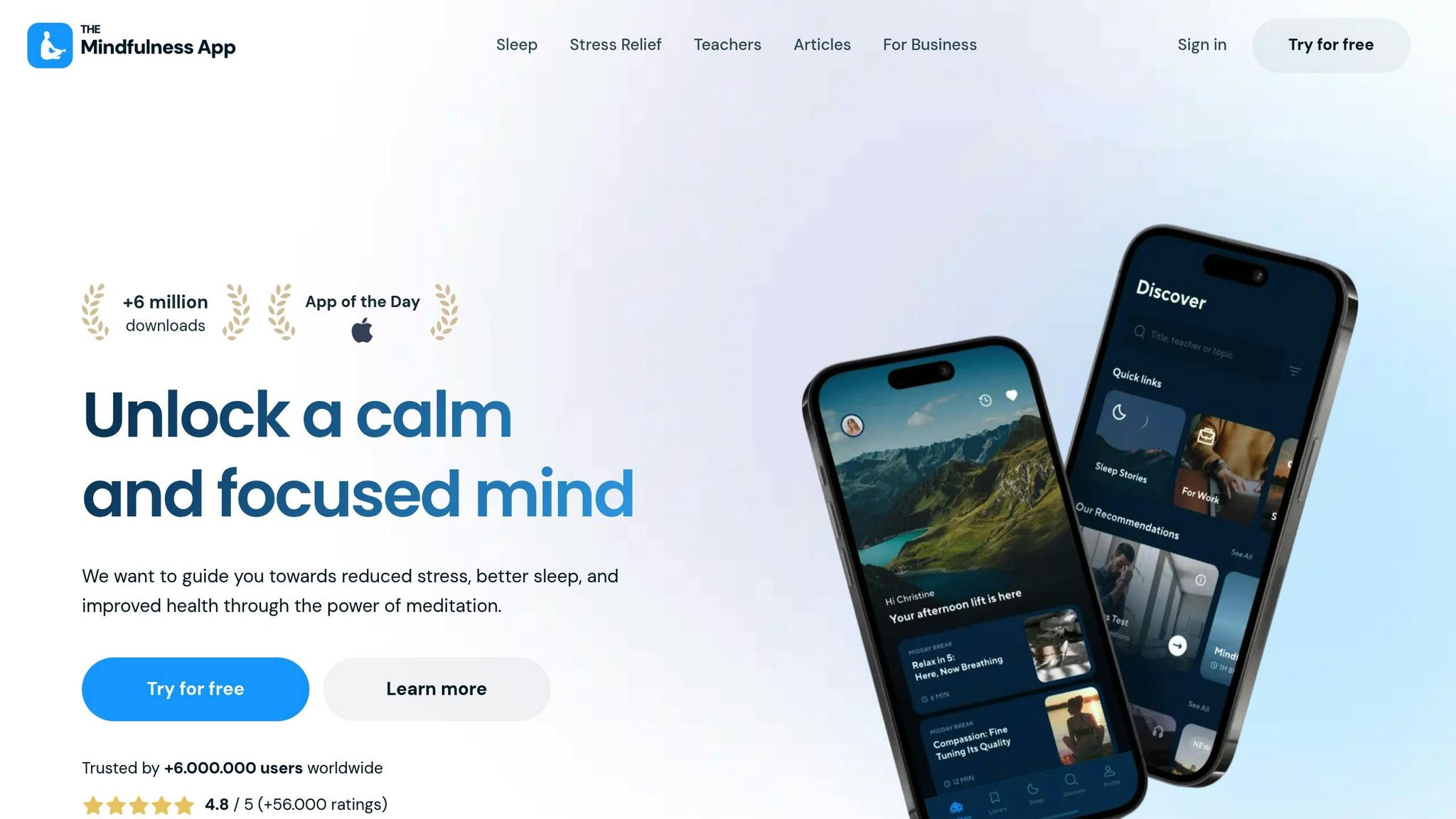
Finding ways to improve mindfulness at work becomes much easier with the right tools. The Mindfulness App provides a structured approach to help professionals develop communication skills, offering features specifically tailored to workplace needs.
Guided Meditations for Presence and Focus
The Mindfulness App offers over 500 guided meditations designed to enhance focus and sharpen mental clarity - key skills for effective workplace interactions. These meditations are crafted to train the brain's attention circuits, improving working memory and task accuracy. A dedicated "Work Mindfulness" tab includes quick exercises that help employees reset their focus between meetings. To accommodate global teams, all content is available in 12 languages, making it accessible to a diverse workforce.
Mindfulness Courses for Skill Development
For those looking to deepen their practice, the app provides structured options like the "Mindfulness in the Workplace" program and a beginner-friendly 5-day introductory course. These courses focus on boosting emotional intelligence by improving empathy, active listening, and conflict resolution. As The Mindfulness App explains:
"Regular practice elevates emotional intelligence, boosting empathy, listening skills, and conflict resolution."
Additionally, mindfulness podcasts within the app offer insights into how presence and focus can address workplace challenges. These resources are designed to seamlessly fit into daily routines, reinforcing mindful habits and enhancing communication skills.
Building a Consistent Mindfulness Routine
Consistency is crucial for mindfulness to have a lasting impact. The Mindfulness App helps employees stick to their practice with features like personalized programs, offline accessibility, and reminders to encourage regular use. This makes it easy for employees to manage stress and maintain their mental well-being, even during busy days.
Michael, a user from the USA, shared his experience:
"Excellent app to keep you on your meditation program. I can HIGHLY recommend! So many options within the app to choose from."
Supporting employees' mental well-being not only improves their personal resilience but also fosters loyalty - employees who feel supported are twice as likely to stay with their current employer. By promoting consistent mindfulness practices, the app strengthens the communication strategies needed for a healthier workplace.
Conclusion
The mindfulness techniques and benefits we've explored reveal how mindful communication can reshape the way teams connect, collaborate, and excel. With poor communication accounting for 70% of workplace errors, the importance of addressing this challenge is hard to ignore.
Mindful communication activates areas of the brain linked to empathy while reducing stress responses. This creates the psychological safety that high-performing teams need to innovate, address concerns early, and resolve conflicts more efficiently. These findings reinforce the practical strategies shared earlier, offering a clear path to more compassionate and effective workplace communication. As highlighted by organizational behavior experts:
"Mindfulness seems to address important issues organizations and employees are struggling with in a time of attention overload, multitasking, and stressors from increasingly complex work arrangements and 24/7 connectivity."
Taking action is key. Try using the HEAR method in your next conversation, kick off meetings with a minute-to-arrive practice, and develop a daily mindfulness habit with tools like The Mindfulness App. These steps can help you build the focus and presence needed for meaningful communication. Many organizations have already seen measurable improvements through mindfulness programs.
Adopting mindful communication can strengthen workplace relationships, improve team dynamics, and positively impact your career. Start incorporating these practices today to create a more engaged, innovative, and resilient work environment. So, the question remains: are you ready to make mindful communication a part of your daily routine?
FAQs
How does mindful communication help reduce stress at work?
Mindful communication - giving your full attention to conversations with empathy and without judgment - can play a huge role in easing workplace stress. It promotes active listening and thoughtful replies, helping to clear up misunderstandings and create a more respectful, calmer work environment. By staying focused and avoiding mental distractions, employees can also lighten the mental load that often comes with multitasking and miscommunication.
When teams make mindful communication a habit, workplace conflicts and tensions often decrease, paving the way for a more supportive and cooperative atmosphere. Simple mindfulness practices, like taking a few deep breaths or doing a brief guided meditation before meetings, can help employees feel grounded and ready for smoother, more productive interactions.
What is the HEAR method, and how can it enhance workplace communication?
The HEAR method is a mindful approach to communication that aims to enhance understanding and build stronger connections during conversations. It focuses on four key steps: Hearing, Empathizing, Acknowledging, and Responding. By prioritizing active listening and empathy, it encourages deeper and more respectful exchanges.
In a workplace setting, the HEAR method can play a significant role in reducing misunderstandings, promoting teamwork, and cultivating a more supportive atmosphere. When team members feel truly listened to and appreciated, it can lead to higher morale and increased productivity.
How can I introduce mindfulness practices into team meetings?
Starting team meetings with a quick mindfulness exercise can help everyone feel more grounded and ready to engage. Try beginning with a simple one-minute pause. Ask participants to sit comfortably, close their eyes, and take a deep breath. Encourage them to notice their body and thoughts without judgment. Once the pause is over, invite everyone to set a quiet intention for the meeting - whether it’s staying focused, listening carefully, or speaking thoughtfully.
If your team is new to mindfulness, you might use a short guided meditation from The Mindfulness App to ease into the practice. Over time, making this a regular part of your meetings can help foster a calmer and more focused environment.