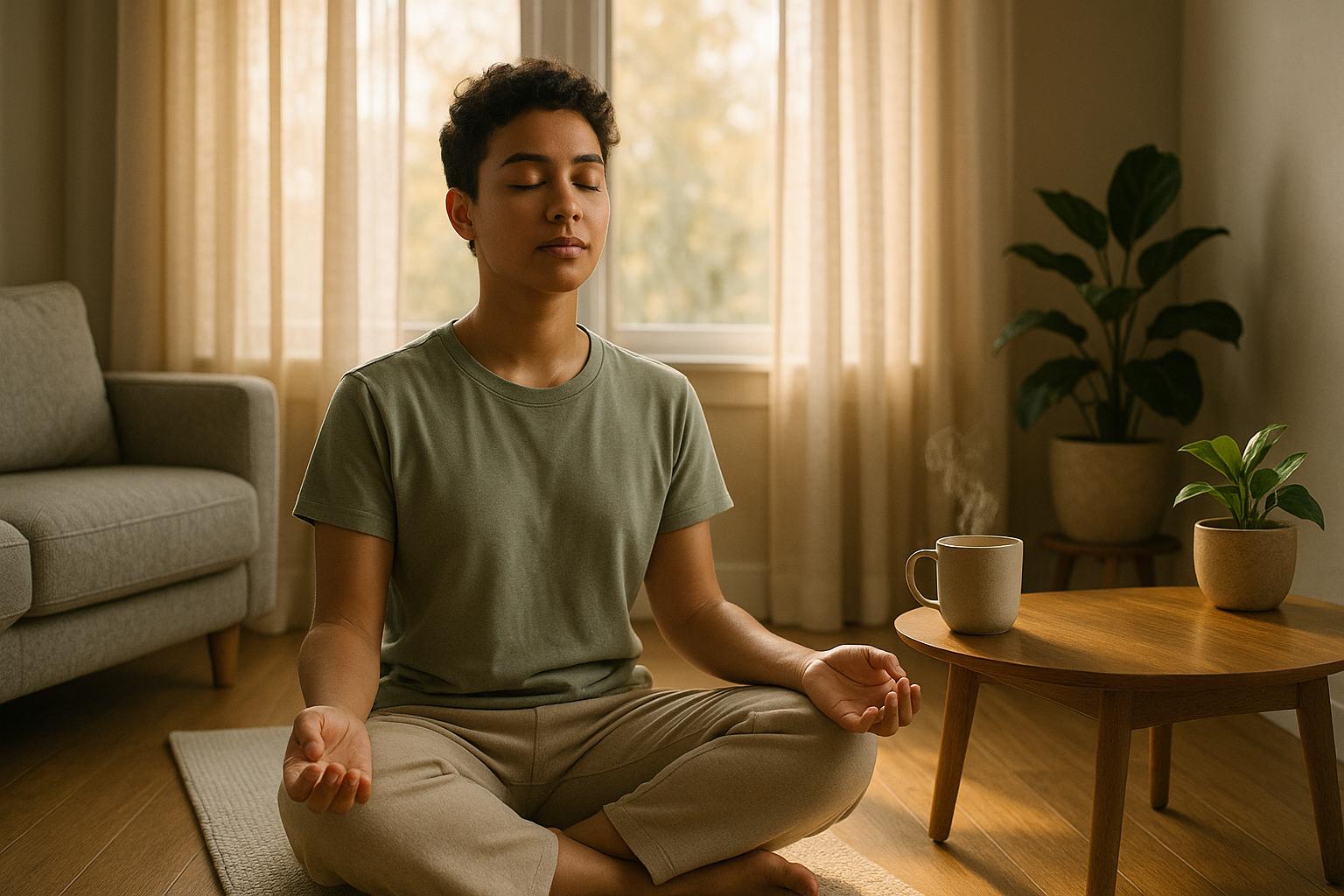

Mindfulness can transform how couples handle conflict by encouraging thoughtful responses instead of impulsive reactions. Research shows mindfulness improves relationship satisfaction, reduces stress, and strengthens emotional connection. Here's how it works:
- Pause Before Reacting: Mindfulness creates a moment to reflect before responding, helping you choose understanding over anger.
- Recognize Emotional Triggers: Identify and observe your emotions without judgment to avoid escalating conflicts.
- Practice Active Listening: Focus fully on your partner's words, validate their feelings, and avoid defensive responses.
- Use Mindful Tools: Techniques like deep breathing, the STOP method, and "I" statements can de-escalate tension.
- Strengthen Bonds Together: Shared mindfulness exercises, like silent gazing or gratitude rituals, build connection and reduce distress.
Even practicing mindfulness solo can positively influence your relationship. Tools like guided meditations or apps can support this journey, offering practical exercises to improve communication and emotional regulation.

5 Mindful Communication Techniques for Conflict Resolution in Relationships
Managing Conflict | 😌 A Calm Disposition | Mindfulness Relationships Meditation | Female Guide
sbb-itb-bea8dce
How Mindfulness Helps You Recognize Emotional Triggers
Emotional triggers often stem from past experiences that activate your brain’s alarm system almost instantly. For example, if your partner says something that feels dismissive or critical, your amygdala - essentially your brain’s "threat detector" - jumps into action. This can disrupt the prefrontal cortex, the reasoning part of your brain, making it harder to stay calm or think clearly. That’s why, during heated moments, you might lash out or shut down entirely.
Mindfulness steps in by breaking this cycle. It creates a small but powerful pause between the trigger and your reaction. Instead of being swept away by anger or defensiveness, mindfulness allows you to observe your emotions as they arise. This pause helps your prefrontal cortex re-engage, giving you the chance to respond thoughtfully instead of reacting impulsively.
Observing Your Triggers Without Judgment
Pay attention to early physical signs - like a racing heart or a clenched jaw - and label the emotion silently, such as "anger" or "frustration." Research shows that simply naming emotions can reduce their intensity. Relationship coach Kyle Benson explains:
"A trigger is an issue that is sensitive to our heart - typically something from our childhood or a previous relationship".
The goal is to notice these reactions without assigning blame. Yoga and meditation teacher Gillian Florence Sanger suggests:
"Rather than noting 'I am furious,' you would simply note 'anger,' tuning into the physiological expressions of this emotion as well".
One practical way to do this is through the Three-Question Reflection: after an emotional reaction, ask yourself, What emotion did I feel? What happened right before? Have I felt this way in similar situations?. Over time, this practice can help you identify patterns. Another useful tool is jotting down quick notes on your phone, tracking the "What, Where, Who, and When" of moments that upset you. This can reveal recurring triggers and help you better understand your emotional landscape.
Staying Present During Disagreements
Being present during disagreements means staying aware and grounded. When you do this, something surprising happens: your calm presence can actually help soothe your partner’s nervous system. A 2022 study by Dr. Tasha Seiter, involving 17 couples, found that when one partner practiced mindfulness during conflicts, the other partner experienced a measurable relaxation response in their nervous system. Sarah Thompson from Ahead explains:
"When one person stays grounded in mindful awareness, it interrupts the ping-pong of reactivity. Your calm presence becomes an invitation for the other person to regulate too".
A simple but effective tool here is the 3-Second Pause: before reacting to a triggering comment, count slowly to three. This short pause gives your prefrontal cortex time to re-engage. Another helpful strategy is the Mental Filter Check - ask yourself before speaking: Is this true? Is this necessary? Is this kind?. These small pauses can prevent what experts call "fight hangovers", the lingering regret and emotional drain that often follow saying things you wish you hadn’t.
In a study by the University of Wyoming and the University of Oregon, researchers observed 88 couples discussing relationship conflicts. They measured cortisol levels (the body’s stress hormone) before and after these discussions. Couples who practiced "attitudinal mindfulness" - approaching the conversation with curiosity and acceptance - recovered from stress much faster than those who didn’t. As the researchers noted:
"Mindfulness helps partners to regulate their own responses and more fully accept one another, resulting in less negative fallout from conflict when it arises".
Using Mindful Communication to Resolve Conflicts
Mindful communication takes the understanding of your emotional triggers and channels it into meaningful, constructive conversations. It’s not just about managing your own reactions - it’s about changing how you interact during conflicts. When you approach communication mindfully, your brain’s prefrontal cortex (responsible for empathy and rational thinking) becomes more active, while the amygdala’s "fight-or-flight" response calms down. This shift creates space for connection and understanding .
The purpose of mindful communication isn’t to "win" an argument or rush to an agreement. Dr. Barbara Larrivee, an educator and author, explains it well:
"The essence of mindful communication is to make a genuine connection and create mutual understanding, not necessarily agreement."
This approach moves the focus from being right to truly understanding your partner. When both people feel heard and validated, conflict tends to lose its intensity. This creates a foundation for using mindful techniques that transform how you listen and speak.
How to Listen Actively and Show Empathy
Active listening isn’t about preparing your next response while the other person is talking - it’s about giving them your full attention. Mindfulness encourages you to quiet your inner dialogue and focus entirely on what’s being said . As author Oren J. Sofer puts it:
"To truly listen depends on a kind of inner silence. It requires that we empty ourselves and make space to receive something new."
One practical way to practice this is the Speaker-Listener Technique. Here’s how it works: one person speaks for 3–5 minutes without interruption, while the other listens attentively. Afterward, the listener summarizes what they heard and reflects the emotions they picked up on (e.g., "It sounds like you felt ignored"). This approach validates feelings without forcing agreement.
Another tool is using "I" statements. Instead of accusing with "You always leave the dishes in the sink", try expressing your emotions: "I feel frustrated when I see dishes piling up". Asking open-ended questions like "Is there more you’d like to share?" or "Can you help me understand what you need right now?" can also deepen understanding .
For moments when emotions run high, the STOP Method can help you regain control. It’s simple: Stop what you’re doing, Take a deep breath, Observe your thoughts and feelings without judgment, and Proceed with mindful awareness . By staying calm, you can help de-escalate the tension for both you and your partner.
Once you’ve mastered active listening and empathy, you’ll find it easier to replace harmful communication habits with honest, constructive conversations.
Replacing Destructive Patterns With Honest Conversations
Destructive behaviors - like yelling, giving the silent treatment, name-calling, or asking accusatory "why" questions - can quickly derail any productive dialogue. Mindfulness helps you notice these patterns as they emerge and choose a better approach. A good starting point is to describe specific behaviors instead of labeling someone’s character. For instance, instead of saying, "You’re so inconsiderate", you could say, "This is the second time you’ve been late this week".
Before speaking, take a moment to reflect on your true intentions. Ask yourself, "What do I want from this conversation?" If your goal is connection and understanding, let that guide your words. When making requests, be clear and specific. For example, say, "Please lower your voice", rather than issuing a vague reprimand.
Another helpful change is replacing "why" questions with ones that start with "what", "when", "where", or "how." For example, instead of asking, "Why did you do that?" - which can feel accusatory - try, "What happened that made you handle it that way?" This invites reflection and collaboration instead of blame.
In especially heated moments, a Heart-Centered Pause can help. Close your eyes for 30–60 seconds and focus on the area around your heart. This brief exercise can reconnect you with your care for your partner and shift the tone of the conversation.
Interestingly, many couples notice improvements in their communication after just three weeks of practicing mindful listening. The goal isn’t perfection - it’s about consistently replacing automatic reactions with thoughtful responses. By staying present and avoiding the temptation to rehash old grievances, every conflict becomes a chance to prioritize connection over being right.
Mindfulness Exercises for Couples
When couples engage in mindfulness exercises together, they often notice quicker improvements in how they handle disagreements. A study involving over 500 couples revealed that just two weeks of shared mindfulness practices led to reduced relationship distress and increased satisfaction. These activities help shift the focus from "me vs. you" to "us vs. the problem", creating a stronger sense of connection that makes conflicts easier to tackle. Let’s dive into some practical techniques to ease tension during challenging moments.
Using Deep Breathing and Pauses During Heated Moments
Arguments can often trigger intense emotions that overpower rational thinking. Research shows it takes about 20 minutes for the nervous system to settle enough for productive communication to resume. Quick mindfulness tools like deep breathing and intentional pauses can help bridge this gap, giving your brain the time it needs to move from reacting to responding thoughtfully.
One method to try is synchronized breathing. Sit facing each other, close your eyes, and focus on inhaling and exhaling together. This shared rhythm promotes calmness and emotional safety. For a quicker reset, the 4-7-8 breathing technique works wonders: inhale for 4 seconds, hold for 7 seconds, and exhale slowly for 8 seconds. Repeating this cycle four times signals your nervous system that you're safe.
Another helpful tool is the Silence Sandwich. After one partner speaks, both of you take three deep breaths before the other responds. This brief pause - just 3 to 5 seconds - activates the prefrontal cortex, helping you avoid impulsive reactions that might escalate the situation. Some couples also establish non-verbal signals, like raising a hand or using a code word, to indicate when a pause is needed.
Mindfulness Activities to Practice Together
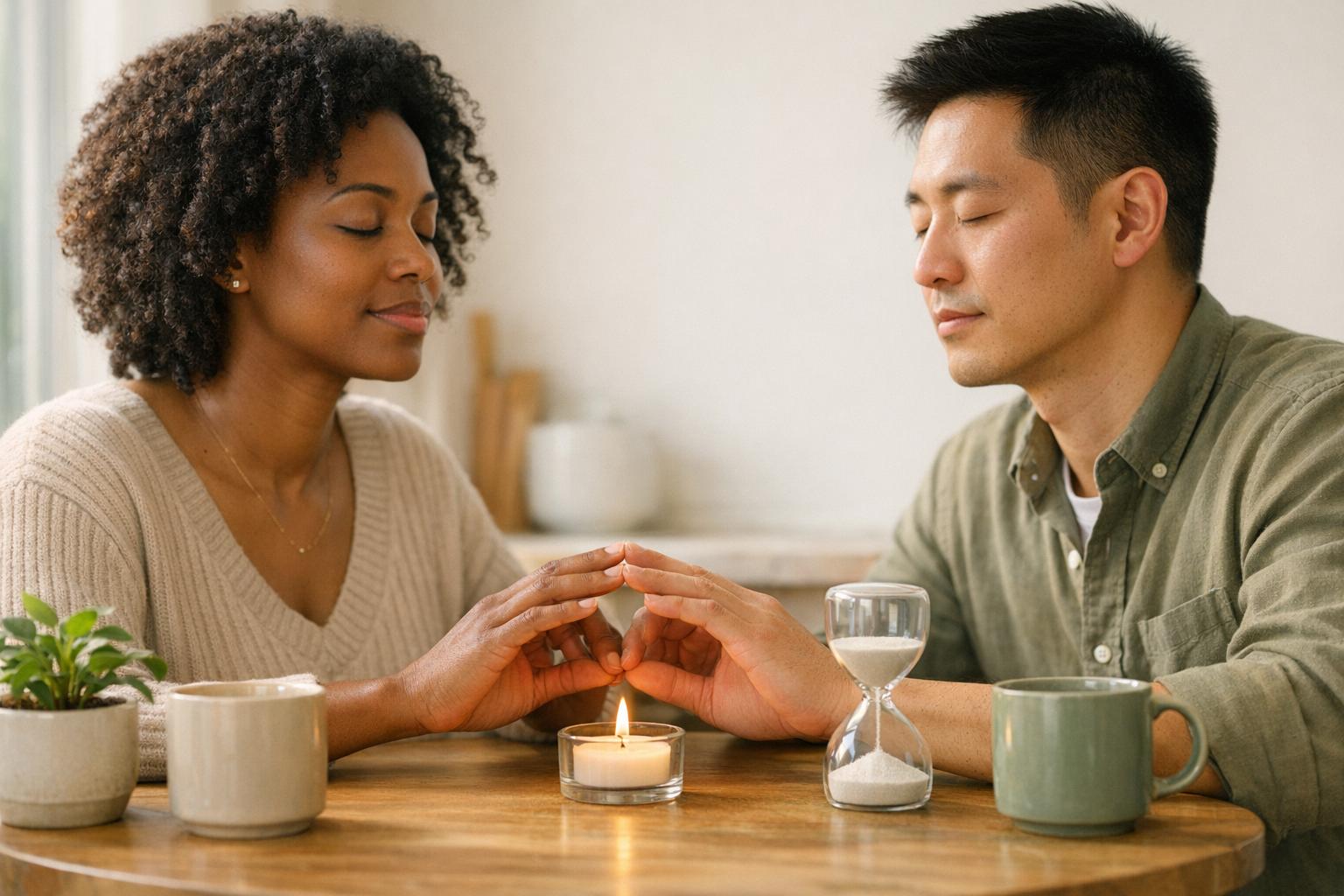
Incorporating regular mindfulness practices into your routine strengthens emotional bonds and makes it easier to stay connected during conflicts. A simple yet powerful exercise is silent gazing. Sit across from each other, hold hands, and maintain eye contact for two to five minutes without speaking. This practice deepens intimacy and helps you reconnect beyond any disagreements.
Another option is Beginning Anew, a structured weekly check-in with four steps: share appreciations, express regrets for your actions, discuss any hurts you’ve felt, and end with a lighthearted "joy" prompt. This ritual keeps communication lines open and prevents small issues from festering. Alternatively, try mindful noting out loud - take turns sharing one thing you’re currently aware of, like "I hear birds chirping" or "I feel warmth from the sun." This builds awareness of each other’s experiences.
For a daily habit, consider a gratitude ritual at dinner or before bed. Share one thing you appreciated about your partner’s actions or communication that day. You can also practice mindful touch by setting aside time for non-sexual physical connection, such as holding hands or placing a hand over your partner’s heart. Focus fully on the sensation of touch during these moments. These small, intentional practices build a foundation of goodwill, making it easier to navigate conflicts with patience and understanding. Together, these exercises foster a deeper emotional connection and set the stage for meaningful growth in your relationship.
How The Mindfulness App Supports Relationship Growth
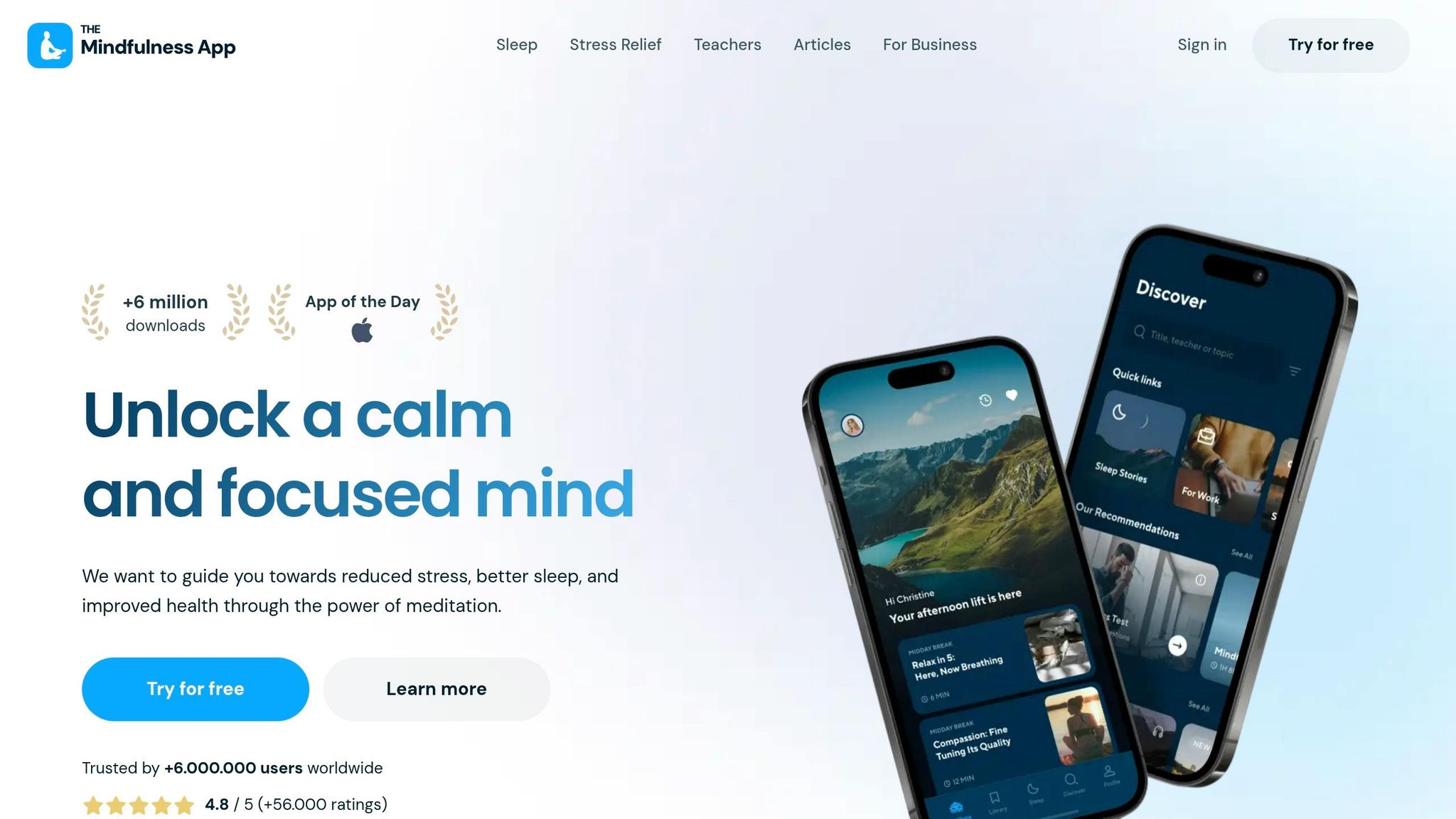
Mindfulness in relationships isn't just a concept - it can be a practice that technology helps bring to life. The Mindfulness App is one such tool, offering over 500 guided meditations, sleep stories, and courses aimed at fostering emotional awareness and reducing stress. Available in 12 languages, the app has been downloaded more than 6 million times, with users logging millions of mindful minutes. Covering over 20 topics related to emotional well-being, its extensive library provides couples with diverse options to meet their specific needs, helping them build a stronger emotional connection and better navigate challenges.
Building Emotional Awareness With Guided Meditations
Guided meditations in the app are designed to help couples identify and address recurring behaviors like withdrawal or defensiveness during conflicts. Research suggests that mindfulness can help couples recover from stress more quickly, with cortisol levels stabilizing faster after disagreements. To support this, the app features Daily Notices, which send gentle reminders to check in with physical sensations - like a clenched jaw, tight shoulders, or a racing heartbeat - before tension escalates.
Additionally, the customizable meditation timer (ranging from 3 to 99 minutes) allows users to take mindful breaks during heated moments. Whether you prefer a silent session or one guided with soothing background sounds like rain or forest ambiance, these tools help both partners regulate their emotions and reset their nervous systems when conflicts arise.
Premium Features for Shared Mindfulness Practice
For couples looking to deepen their mindfulness journey, the app’s Premium plan offers an even broader range of benefits. This plan unlocks the full library, including offline access - perfect for practicing together during travel or in places without internet distractions. For $9.99 per month or $79.99 per year, couples gain access to guided meditations, sleep stories, and courses that support emotional regulation and relationship growth. The app also integrates with Apple Watch, making it easy to track progress and access resources during stressful moments.
With a 4.8/5 user rating, many praise the app for improving sleep and emotional regulation. Plus, the 14-day free trial allows couples to explore premium content risk-free, helping them discover the meditations and courses that best align with their relationship goals.
Conclusion
Mindful practices can turn relationship conflicts into moments of growth and understanding. By creating a pause between emotions and reactions, mindfulness helps foster meaningful change. Recognizing emotional triggers, practicing active listening, and using methods like the STOP technique or belly breathing during tense moments can reshape how you handle disagreements. In fact, research indicates that couples who engaged in mindfulness exercises for just two weeks reported feeling less distressed in their relationships and more connected.
The impact isn't limited to both partners practicing together. Even when only one partner adopts mindfulness, their calmer demeanor can influence the overall emotional tone of the relationship. Studies also show that mindfulness speeds up recovery from stress, reducing emotional exhaustion and minimizing regrets after conflicts.
Within just three weeks of consistent mindfulness practice, couples often notice better communication. The key is consistency, not perfection.
Technology can also play a helpful role. For example, The Mindfulness App offers a library of over 500 guided meditations and courses designed to lower stress and improve well-being. With a 14-day free trial, you can explore different practices to find what aligns with your relationship goals.
Starting small can make a big difference. Just five minutes of belly breathing or a single mindful pause can shift the dynamic between you and your partner. That pause - between what you feel and how you respond - can become the foundation for healing and connection.
FAQs
How can I use mindfulness when I’m already upset?
When emotions run high, mindfulness can help you stay grounded and avoid knee-jerk reactions. Take a moment to pause and focus on what’s happening inside you - your physical sensations, emotions, and thoughts - without labeling them as good or bad. Simple techniques like deep breathing or the 5-4-3-2-1 exercise (identifying five things you see, four you can touch, three you hear, two you smell, and one you taste) can help settle your nervous system. By acknowledging your feelings, such as saying to yourself, "I feel angry", you create space to respond with intention and clarity, rather than letting emotions take over.
What if my partner won’t practice mindfulness with me?
If your partner isn't open to practicing mindfulness, that's okay - focus on your own journey. Practicing mindfulness can help you manage your emotions, show greater empathy, and handle conflicts more effectively. These changes can positively influence your relationship, even if you're the only one actively practicing.
Be patient with their hesitation. Pushing them to join in might backfire and create resistance. Instead, let your actions speak for themselves. Show mindfulness through behaviors like truly listening when they speak or staying calm and present during challenging moments. Over time, this approach might inspire them to explore mindfulness when they're ready.
How long does it take to see results in our communication?
The amount of time it takes to see improvements in communication through mindfulness depends on the individual. For many, consistent practice leads to noticeable changes within a few weeks to a few months. By regularly engaging in mindfulness exercises, people can gradually build stronger understanding and experience fewer conflicts over time.