
If you want stress help you can use during the day, mindfulness is often the better pick. If you want a set sit-down practice with one clear point of focus, meditation from older systems may fit better.
Here’s the short version:
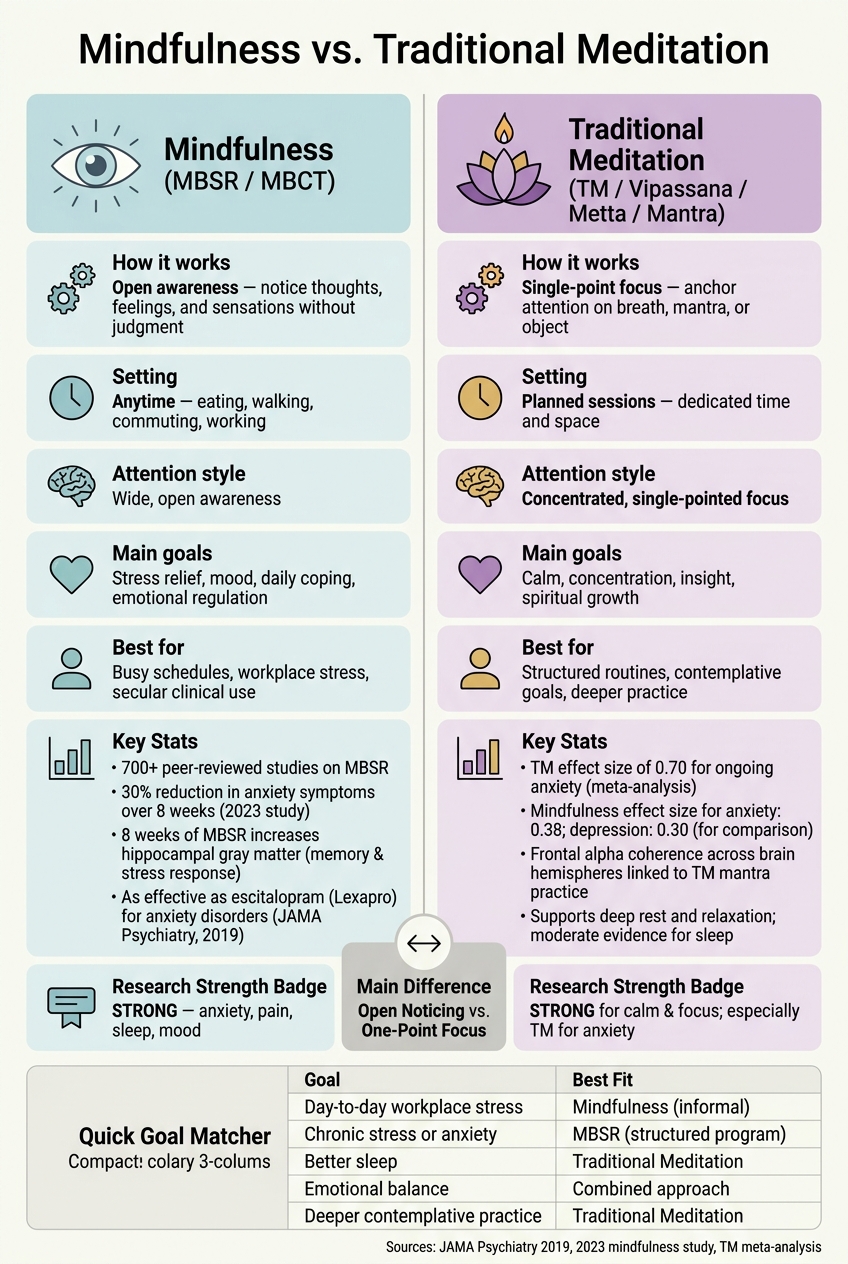
- Mindfulness = present-moment awareness you can use while eating, working, walking, or commuting
- Meditation from older systems = a formal practice with set time, set technique, and often a spiritual frame
- Main difference = open noticing vs. one-point focus
- Best for stress and daily coping = mindfulness programs like MBSR and MBCT
- Best for a fixed practice routine = breath, mantra, loving-kindness, Zen sitting, and similar methods
- What research shows:
- 700+ studies on MBSR
- 30% drop in anxiety symptoms over 8 weeks in one 2023 study
- 8 weeks of MBSR linked to brain changes tied to memory and stress response
- TM effect size of 0.70 for anxiety in one meta-analysis
My takeaway: both can help, but they are not the same thing. One is easier to use in daily life. The other gives you more structure and often aims at more than stress relief.
Quick Comparison
| Area | Mindfulness | Meditation from older systems |
|---|---|---|
| How I’d describe it | Notice what is happening right now without judging it | Sit down and use a set practice like breath, mantra, or loving-kindness |
| Setting | Can happen anytime | Usually done in a planned session |
| Attention style | More open awareness | More single-point focus |
| Main goals | Stress, mood, coping, awareness | Calm, concentration, insight, spiritual growth |
| Best fit for | Busy days, work stress, daily use | People who want routine and a clear practice frame |
| Research strength | Strong for anxiety, pain, sleep, and mood | Good for calm and focus; some methods like TM show strong anxiety results |
If you’re trying to choose, I’d keep it simple: pick the one you’re most likely to do more than once.
Mindfulness vs. Traditional Meditation: Key Differences & Evidence
Mindfulness v meditation. Do you need to meditate to be mindful? | Mindful Moments: Ep 06
sbb-itb-bea8dce
Core differences in purpose, attention, and structure
The biggest difference comes down to why you practice and how you train your mind. You can feel that split most clearly in the way each approach handles attention.
Mindfulness-based programs and their health focus
MBSR and MBCT are usually set up as 8-week programs with weekly sessions and a daylong retreat. Their core practices - body scan, sitting mindfulness, and mindful movement - are built to help lower stress reactivity.
That health-centered design matters. In structured MBSR programs, participants show reduced cortisol within 4 weeks. MBCT builds on that base by adding cognitive-behavioral elements, and it's often used to help prevent depressive relapse. Across both programs, the main focus stays on stress, mood, and coping.
Traditional techniques and their broader aims
Traditional systems place meditation inside a broader spiritual path. The aim isn't just feeling calmer after a hard week. It's insight, ethics, and liberation from suffering.
Practices such as Shamatha, Vipassana, Metta, and mantra-based methods do more than ease stress. They're part of ethical systems meant to help people understand the nature of reality. In the U.S., these practices are most often found in dedicated meditation centers, spiritual communities, and retreat settings.
Open awareness vs. single-pointed focus
There's also a clear split in how attention is trained during practice. Mindfulness uses a wider, more open style of attention. You notice thoughts, emotions, and body sensations as they come up, without getting pulled around by them.
Traditional concentrative techniques take a different route. Instead of keeping attention open, you place the mind on one anchor - like the breath or a mantra - and keep bringing it back there.
That contrast helps explain why the two approaches often support different kinds of outcomes.
Benefits and evidence: what each approach does well
Those differences in attention become easiest to spot when you look at emotional health, focus, and day-to-day life.
Stress, anxiety, depression, and emotional regulation
MBSR has been studied a lot - more than 700 peer-reviewed studies. That makes it one of the most researched meditation programs. In a 2019 randomized controlled trial published in JAMA Psychiatry, an 8-week MBSR program was as effective as the antidepressant escitalopram (Lexapro) for patients with anxiety disorders. A separate 2023 study found that mindfulness practices cut anxiety symptoms by 30% over eight weeks.
Traditional techniques do well here too, especially TM for ongoing anxiety. One meta-analysis found that Transcendental Meditation reduced ongoing anxiety with an effect size of 0.70. That's larger than the effect sizes reported for mindfulness on anxiety (0.38) and depression (0.30). Metta takes a different route. It trains compassion so your emotional response starts to shift.
Beyond mood, these two approaches also affect attention in different ways.
Attention, cognitive flexibility, and mental clarity
Mindfulness trains attention directly. It strengthens brain systems tied to focus and self-control, including working memory, distraction filtering, and cognitive flexibility. MRI studies show that 8 weeks of MBSR increases gray matter density in the hippocampus, which is linked to learning and memory, and decreases it in the amygdala, which is linked to the stress response.
Concentrative practices like TM use a different method. Instead of watching attention moment by moment, they rely on effortless mantra repetition to let the mind settle into calm alertness. That state is tied to widespread frontal alpha coherence across brain hemispheres. The plain-English upside is pretty simple: if racing thoughts are the main issue, a mantra-based method may quiet the mind faster than open-awareness mindfulness.
Those changes in attention often carry over into sleep, pain, and general well-being.
Sleep, pain, and overall well-being
MBSR has the strongest standardized research base for chronic pain and sleep. Body scan meditation, one of the core MBSR practices, has been studied closely for pain modulation through interoceptive retraining over an 8-week period.
Traditional meditation also helps with relaxation and resilience, although the research is less standardized.
Here’s a quick snapshot of where the evidence stands right now:
| Benefit Area | Mindfulness-Based (MBSR/MBCT) | Traditional Meditation (TM/Vipassana) |
|---|---|---|
| Stress & anxiety | Strong - 700+ studies; 30% anxiety reduction over eight weeks | Strong - TM shows effect size of 0.70 for ongoing anxiety |
| Attention & memory | Strong - increases hippocampal gray matter; boosts working memory | Moderate - supports steady focus, especially with mantra repetition |
| Sleep & chronic pain | Strong - strong evidence for chronic pain and sleep; body scan is a core practice | Moderate - supports relaxation and deep rest |
How to choose the right approach for your goals
Choose mindfulness if you want in-the-moment stress relief and something you can use in daily life. Choose traditional meditation if you want a set practice session and a more formal path. The point is simple: match the method to your goal, not the other way around.
When mindfulness may be the better fit
If you want open awareness you can use throughout the day, mindfulness is often the easier fit. It works well in a busy schedule because you can practice it at work, during a commute, or before bed. And if you want a secular approach with clinical roots, mindfulness-based programs like MBSR are a strong place to start.
When traditional meditation may be the better fit
If you like having one anchor and a fixed time for practice, traditional meditation is usually the better match. It makes sense if you want a clear practice container, a concrete anchor like a mantra, or a broader contemplative framework.
This quick guide maps common goals to the clearest fit:
| Goal | Best Fit | Why |
|---|---|---|
| Day-to-day workplace stress | Mindfulness (informal) | Works in real time, no dedicated session needed |
| Chronic stress or anxiety | MBSR (structured program) | Best for a structured, evidence-based program |
| Better sleep | Traditional meditation | Best for a structured wind-down practice |
| Emotional balance | Combined approach | Useful when both approaches support each other |
| Deeper contemplative practice | Traditional meditation | Addresses deeper contemplative goals |
Using digital support to build a consistent habit
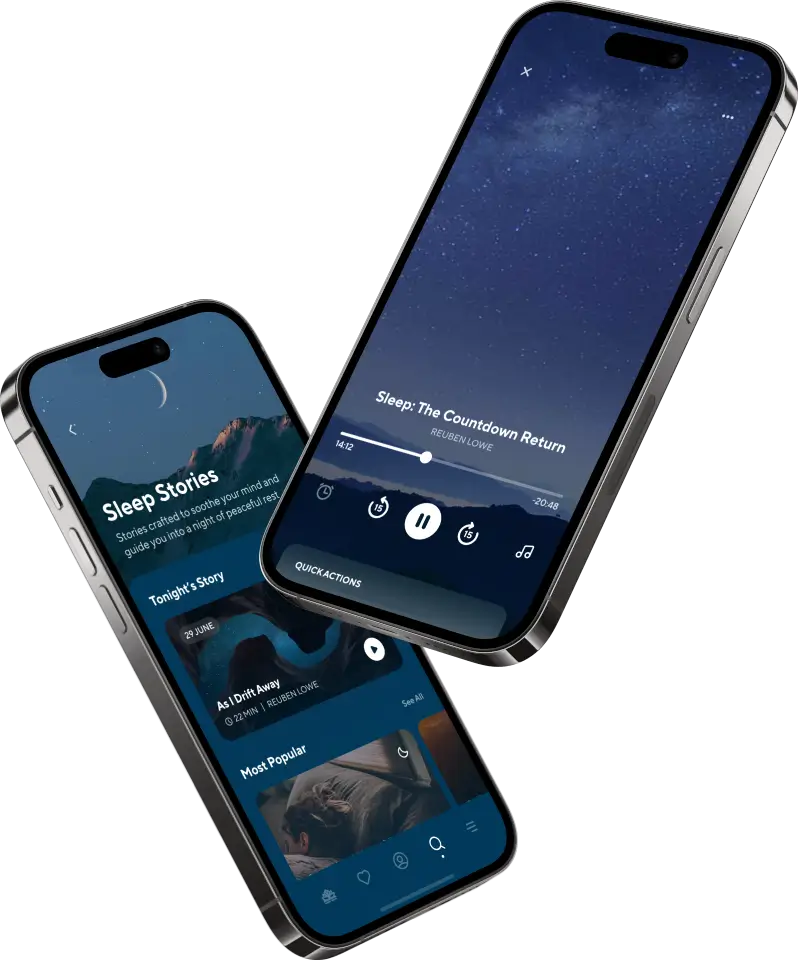
Once you choose a method, consistency matters more than variety. The Mindfulness App can help you stay on track with guided meditations, sleep stories, and courses in 12 languages.
Conclusion: mindfulness and traditional meditation can work together
The main takeaway is pretty simple: both methods can help, but they help in different ways. Mindfulness works well in day-to-day life, while traditional meditation gives you a set time and space to practice.
That’s why plenty of people use both. Put together, these two approaches can support emotional regulation.
Go with the practice you can stick with. Some people do well with one method. Others pair a short daily meditation session with informal mindfulness during the day. These quick mindfulness tools are ideal for busy schedules. In the end, the best method is the one you can repeat. The Mindfulness App offers guided meditations, sleep stories, and courses in 12 languages to help you build a steady practice.
FAQs
Can I practice both mindfulness and traditional meditation?
Yes. They work well together rather than against each other.
Meditation is a set time to train your mind. Mindfulness is paying attention to the present moment, and you can use it during meditation or while going about your day.
When you practice both, you get the structure of meditation and the day-to-day ease of mindfulness to support your overall well-being.
How long should I try one method before switching?
There’s no one-size-fits-all rule here. Start small and stick with one technique for about a week to see if it feels natural and easy to keep up with in your day-to-day life.
With self-guided meditation, many people start to notice meaningful stress relief after 8 to 12 weeks of steady practice. The best method, then, is simply the one that fits your needs and your rhythm well enough that you’ll actually keep doing it.
Which approach is better for beginners?
For beginners, mindfulness is often the easier place to start. It slips into everyday life without much friction. You can practice it while walking, washing dishes, or waiting in line. There’s no need to carve out special sitting time right away.
Guided meditation can help too. It gives you a voice to follow, which makes the process feel less intimidating and easier to stick with. Both approaches work well, but brief mindfulness practices can help build attention first before you move into longer, more structured meditation sessions.