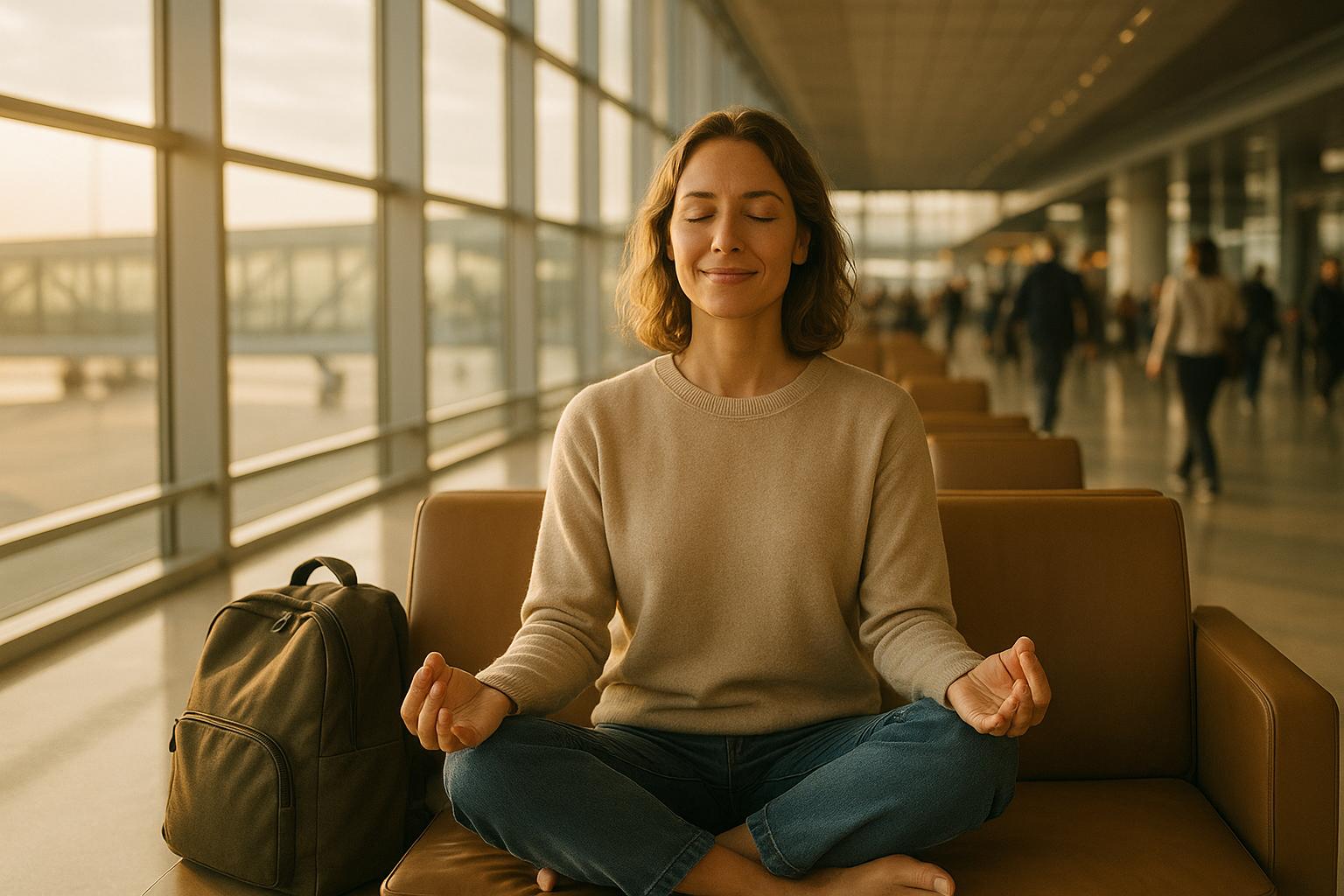

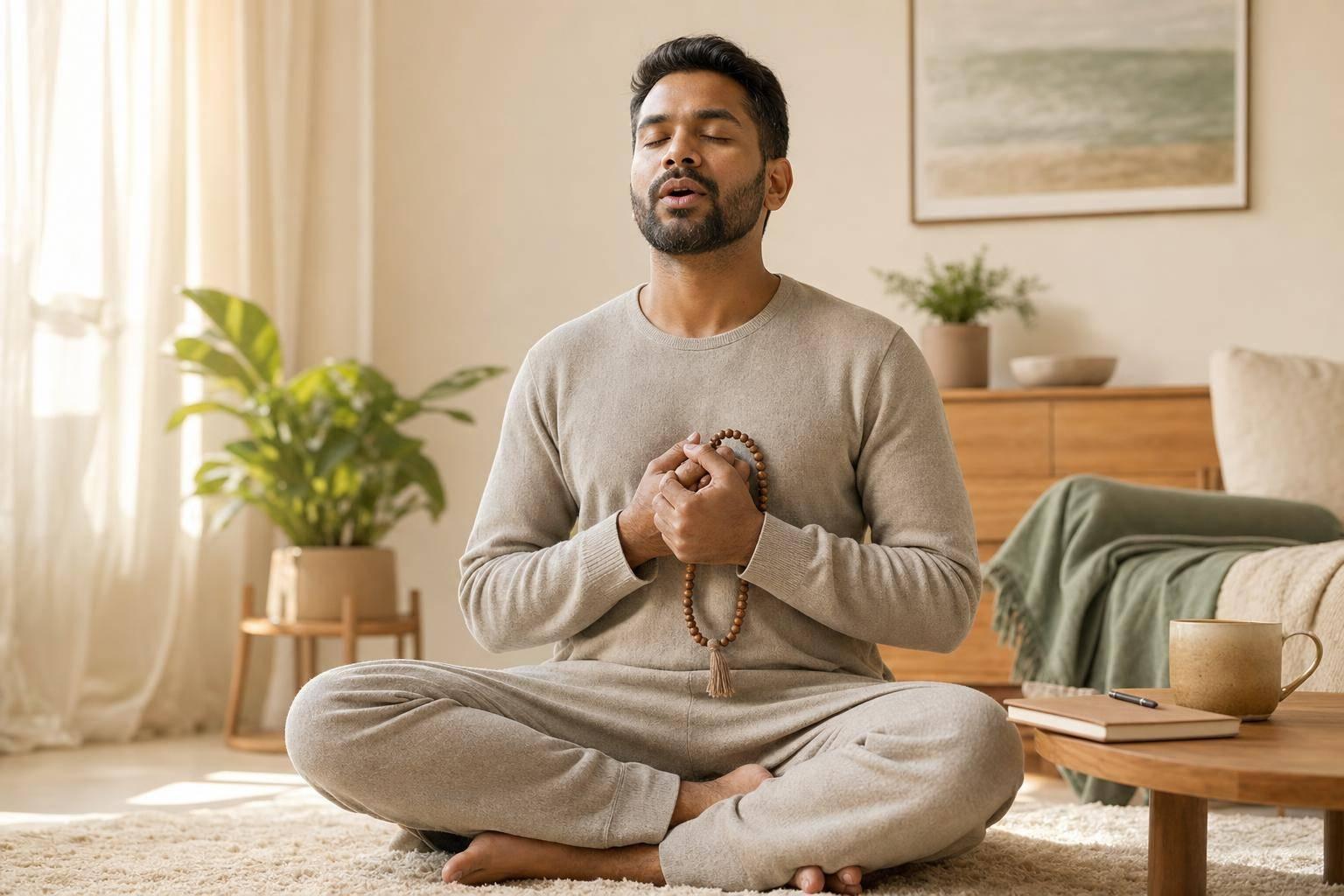
Yes - mantra yoga may help mental health, mainly with stress, anxiety, and PTSD symptoms. The research is most clear on calming the mind and body, but results for depression are less steady, and this practice works best as an add-on, not a replacement for care.
Here’s the short version:
- Mantra yoga uses repetition of a word, sound, or phrase to hold attention.
- It may help cut mind-wandering and rumination, which are common in anxiety.
- Studies in veterans, students, and older adults show drops in stress-related symptoms.
- In one trial of 173 veterans, 59% of people in a mantra program no longer met PTSD criteria after 2 months, versus 40% in the control group.
- In another 8-week study of 60 young adults, mantra chanting lowered depression, anxiety, and stress scores.
- Body and brain findings also point to a calming effect, including lower heart rate, lower blood pressure, and more alpha/theta brain-wave activity.
- But there’s a catch: many studies are small, short, or based on one group, so the evidence is stronger for stress and anxiety than for all mental health conditions.
If I put it plainly: mantra yoga looks most useful when you want a simple verbal focus that helps settle mental noise. It may be easier than breath meditation for some people, especially when the mind keeps looping.
A few key points stand out:
- Best-supported uses: stress, anxiety, PTSD symptoms
- Less clear: depression outcomes over time
- How it may work: attention control, slower breathing, and a shift toward a calmer nervous system
- Best use case: daily mindfulness practice, done often
- Best role: support tool alongside professional treatment when symptoms are serious
Bottom line: mantra yoga is a low-effort practice with early-to-moderate research support for mental calm, but it is not a cure-all.
The rest of the article breaks down what mantra yoga is, what the studies found, how it may affect the brain and body, and who may get the most from it.
Mantras For Health, Healing, And Peace (RELEASE MENTAL STRESS) | 4 Powerful Chanting Mantras
sbb-itb-bea8dce
What mantra yoga is and how it differs from other meditation
Mantra yoga uses the repeated saying or mental repetition of a sound, word, or phrase. In most cases, the person keeps focused attention on that repetition, and sometimes pairs it with breathing or chanting. That detail matters because studies aren’t all looking at one identical practice.
Unlike breath-focused mindfulness, mantra practice uses a verbal anchor. That helps explain why results from one study can’t always be matched neatly with results from another.
Core forms studied in mental health research
Research groups several repetition-based practices under mantra yoga. In mental health research, the main forms include:
- Silent repetition, such as Transcendental Meditation or the Mantram Repetition Program, where a word or phrase is repeated internally without saying it out loud.
- Vocal chanting, such as repeating "Om" or the Maha Mantra aloud.
- Chanting-based practices, such as Kirtan Kriya, which combines chanting, hand movements, and a fixed sound sequence.
That range is a big reason findings vary from study to study.
Why repetition may affect mood and attention
Repetition can take up verbal attention, slow breathing, and cut down on mind-wandering, which may support calm and focus. EEG studies report more alpha and theta activity during chanting, and those patterns are linked with relaxed, refreshed mental states.
Put simply, the repetition may give the mind something steady to hold onto. Instead of bouncing from thought to thought, attention has a set point. That may help explain why mantra practice can support calm and attention.
The next question is how these forms perform in studies on anxiety, depression, and stress.
What research says about anxiety, depression, and stress

Mantra Yoga for Mental Health: What the Research Shows
Studies point to small to moderate gains, with the clearest pattern showing up in stress and anxiety. Reviews and controlled trials suggest mantra yoga can help lower both, but the picture for depression is less steady.
Findings from reviews and clinical trials
You can see that pattern in several controlled studies. In a randomized controlled trial of 173 veterans, 59% of those in the Mantram Repetition Program no longer met PTSD criteria after two months, compared with 40% in the control group. The program also worked better than Present-Centered Therapy for PTSD and insomnia.
In a separate 8-week controlled trial of 60 young adults, Panchakshari mantra chanting led to a significant drop in depression, anxiety, and stress scores compared with a control group.
Where evidence is strongest and weakest
The strongest and most steady results show up in anxiety, stress, and PTSD across different study types and groups. Depression findings are more mixed, especially in shorter studies or early-stage feasibility work.
The table below sums up the key studies:
| Study Type | Population | Mantra Practice | Main Outcomes | Overall Findings | Key Limitations |
|---|---|---|---|---|---|
| Randomized Controlled Trial | 173 veterans | Mantram Repetition Program | PTSD, insomnia, depression | More effective than Present-Centered Therapy for PTSD and insomnia | Self-reported ratings; no long-term follow-up |
| Controlled Trial | 60 young adults | Panchakshari mantra (8 weeks) | Depression, anxiety, stress | Significant decrease in all scores | Small sample; limited to young adults |
| Controlled Study | 50 elderly adults (ages 50–70) | Om Jap Dhyan (40 min/day, 1 month) | Anxiety, depression, stress | Significant reductions across all markers | Small sample; virtual delivery |
One catch: effects tend to be stronger in experienced practitioners than in novices, so these results don't map neatly onto beginners.
The clearest signal is still stress and anxiety relief, which sets up the next question: how does mantra practice help the mind settle down?
How mantra yoga may support emotional balance
Researchers point to a few reasons mantra yoga may have a calming effect. Some are backed by stronger data than others.
Autonomic and brain-related effects linked to calm
The clearest pattern is tied to the parasympathetic nervous system. That’s the part of the body linked to rest and digest. When people repeat a mantra, studies often show signs of this system turning on more fully, including a lower heart rate and lower blood pressure.
There are brain changes as well. EEG studies show that chanting - specifically the Maha Mantra - can increase relative alpha power in the central and parietal regions of the brain. That pattern is linked to a more relaxed, refreshed state. In a study of 40 participants, the shift was statistically significant at p < 0.001. Rhythmic chanting may also help steady breathing, which can support vagal tone and strengthen the body’s relaxation response.
Put simply, these body-level shifts help explain why mantra practice can feel calming so fast.
Attention, rumination, and cognitive effects
Mantra practice may also help with anxiety or low mood for a pretty direct reason: repetition gives the verbal mind something to do. That matters because the same mental channel is often used for worry and rumination. When a mantra fills that space, default mode network activity tied to mind-wandering tends to drop.
That may reduce the repetitive, self-focused thinking that often feeds anxiety and low mood.
What is established versus still preliminary
Not all proposed mechanisms carry the same level of support. Right now, the strongest findings are tied to autonomic changes and EEG patterns.
| Mechanism | Supporting Evidence | Mental Health Outcome | Strength of Evidence |
|---|---|---|---|
| Autonomic (parasympathetic) | Reductions in heart rate, blood pressure, and cortisol; increased vagal tone | Stress reduction and physiological calm | Strong |
| Neural (alpha/theta waves) | EEG studies showing increased alpha/theta power | Relaxation and relief from anxiety/depression | Strong |
| Cognitive (DMN suppression) | fMRI/EEG showing reduced DMN activity during repetition | Reduced rumination and mind-wandering | Moderate |
| Neurophysiological (limbic) | Limbic deactivation observed during "OM" chanting | Improved emotional regulation | Preliminary |
These effects show up most clearly in the groups and practice formats researchers have studied most often.
Who may benefit most and how to apply the research
Populations studied and common practice formats
These calming effects seem most useful for people dealing with high stress or persistent rumination. Research suggests mantra yoga may help with stress, anxiety, trauma symptoms, and rumination across several groups, including students, veterans, and adults with high stress.
It may be a good fit for people who like a verbal anchor more than breath-focused meditation. In plain English, repeating a word or phrase can feel easier than trying to follow the breath, especially when the mind won't slow down. Studies have also found benefits from short daily sessions, and the pattern seems clear: consistency matters more than session length.
Using guided support to build a regular habit
Most studies look at short sessions done again and again, so guided support may make it easier to stick with the practice. The Mindfulness App offers guided meditations and mindfulness courses designed to support mental health.
A simple way to make the habit stick is to attach it to something you already do every day, such as:
- right after waking up
- just before bed
That kind of routine can lower friction and make practice easier to keep up.
Conclusion: What the evidence supports right now
Taken together, the research supports mantra yoga as a low-burden adjunct, not a stand-alone treatment. The evidence looks promising, but it's still limited by studies that are small, short, and varied.
For more serious symptoms, mantra yoga appears to work best alongside professional care.
FAQs
How do I start mantra yoga as a beginner?
Choose a mantra that lines up with your values or what you want to focus on, such as Om. Then find a quiet spot, sit in a way that feels comfortable, and bring your attention to your breath as you repeat the sound or phrase, either silently or out loud.
The key is to do it often. Work it into your daily routine, whether that’s during meditation, while doing day-to-day tasks, or as part of a yoga flow.
How long should I practice mantra yoga each day?
Even short, steady sessions can help, so you don't need long practice periods to notice results.
Research includes approaches like 20 minutes twice a day, 30-minute chanting sessions, or brief daily moments of 30 to 60 seconds to a few minutes. Doing it on a regular basis matters most.
Can mantra yoga replace therapy or medication?
No. Mantra yoga is not a replacement for therapy or medication.
Research suggests it may help ease stress, anxiety, and depression, but it tends to work best as a complementary practice alongside professional treatment. It can help with symptom management, emotional resilience, and overall well-being. Always talk with a qualified healthcare professional before making changes to your prescribed mental health treatment plan.