
Mindful movement combines physical activity with mindfulness to improve focus, reduce stress, and boost mental clarity. Research shows that practices like yoga, walking, and stretching help anchor attention in the present moment, making them an effective alternative for those who struggle with seated meditation. Key findings include:
- Improved focus: Physical sensations during movement act as mental anchors, reducing mind-wandering and enhancing attention.
- Stress reduction: Activities like mindful walking calm the brain's stress response and promote emotional balance.
- Cognitive benefits: Movement-based mindfulness improves executive functions, such as task-switching and impulse control.
Studies reveal that even short sessions - like 15 minutes of yoga or mindful walking - can lead to noticeable improvements in focus and emotional well-being. Combining mindfulness with movement provides a practical way to stay present and manage stress in daily life.
7 Surprising Benefits of Walking Meditation for Calming Your Mind
Research Findings: Movement and Mindfulness
Cognitive Benefits of 15-Minute Mindful Movement Practices
Evidence Linking Movement and Mindfulness
Studies have consistently shown that activities combining movement and mindfulness - like yoga, tai chi, or walking - can improve present-moment awareness. These practices not only enhance mindfulness but also help reduce mental distractions.
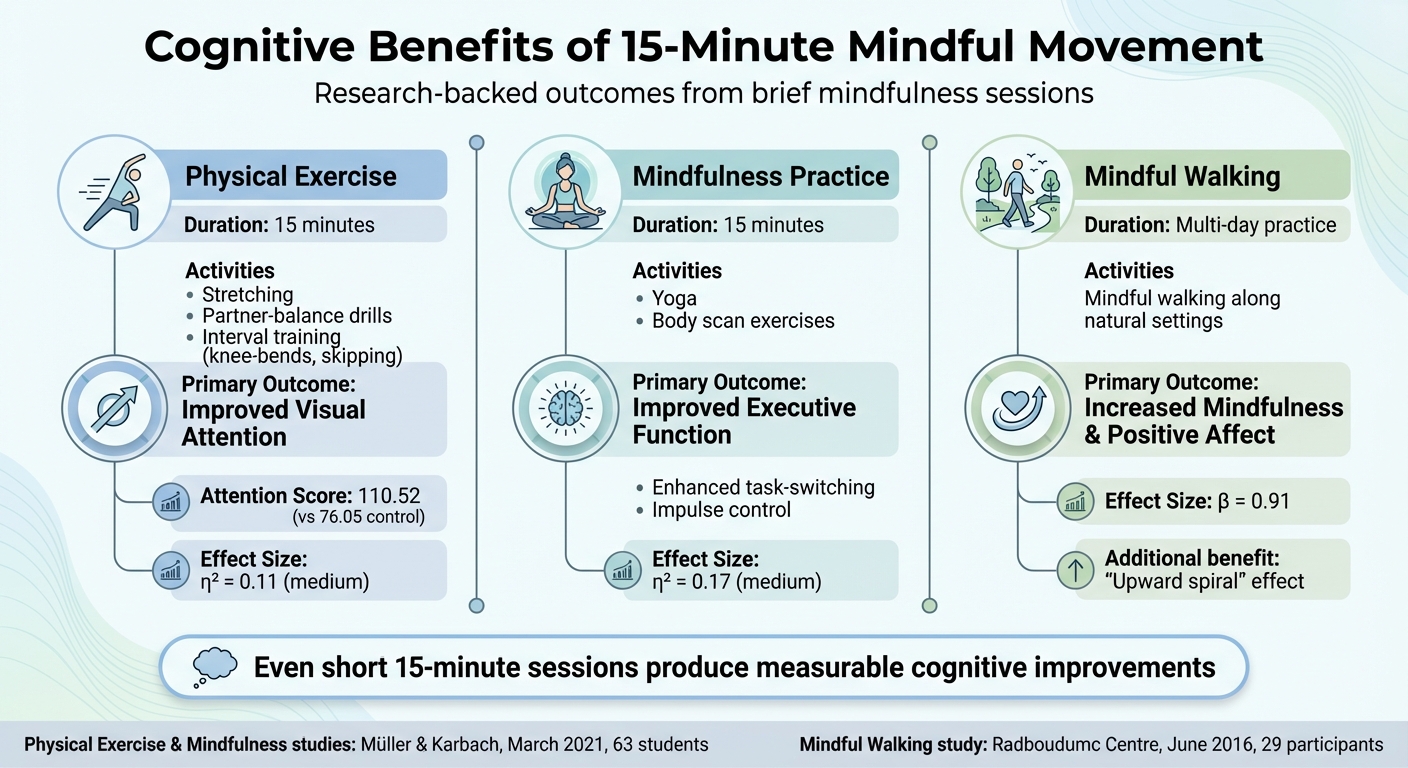
In June 2016, researchers from the Radboudumc Centre for Mindfulness in the Netherlands conducted a fascinating study involving 29 participants who walked along the river Rhine over periods ranging from 1 to 10 days. Using random smartphone data, they discovered an "upward spiral" effect: moments of increased mindfulness led to higher levels of positive emotions (β = 0.91).
"The physical sensation of walking enables people to feel more 'grounded' in the present moment. When people's minds are occupied or stressed, paying attention to their physical movements can be an easy way to become more mindful." – Radboudumc Centre for Mindfulness
A systematic review focusing on mindful walking further supported these findings. Out of 14 studies reviewed, 13 reported notable improvements in at least one mental or cardiovascular health measure, such as heightened mindfulness and reduced stress. Similarly, research from King's College London highlighted the benefits of mindful yoga, which showed measurable improvements in mindfulness, overall well-being, and even medical symptoms - even when practiced for shorter durations compared to more traditional stationary mindfulness methods.
Study Designs and Key Outcomes
The cognitive benefits of movement and mindfulness practices are further supported by detailed research designs. For instance, in March 2021, Christian Müller and Julia Karbach conducted a randomized crossover study with 63 students. Participants were divided into two groups: one performed a 15-minute physical exercise routine that included stretching, partner-balance drills, and interval training (like knee-bends and skipping), while the control group watched a fitness video. The exercise group demonstrated significantly better attention performance scores (110.52 vs. 76.05), with a medium effect size of η² = .11.
In another study, 28 students took part in a 15-minute mindfulness session featuring yoga and body scan exercises. This group showed improvement in executive functions - key mental skills for task-switching and impulse control - with a medium effect size of η² = .17. These findings suggest that while physical exercise enhances attention and visual focus, mindfulness-based practices are more effective at improving higher-level cognitive functions.
| Intervention Type | Duration | Cognitive Outcome | Effect Size |
|---|---|---|---|
| Physical Exercise (Stretching/Cardio) | 15 min | Improved Visual Attention | η² = .11 |
| Mindfulness (Yoga/Body Scan) | 15 min | Improved Executive Function | η² = .17 |
| Mindful Walking (Nature) | Multi-day | Increased Mindfulness and Positive Affect | β = 0.91 |
Cognitive and Emotional Benefits of Mindful Movement
Improved Focus and Reduced Mind-Wandering
Staying focused in today’s world of constant distractions can feel like an uphill battle. Mindful movement offers a practical way to combat this by grounding your attention in physical sensations.
When you practice mindful movement, your brain engages what researchers call a "skilled attention" mechanism. This process synchronizes your motor actions, sensory feedback, and cognitive control. Think of it this way: as you feel your feet touch the ground, notice your breath shifting, or sense your muscles stretching, these physical cues act as mental anchors. They’re like a gentle tug, pulling your attention back whenever your mind starts to drift.
"Mindful movement practice may improve the functional quality of rehearsed procedures, cultivating a transferrable skill of attention." – Dav Clark, University of California, Berkeley
Studies using brain imaging reveal that mindful movement reduces activity in the Default Mode Network (DMN) - the part of the brain responsible for daydreaming and getting "lost in thought". At the same time, it activates working memory systems, including the "central executive" and "episodic buffer", which help you notice when your mind wanders and guide your focus back to your goals. This makes mindful movement especially helpful for people who struggle with seated meditation, such as those with ADHD or high mental restlessness. The physical sensations provide clear, tangible reference points to focus on. Beyond improving concentration, these sensations also contribute to emotional stability.
Emotional Regulation and Stress Reduction
Mindful movement doesn’t just sharpen your focus - it also brings emotional benefits. Research with college students showed that negative emotions were lower during mindful movement compared to sitting still (b = 0.10, p < .001). In another study, a quick 15-minute session combining yoga and body scan exercises left participants feeling calmer (p = .001) and more positive (p = .017), with medium to large effect sizes (η² = 0.15–0.30).
Mindfulness practices have a calming effect on the amygdala, the part of the brain responsible for triggering anger and anxiety. This allows the prefrontal cortex - the area associated with decision-making and focus - to work more effectively. As psychologist Daniel Goleman explains:
"When we are anxious or angry we can't think so well. If we can calm our amygdala, that allows the prefrontal areas to operate more effectively - and thus to better focus our attention."
A meta-analysis of 47 studies found that mindfulness programs reduce psychological stress as effectively as antidepressants. For individuals dealing with recurrent depression, Mindfulness-Based Cognitive Therapy (MBCT) has been shown to cut relapse rates by 50%. Additionally, a systematic review of 35 trials found that combining physical activity with mindfulness practices resulted in better psychological health outcomes compared to passive control groups.
Mindful movement also breaks the cycle of rumination - the repetitive negative thinking that often fuels anxiety and depression. By focusing attention on bodily sensations, it limits the mental energy available for unhelpful thought patterns. This shift creates a state of "alert relaxation", promoting both mental clarity and emotional balance.
sbb-itb-bea8dce
How Movement Enhances Mindfulness and Focus
Building on earlier studies, let’s delve into how movement influences the brain to sharpen mindfulness. These processes explain the mental and emotional benefits often seen in mindful movement practices.
Embodied Attention and Sensory Awareness
Movement activates something called an efference copy. This is the brain's way of predicting sensations and then comparing them to what you actually feel. When there’s a mismatch, your attention naturally sharpens to address it.
Physical activity also provides strong feedback from your body - think of the sensations in your joints, muscles, and skin. These physical cues help ground your focus in the present moment.
"Movement increases the intensity of proprioceptive stimuli, it is possible that MECPs [movement-based embodied contemplative practices] may offer a more efficient form of practice than seated meditation when it comes to cultivating bodily awareness." – Laura Schmalzl, Department of Family and Preventive Medicine, University of California San Diego
For those who find seated meditation challenging, this connection between movement and sensory feedback offers a more approachable way to build mindfulness.
But movement doesn’t just enhance bodily awareness - it also plays a role in managing stress and balancing arousal levels.
Arousal and Stress Regulation
Movement influences arousal through the LC/NA network, a system in the brain that helps regulate attention . When stress pushes your arousal levels too high, it can lead to hypervigilance and mental distractions. On the flip side, if your arousal dips too low, you may feel drowsy or have wandering thoughts. Mindful movement helps strike a balance, creating a state of "alert relaxation" where focused attention is heightened, and distractions fade into the background .
In a study conducted in November 2023 by researchers at Northwestern University Feinberg School of Medicine, Siobhan M. Phillips and Payton Solk observed 29 healthy adults (average age 28.6 years) during 20-minute moderate-intensity walking sessions. When participants combined walking with guided mindfulness, their Rating of Perceived Exertion (RPE) was significantly lower (p < 0.001) compared to walking alone, even though their heart rate and blood pressure stayed the same.
Movement also quickly activates the autonomic nervous system. Within 1–4 minutes of starting physical activity, the vagus nerve - a key player in the parasympathetic system - helps calm the fight-or-flight response. This increased vagal tone promotes a sense of calm and enhances emotional control. On top of that, aerobic activity releases Brain-Derived Neurotrophic Factor (BDNF) and other biomolecules that support brain metabolism, particularly in areas tied to learning and memory.
Practical Applications and The Mindfulness App
Research-Informed Movement Practices
Mindful movement practices, like yoga and walking, have been shown to improve well-being and reduce stress, even with just a few minutes of practice. The secret lies in paying attention to your breath and bodily sensations as you flow through each pose or step.
Mindful walking transforms an ordinary walk into "meditation in motion." By focusing on your footsteps, breathing, and surroundings, you create a calming, present-moment experience. Research shows that people feel noticeably less negative when moving, especially when practicing mindfulness, compared to sitting still. In natural settings, this practice can spark an "upward spiral", where mindfulness and positive emotions feed into each other.
Pairing mindfulness with moderate physical activities like walking or cycling can also make exercise feel less strenuous. Participants often report feeling less exertion when combining movement with guided mindfulness. Keeping activity levels below 65% of your maximum effort helps activate the "rest and digest" response, promoting relaxation. These approaches, backed by science, are easily accessible through digital tools like The Mindfulness App.
Using The Mindfulness App to Support Movement Practices
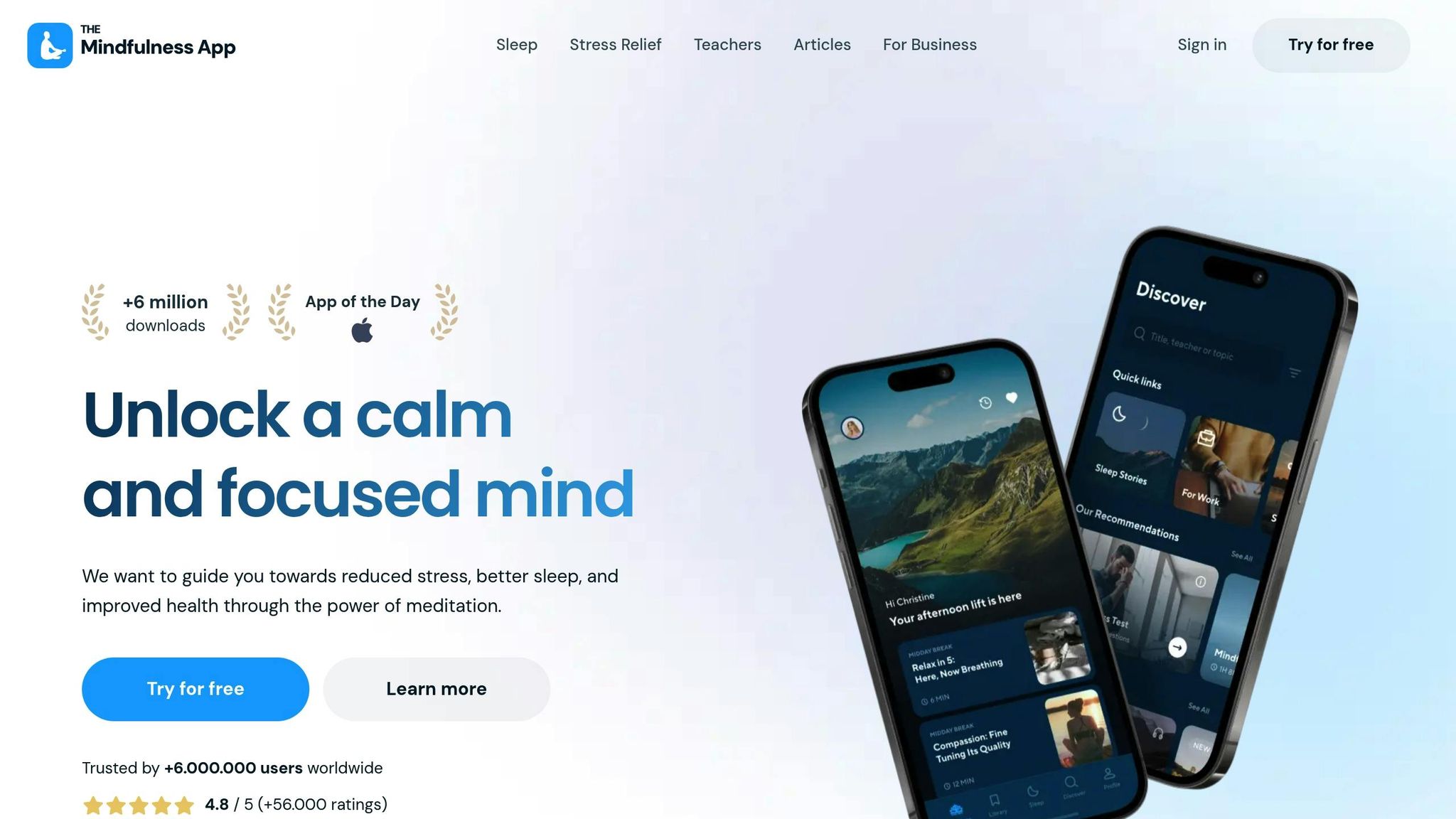
The Mindfulness App takes these research-backed techniques and makes them part of your daily life, offering tools to enhance mindful focus during movement. With over 500 guided meditations in 12 languages, the app provides audio guidance tailored for practices like mindful walking and gentle yoga. Its structured 30-day courses help users gradually develop the skills to blend mindfulness with physical activity.
One example of a science-based program is Ohio State University Wexner Medical Center's Mindfulness in Motion initiative, which integrates guided mindfulness, gentle yoga, and quick breathing exercises through a mobile app. Julie Lawson, MSN, RN, CCRN, shared her experience:
"Mindfulness in Motion taught me how to decompress during stressful moments and start my day refreshed with simple 5‑minute breathing exercises".
Similarly, The Mindfulness App offers features like short breathing exercises and movement-focused guidance, making it easy to practice mindfulness anywhere. Plus, with offline access, you can bring guided sessions along for outdoor walks or other activities.
Conclusion
Research highlights that combining movement with mindfulness amplifies its benefits. Practices that incorporate mindful movement not only sharpen attention but also reduce the feeling of effort, creating a positive cycle that boosts both mindfulness and mood. Even short 15-minute sessions have been shown to enhance focus, increase alertness, and improve emotional regulation.
By focusing on physical sensations, mindful movement provides an effective way to anchor attention, making it an excellent option for those who find seated meditation challenging.
Mindful walking, in particular, has been linked to better mental and cardiovascular health. Taking this practice outdoors, especially in nature, further supports mindfulness and uplifts mood.
These insights offer practical ways to weave mindfulness into everyday life. The Mindfulness App simplifies this process with tools like guided meditations tailored for movement, offline features for outdoor walks, and quick breathing exercises you can do anywhere. These resources make it easier to enjoy the cognitive and emotional benefits of mindful movement. Start incorporating these practices into your daily routine to nurture mental clarity and emotional well-being.
FAQs
What makes mindful movement different from traditional seated meditation?
Mindful movement takes the principles of traditional seated meditation - focused attention and awareness - and adds a physical element to the mix. While seated meditation emphasizes stillness and turning inward, mindful movement incorporates activity, making it a great option for people who struggle to sit still. Plus, research shows it can help regulate mood in the moment.
This approach taps into more areas of the brain. Along with activating attention-regulating pathways (similar to seated meditation), it also engages the sensorimotor network, which is responsible for coordinating movement and sensory input. By combining breath control, body awareness, and movement, mindful practices like walking can sharpen mental clarity and ease anxiety. In fact, studies suggest that mindful walking might even give a slight boost to executive function compared to seated meditation, offering a more dynamic way to practice mindfulness.
How does movement enhance mindfulness and mental focus?
Physical activity paired with mindfulness has a powerful impact on the brain, boosting systems linked to attention, memory, and focus. Research shows that practices like yoga, tai chi, or mindful walking can lift your mood, sharpen alertness, and cultivate a calmer state of mind - all of which contribute to sharper cognitive abilities.
Even short bursts of mindful movement can make a noticeable difference. For instance, taking just a 10-minute mindful walk has been shown to improve focus and ease anxiety more effectively than traditional seated meditation. Beyond enhancing mental clarity, mindful movement also supports overall well-being, making it a simple yet effective tool for both the mind and body.
Can practicing mindful movement help reduce anxiety and stress?
Mindful movement, such as walking, gentle yoga, or stretching while focusing on your breath and body, can be an effective way to ease anxiety and stress. Research highlights that pairing light physical activity with mindfulness creates a calming effect, lowering stress levels more effectively than moving without mindful attention.
In fact, studies reveal that even short sessions of mindful walking or yoga can enhance positive emotions and alleviate anxiety. If you’re eager to try mindful movement, The Mindfulness App provides guided walking meditations and gentle yoga flows to help you feel more centered, relaxed, and focused in your daily routine.