

Mindful eating is about paying close attention to your body's hunger and fullness signals, helping you distinguish between physical and emotional hunger. By slowing down and eating with awareness, you can improve your relationship with food and avoid overeating. Here's what you need to know:
- Physical Hunger: Gradual onset, tied to energy needs, and relieved by eating a variety of foods.
- Emotional Hunger: Triggered by emotions like stress or boredom, often sudden, and leads to specific cravings.
- Key Practices: Pause before meals to assess hunger, eat slowly without distractions, and check fullness mid-meal.
- Barriers: Fast-paced eating, dieting, and emotional triggers can make it hard to recognize hunger cues.
Start by using a simple hunger scale (1–10) to gauge your needs, take deep breaths before eating, and focus on how your body feels. These small steps can help you eat more intentionally and trust your body's signals.
How to Use The Hunger Scale | Understanding Your Hunger and Fullness Cues for Mindful Eating
What Are Hunger Cues?
Physical vs Emotional Hunger: Key Differences
Hunger cues are your body’s way of letting you know it’s time to refuel. These signals come from within - like a growling stomach, low energy, or even a change in mood - rather than external factors like the clock or the sight of food. They’re your body’s natural reminders that it needs energy. Let’s take a closer look at the most common hunger signals and how to interpret them.
Physical signs of hunger can range from subtle to intense. Early signs might include stomach growling, an empty feeling, or mild hunger pangs. As hunger builds, you might notice lightheadedness, trouble concentrating, a headache, or low energy. Irritability, often jokingly called being "hangry", is another common clue. If hunger goes unchecked, it can escalate to shakiness, weakness, nausea, or even feeling unwell, with thoughts about food becoming harder to ignore.
To help identify these signals, some people use a hunger–fullness scale. This 0–10 scale helps track where you are: 0–1 indicates extreme hunger, 3–4 signals moderate hunger, and 5 is neutral. Eating when you’re at a 3 or 4 allows you to make more thoughtful food choices.
Physical vs. Emotional Hunger
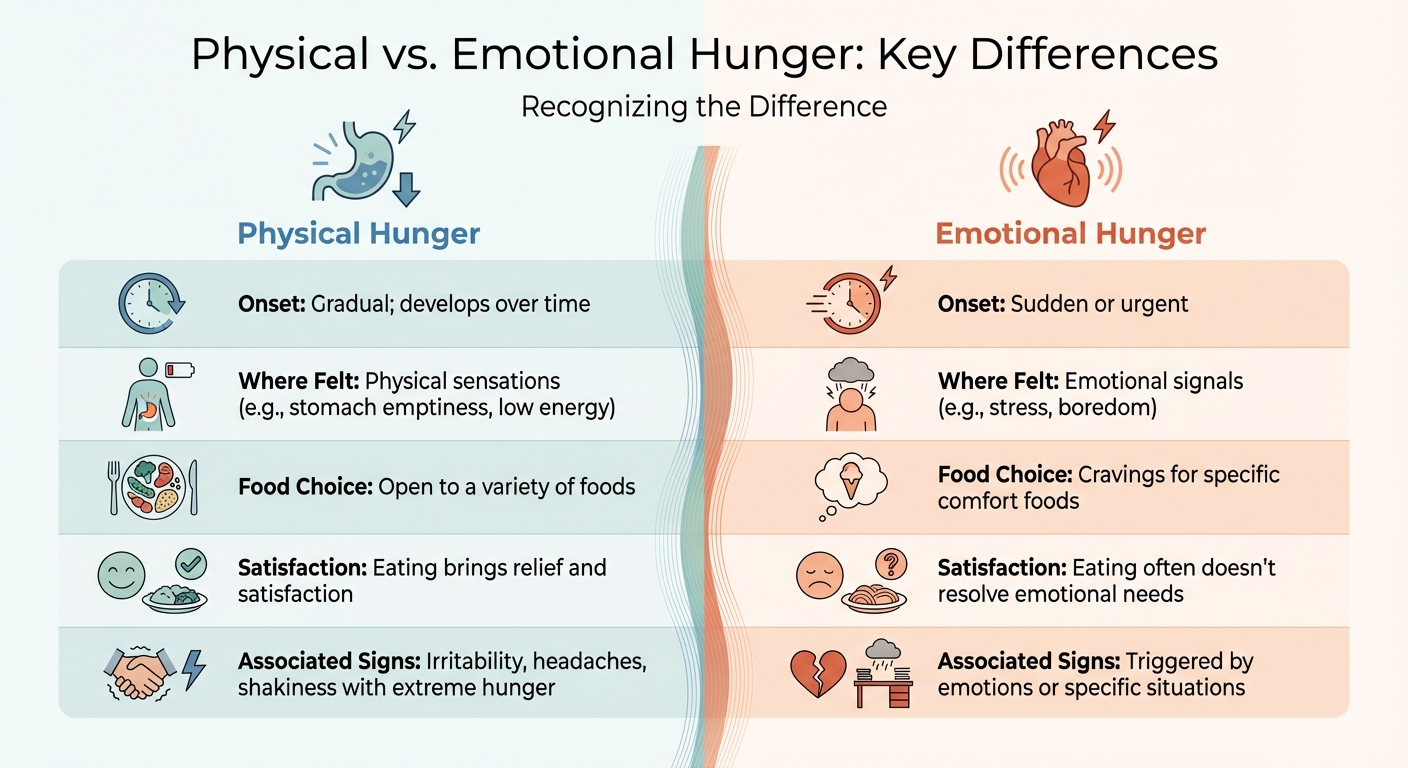
While physical hunger is tied to your body’s energy needs, emotional hunger is linked to your feelings. Emotional hunger often stems from stress, boredom, sadness, loneliness, or anxiety rather than a true need for food. It can appear suddenly, bringing strong cravings for specific comfort foods even when your stomach isn’t empty.
In contrast, physical hunger builds gradually, and a variety of foods may seem appealing. Eating when physically hungry typically brings relief and satisfaction. However, eating in response to emotional hunger often leaves you feeling unsatisfied or weighed down by guilt or regret. Recognizing the difference between the two is key, and practicing mindfulness can help you address emotional needs without mistaking them for physical hunger.
| Aspect | Physical Hunger | Emotional Hunger |
|---|---|---|
| Onset | Gradual; develops over time | Sudden or urgent |
| Where Felt | Physical sensations (e.g., stomach emptiness, low energy) | Emotional signals (e.g., stress, boredom) |
| Food Choice | Open to a variety of foods | Cravings for specific comfort foods |
| Satisfaction | Eating brings relief and satisfaction | Eating often doesn’t resolve emotional needs |
| Associated Signs | Irritability, headaches, shakiness with extreme hunger | Triggered by emotions or specific situations |
What Prevents You from Recognizing Hunger Cues
Even if you understand hunger cues, modern habits, strict diets, and emotional triggers can make it tough to tune into them. Breaking through these barriers is the first step toward reconnecting with your natural hunger signals. By identifying these challenges, you can apply mindful strategies to better recognize and respond to your body's needs.
Distractions and Fast-Paced Eating
It's easy to miss hunger signals when you're multitasking - scrolling on your phone, watching TV, or working. These distractions pull your focus away from your body, making it harder to notice subtle signs like a growling stomach, low energy, or the shift from hunger to fullness.
Eating too quickly adds to the problem. Did you know it takes about 20 minutes for your brain to register fullness? When you rush meals, you can easily eat past the point of comfort. A review of 68 studies found that eating slowly helps people recognize when they're about 80% full, reducing the likelihood of feeling uncomfortably stuffed.
Dieting and Food Rules
Strict dieting can mess with your ability to trust your hunger cues. By following rigid food rules, you suppress your natural signals and may confuse real hunger with mental restrictions. Evelyn Tribole and Elyse Resch, who developed the Intuitive Eating framework, highlight how chronic undereating often leads to overeating. They describe the "food police" in your mind - an internal voice enforcing guilt and rules - as a major obstacle to reconnecting with your body.
Studies back this up: relying on internal hunger cues is linked to fewer disordered eating behaviors, better self-esteem, and healthier weight regulation. On the flip side, dieting is associated with disordered eating patterns and lower body positivity. Ignoring moderate hunger (levels 3-4 on the hunger scale) can push you into ravenous hunger (levels 0-2), where making mindful food choices becomes nearly impossible.
Emotional and Stress-Driven Eating
Stress and emotions can mimic physical hunger or even override it. Feelings like boredom, sadness, or anxiety can create sensations - like restlessness or low energy - that feel like hunger, even when your body doesn’t actually need food. This often leads to reaching for comfort foods to manage emotions instead of nourishing your body.
Mindfulness can help break this cycle. Practicing non-judgmental awareness - observing your feelings without criticism - can help you tell the difference between emotional cravings and true physical hunger. Simple strategies include pausing to take a few deep breaths when cravings hit or savoring small portions of food slowly. These habits can help you avoid eating quickly to numb uncomfortable emotions. Rebuilding this awareness is key to separating emotional needs from genuine hunger.
How to Recognize and Respond to Hunger Cues
Understanding your body's hunger signals can feel like learning a new language, but with practice, it becomes second nature. Here are five practical strategies to help you tune in to your body's needs and respond in a way that feels natural and manageable. Start by pausing and checking in with yourself before each meal.
Pause and Assess Hunger Levels
Before diving into a meal, take a moment to gauge your hunger on a scale of 1 to 10. Imagine 1 as extreme hunger - think dizziness, nausea, or trouble focusing - while 10 means you're so full it's uncomfortable. A good time to start eating is when you're around a 3 or 4, and you should aim to stop when you’re at a 6 or 7. Close your eyes for a second, focus on how your stomach feels, and pick a number. If you're at a 2, grab a snack soon. If you're at a 5, you can wait a bit. And if you’re at a 7, eating might not be necessary right now. This simple pause helps align your eating with mindful habits and keeps you in tune with your body’s needs.
Perform a Body Scan for Hunger Signals
A quick body scan - just 1 to 2 minutes - can help you figure out if your hunger is physical or if it’s more about emotions. Sit or stand quietly and focus on your breathing. Then, move your attention through different parts of your body:
- Head: Are you lightheaded or dealing with a headache?
- Chest: Is there tightness that might signal stress?
- Stomach: Do you feel a gentle emptiness or even a growl?
- Limbs: Do your arms and legs feel heavy or lacking energy?
Physical hunger tends to build gradually and comes with these kinds of cues. Emotional cravings, on the other hand, often show up suddenly and are tied to specific foods without the usual signs of hunger.
Create a Distraction-Free Eating Environment
Once you've checked in with your hunger cues, set the stage for a focused eating experience. Reducing distractions helps you notice when you're truly full. At home, turn off the TV, put your phone on silent, and eat at the table instead of in front of a screen. If you’re at work, take a short break - 10 to 15 minutes - and eat in a quiet spot away from your computer. Even on the go, you can make small adjustments: park your car in a safe spot, take a few deep breaths, and savor your food. Slow down by taking smaller bites, putting your utensils down between bites, and checking in with your hunger scale halfway through your meal.
Practice Deep Breathing Before Meals
A quick breathing exercise before eating can help you separate physical hunger from emotional cravings while promoting mindful eating. Here’s how to do it:
- Sit comfortably with one hand on your belly.
- Inhale through your nose for a count of 4, letting your belly expand.
- Hold your breath for 1 to 2 counts.
- Exhale through your mouth for a count of 6.
Repeat this cycle 5 to 10 times. Afterward, ask yourself: What physical sensations are telling me I’m hungry? If the desire to eat feels sudden, is tied to a specific comfort food, and isn’t accompanied by signs like an empty stomach or low energy, it might be emotional rather than physical hunger.
Track Hunger and Fullness Over Time
Keeping a journal for a few weeks can reveal patterns in your eating habits and help you better understand your hunger cues. Note the time, your hunger level (1–10) before eating, your fullness level (1–10) after eating, what you ate, where you were, and how you felt. Over time, you may notice trends, like waiting until you’re at a 1 or 2 before eating, which could lead to overeating, or frequently stopping at an 8 or 9, which suggests eating past comfort. You might also spot emotional triggers - like stress or boredom - that lead to eating when you’re not hungry. Make small adjustments, like adding a mid-afternoon snack or cutting out distractions, and see how these changes affect your hunger and fullness ratings.
sbb-itb-bea8dce
How to Honor Hunger and Fullness
Tuning into your body's natural hunger and fullness cues can transform your relationship with food. Research suggests that people who rely on these internal signals often experience fewer disordered eating behaviors, greater body appreciation, and more stable, healthy weights over time. This is especially important in the U.S., where hectic lifestyles and oversized portions encourage mindless eating. Here are some practical ways to bring these principles into your daily meals.
Pause Mid-Meal to Check Fullness
Taking a moment to pause during your meal can help you avoid overeating. Set down your fork, take a sip of water, and ask yourself, "How full do I feel right now?" Pay attention to whether your stomach feels light, neutral, slightly stretched, or tight. If you’re nearing a 6 or 7 on the hunger–fullness scale, you’re likely comfortably satisfied. Studies show that pausing between bites can make it easier to recognize when you’ve had enough. Simple strategies like pre-portioning your meals or taking short breaks while eating can help you stay in tune with your fullness.
Savor Each Bite Mindfully
Focusing on the sensory details of your food can enhance satisfaction and help you eat less. Notice the taste, texture, smell, temperature, and appearance of each bite. For example, try the "first three bites" exercise: during your first three bites, silently identify at least one sensory detail for each, like "crunchy", "spicy", or "smooth". Take smaller bites, chew slowly, and observe how the flavors change as you eat. Research shows that slowing down and savoring your food not only helps you feel full sooner but also increases your overall enjoyment - even with smaller portions. These mindful practices can deepen your trust in your body’s natural signals.
Approach Eating with Compassion
Building on mindful eating habits, bring a sense of kindness and understanding to your relationship with food. Non-judgmental awareness means observing your thoughts, feelings, and actions around eating without labeling them as "good" or "bad". For example, instead of thinking, "I failed by eating dessert", try reframing it: "I noticed I ate past my comfort level; what can I learn for next time?". This mindset helps separate physical hunger from emotional hunger, reducing the likelihood of binge or emotional eating over time. On occasions where you consciously eat past fullness - like enjoying a special holiday dessert - acknowledge your choice and its effects without guilt or self-criticism. By treating yourself with compassion, you can rebuild trust in your body’s cues while fostering a more balanced, sustainable approach to eating.
Using The Mindfulness App for Mindful Eating

The Mindfulness App offers over 500 guided meditations, body scans, and courses in 12 languages, making it a valuable tool for honing mindful eating habits. Studies suggest that techniques like eating more slowly can improve your ability to recognize fullness and enhance self-control.
Before diving into a meal, take 3–5 minutes for a breathing exercise or body scan using the app. This short pause helps you tune into your hunger signals and energy levels, making it easier to distinguish physical hunger (like an empty stomach or low energy) from emotional hunger (such as stress, boredom, or loneliness). Research indicates that mindfulness practices can help reduce binge eating and emotional eating by clarifying these cues.
While eating, the app’s mindful eating tracks guide you to slow down, chew thoroughly, and truly enjoy your food. You can also set reminders to pause halfway through your meal, take a few deep breaths, and reassess your fullness level. These small practices encourage you to stop eating when you’re satisfied rather than overfull. If cravings hit between meals, try the app’s "urge surfing" or emotion-regulation meditations instead of immediately grabbing a snack. These exercises focus on your breath and body sensations, helping you ride out the peak of the craving and decide more thoughtfully whether to eat.
The app also offers courses on acceptance, self-compassion, and non-judgmental awareness, which can help you move away from rigid dieting rules and reconnect with your body’s natural hunger and fullness cues. Research has shown that relying on these internal signals is linked to greater body positivity, improved self-esteem, fewer disordered eating behaviors, and healthier weight maintenance. With a stellar 4.8 out of 5 rating from over 56,000 reviews and more than 6 million downloads worldwide, The Mindfulness App has already helped users log over 180 million mindful minutes. A 14-day free trial gives you access to the full premium library so you can explore and find the practices that resonate with you.
For an even deeper mindful eating experience, combine the app with a simple hunger–fullness log. Use this log to track which meditation you tried, your hunger levels before and after eating, your eating speed, and any emotional triggers you noticed. Monitoring your hunger–fullness scale, as previously mentioned, is a key part of mindful eating, and the app’s log feature reinforces this habit. Reviewing your entries can highlight positive patterns, like starting meals when moderately hungry and stopping when comfortably full, or noticing fewer emotional eating episodes. Even small, consistent efforts can transform your relationship with food, helping you approach eating with more ease and self-assurance.
Conclusion
Learning to tune into your hunger and fullness cues is a process that takes patience and practice. By pausing before meals, eating at a relaxed pace, and stopping when you feel comfortably full, you can start to trust your body rather than relying on external rules. Studies suggest that people who follow their internal cues often experience fewer symptoms of disordered eating, a stronger sense of body appreciation, higher self-esteem, and more stable weight management. This mindful approach creates a solid framework for eating with kindness and clarity.
It’s important to approach this journey with a sense of curiosity and without judgment. If you notice moments of overeating or emotional eating, use them as opportunities to learn rather than criticize yourself. This compassionate mindset helps break the cycle of shame and restriction, paving the way for a healthier, more trusting relationship with food. Over time, these small, consistent efforts help you reconnect with your body’s natural rhythms.
A simple way to begin is by rating your hunger on a scale from 1 to 10 before eating, taking a few calming breaths, and pausing midway through your meal to assess your fullness. These mindful steps can reshape the way you relate to food and build lasting confidence in your body’s signals. By weaving these practices into your daily routine, you’ll develop a deep and lasting trust in your body’s needs.
FAQs
How can I tell the difference between physical hunger and emotional hunger?
Physical hunger builds up slowly and is often marked by signs like a growling stomach, a sense of emptiness, or feeling low on energy. It can typically be satisfied with a range of different foods. Emotional hunger, however, tends to hit suddenly, is linked to emotions such as stress or boredom, and often leads to cravings for specific comfort foods.
By practicing mindfulness, you can become more aware of your body's natural signals and learn to distinguish between these types of hunger without self-criticism. Taking the time to slow down and pay attention allows you to address your genuine needs more effectively.
How can I start practicing mindful eating?
Before you eat, take a moment to check in with yourself. Ask: Am I actually hungry, or am I eating because I'm bored, stressed, or just following a routine? A few deep breaths can help you refocus and connect with what your body truly needs.
As you eat, slow down and really enjoy the experience. Notice the flavors, textures, and aromas of your meal. Try to avoid distractions like TV or your phone - give your full attention to the act of eating. This simple shift can help you tune in to when you're full or satisfied, making it easier to eat in line with your body's natural signals.
Using mindfulness practices, like guided meditations, can also help you sharpen this awareness and build a more balanced relationship with food.
How does eating quickly impact your ability to notice hunger cues?
Eating too quickly often disrupts your ability to recognize your body's natural hunger and fullness signals. When meals are rushed, your brain doesn’t get enough time to catch up and register that you’re full, which can lead to overeating or feeling uncomfortably stuffed.
Taking the time to slow down and practice mindful eating allows you to connect with these cues. This approach not only helps you savor your meals but also supports healthier eating habits.