
Mindful listening is a simple way to reduce anxiety by focusing on external sounds like music or nature. Research shows it can lower stress, improve emotional control, and even change brain activity to promote calmness. Here's why it works and how to use it:
- What it is: Paying focused, non-judgmental attention to sounds around you.
- Why it helps: Redirects your mind from anxious thoughts, lowers heart rate, and enhances brain regions tied to emotional regulation.
- Scientific proof: Studies show mindful listening reduces anxiety by up to 39% and boosts heart rate variability (HRV), a marker of stress resilience.
- How to try it: Use mindfulness practices like body scans, grounding techniques, or calming music (e.g., tracks at 60–80 BPM).
Mindful listening is easy to fit into your daily routine with just 5–15 minutes a day. Whether you're commuting, taking a break, or preparing for a stressful event, this practice can help you feel more grounded and less anxious.

Mindful Listening for Anxiety Relief: Key Statistics and Brain Effects
Mindful Listening: A Moment for Mental Health
sbb-itb-bea8dce
The Science Behind Mindful Listening
Mindful listening doesn’t just help you focus - it also creates measurable changes in your brain and body that can ease anxiety. Let’s unpack the science behind how this works.
Brain Activity During Mindful Listening
When you practice mindful listening, specific areas of your brain light up, helping to regulate emotions and sharpen attention. Studies show that this practice activates the anterior cingulate cortex (ACC) and ventromedial prefrontal cortex (vmPFC) - key regions for emotional control - while simultaneously reducing activity in the amygdala, the part of your brain responsible for fear and stress responses.
Fadel Zeidan’s 2014 research observed this in action. In a study of 15 beginners, participants experienced a 39% drop in state anxiety. This reduction was directly linked to increased activity in the ACC and vmPFC, along with decreased amygdala activity.
"Meditation-related anxiety relief was associated with activation of the anterior cingulate cortex, ventromedial prefrontal cortex and anterior insula." - Fadel Zeidan, Assistant Professor of Neurobiology and Anatomy, Wake Forest Baptist Medical Center
Another brain region affected by mindful listening is the posterior cingulate cortex (PCC), which is tied to mind-wandering and self-focused thinking. High PCC activity during meditation is associated with greater anxiety, but mindful listening helps tone down this mental noise, allowing for a calmer state of mind.
These shifts in brain activity lay the groundwork for physical changes that further support anxiety relief.
Physical Changes During Mindful Listening
On a physical level, mindful listening helps your body switch gears from a high-stress state to a more relaxed one. It does this by influencing the autonomic nervous system, moving it from “fight-or-flight” mode to “rest-and-digest” mode. One key marker of this shift is an increase in Heart Rate Variability (HRV), which reflects better stress resilience and heart health.
In April 2025, a Yale University study led by Stephen Allsop and Christine Ramirez explored this effect in 38 anxious adults. Participants attended 15-minute sessions at the BLOOM community center in New Haven, CT, combining mindfulness with live instrumental music. Using wearable ECG and EEG sensors, researchers found that these sessions significantly boosted HRV and altered brain activity in frontotemporal regions, which reduced participants’ feelings of distress.
"Music mindfulness effectively engages autonomic and frontotemporal neural mechanisms, which may contribute to the treatment of anxiety and depression symptoms." - Stephen Allsop, Lead Researcher, Yale University
Additionally, mindful listening promotes alpha and theta brainwave activity, states associated with calm focus and relaxed alertness. These changes, alongside reduced stress hormone levels, explain why this practice is so effective at alleviating anxiety.
Research Studies on Mindful Listening and Anxiety Reduction
Meta-Analysis on Mindfulness Interventions
A review of 21 controlled studies highlights how mindful listening can significantly ease state anxiety. Music-based listening interventions, in particular, showed a strong impact on reducing state anxiety, with an effect size of d = -0.77.
The American Psychological Association (APA) evaluated over 200 studies on mindfulness among healthy individuals and concluded that mindfulness-based therapy effectively reduces stress, anxiety, and depression. Mindful listening stands out as a simple, low-cost, and self-directed approach. This is crucial when you consider that about 18% of Americans experience anxiety disorders, yet only 20% of them pursue formal treatment.
These findings lay the groundwork for exploring how mindful listening affects different contexts, from clinical environments to everyday life.
Clinical vs. Non-Clinical Study Results
The impact of mindful listening depends on whether it’s used to address diagnosed anxiety disorders or everyday stress. A 2023 meta-analysis of 334 participants with Generalized Anxiety Disorder revealed that 8-week mindfulness programs, such as MBSR (Mindfulness-Based Stress Reduction) and MBCT (Mindfulness-Based Cognitive Therapy), significantly reduced anxiety symptoms (g = -1.92) when compared to standard care or waitlist controls. In these cases, improvements in overall mindfulness skills played a key role in reducing symptoms.
For non-clinical groups, the results are equally compelling. A July 2024 study involving 2,239 participants (70.4% women, average age 22.4) found that a single session of "body scan" meditation reduced stress (d = -0.56) compared to an active control group that listened to story excerpts. This suggests that even short, self-guided mindfulness practices can provide quick relief for everyday anxiety.
These findings align with earlier research on brain and autonomic activity, emphasizing that mindfulness techniques may be particularly effective for people with subclinical anxiety. However, individuals with diagnosed anxiety disorders may require more comprehensive, multi-faceted treatments.
Factors That Make Mindful Listening More Effective
The effectiveness of mindful listening can vary, but certain factors enhance its impact. Not all techniques are equally effective, and research points to key elements that optimize results. These include longer session durations (30 minutes or more), individual rather than group practice settings, and the type of exercise used - body scan meditations being the most impactful.
In the 2024 multi-site study, participants practicing body scan meditation reported significantly lower stress levels (M = 1.68) compared to those in the active control group (M = 1.95). Other mindfulness exercises like mindful breathing, walking, and loving-kindness meditation also showed benefits, but none matched the body scan's effectiveness.
A systematic review from 2020, conducted by W.W.Y. Sun and colleagues, examined 24 randomized controlled trials comparing mindful exercises (like yoga and qigong) to non-mindful physical activities (such as walking or aerobic exercise). The findings revealed that yoga was more effective in reducing anxiety (SMD = -0.45) than traditional physical exercises. This underscores the importance of the mindful aspect in these practices rather than just physical movement.
Another critical factor is the style of attention in mindfulness exercises. Approaches that emphasize passive observation - such as noticing thoughts, sensations, or breathing without trying to alter them - consistently reduce anxiety more effectively than techniques requiring active manipulation. This aligns with the core principle of mindful listening: observing without judgment or interference.
How to Use Mindful Listening for Daily Anxiety Relief
Guided Listening Exercises to Try
One of the simplest and most effective ways to ease stress is through body scan meditation. Find a comfortable position - sitting or lying down - and mentally "scan" your body from your toes to your head. Pay attention to any tension, like a clenched jaw or tight shoulders, without trying to change it. Just noticing these sensations can help you feel more grounded.
The 5-4-3-2-1 grounding technique is another great tool for redirecting anxious thoughts. Use your senses to name: five things you see, four things you hear, three things you can feel, two things you can smell, and one thing you can taste. This exercise is especially helpful when anxiety feels overwhelming, as it anchors you in the present.
For those who find music soothing, functional music listening offers a science-backed way to reduce stress. Tracks like "Weightless" by Marconi Union, which gradually slows from 60 BPM to 50 BPM, have been shown to reduce anxiety by up to 65%. Choosing music with a tempo between 60 and 80 BPM can mimic your resting heart rate, helping your nervous system relax naturally.
A 2025 study led by Dr. AZA Allsop at Yale School of Medicine's AZA Lab explored the effects of live instrumental music on anxiety. Using wearable EEG and EKG devices, researchers measured the impact of "Focus" sessions (B Major, 72 BPM) and "Motivation" sessions (E Minor, 164 BPM) on 38 participants with moderate anxiety and depression. The results showed significant improvements in heart rate variability and brain activity, reducing psychological stress.
| Exercise Type | Primary Focus | Recommended Audio/Tempo |
|---|---|---|
| Focus MM | Breath and body awareness | B Major, ~72 BPM |
| Motivation MM | Visualization and restructuring | E Minor, ~164 BPM |
| Relaxation Listening | Physiological entrainment | 60–80 BPM (e.g., "Weightless") |
| Grounding (5-4-3-2-1) | Immediate environment | Natural ambient sounds |
These techniques are easy to incorporate into your daily routine, no matter how busy life gets.
Fitting Mindful Listening into Busy Schedules
Even on the busiest days, micro-practices can make mindful listening doable. For example, spend just 60 seconds focusing on the sounds around you before tackling a stressful email or heading into a meeting. This quick practice can help reset your mind and body.
Transition rituals are another way to weave mindful listening into your day. Whether you're waking up, commuting, or winding down, listening to calming music during these moments can shift your brain into a more relaxed state. While research suggests it takes about 45 minutes of calming music to fully reach alpha wave states, noticeable relief often begins within the first 5–15 minutes.
Planning ahead with pre-anxiety priming can also be effective. Listen to soothing tracks for 15–30 minutes before facing a stressful situation, like a work presentation or a flight. Studies show that 30-minute sessions are particularly effective for reducing anxiety.
If you have a chance to step outside, try mindful walking during breaks. Walk slowly, paying attention to the sensation of your feet touching the ground and the sounds around you. If your mind starts to wander, gently bring your focus back to your steps. These small practices can make a big difference over time.
For an immersive experience, consider using noise-isolating headphones. These block out distracting sounds that might trigger your brain's natural threat-detection system. As Brain.fm Editorial explains:
"Anxious brains are hypervigilant, constantly scanning for threats. Music with sudden changes... can trigger this threat-detection system".
Tools and Resources for Mindful Listening
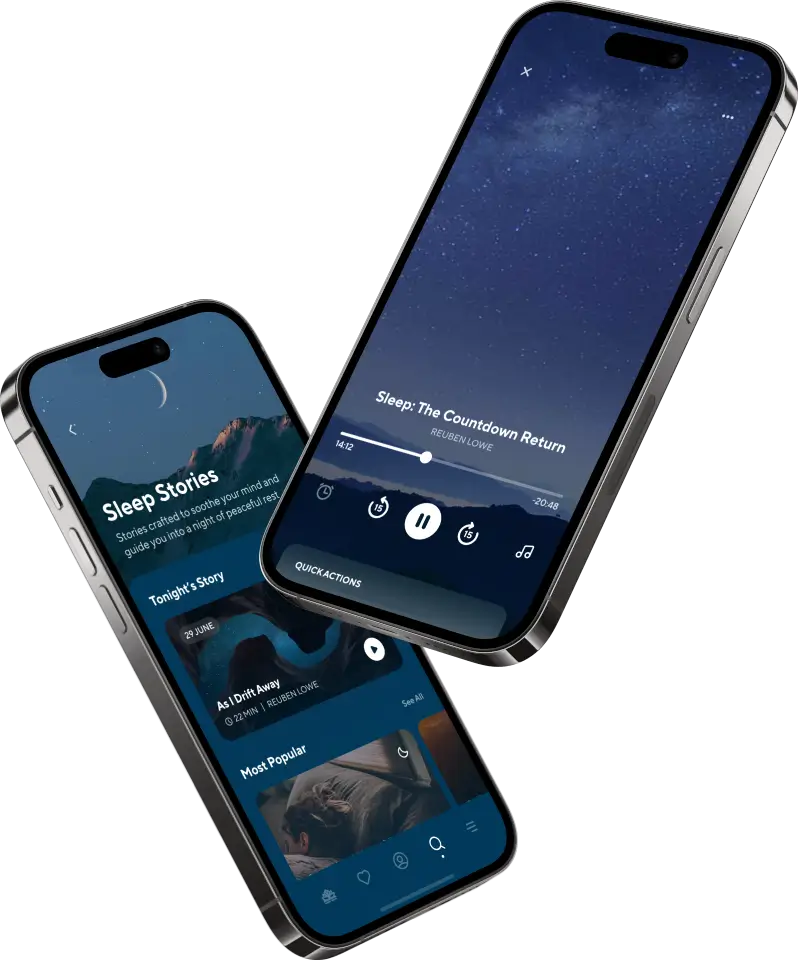
Incorporating mindful listening into your life doesn't have to be complicated. Apps like The Mindfulness App provide guided meditations, sleep stories, and mindfulness courses designed to reduce stress and improve well-being. With over 500 tracks available in 12 languages and offline functionality, it’s a convenient option for both beginners and experienced practitioners.
The app offers a 14-day free trial, giving you the chance to explore techniques like body scans and breathing exercises. Its personalized programs adapt to your schedule, whether you have just a minute or a full half-hour to dedicate to mindfulness.
"We desperately need community-based, accessible, and affordable treatments for anxiety and depression. Music mindfulness impacts physiology and the psyche in a way that we can leverage to manage symptoms that lead to distress and hospitalization." - AZA Allsop, MD, PhD, Assistant Professor of Psychiatry, Yale School of Medicine
If you'd prefer to create your own playlist, instrumental tracks are a great place to start. Classical, meditative, ambient, or "new age" music works well. Research also points to major-key violin music as particularly helpful for high-anxiety individuals, as its high-frequency harmonics can influence brain activity in calming ways.
Conclusion: Why Mindful Listening Matters for Anxiety Relief
Summary of Scientific Findings
Research consistently shows that mindful listening can significantly reduce anxiety. A meta-analysis of 19 trials revealed that mindfulness interventions led to a measurable reduction in anxiety (Hedges' g = 1.08), with even stronger effects (up to 1.85) for conditions like panic and generalized anxiety disorders. Additionally, a large-scale study involving 2,239 participants demonstrated that body scan meditation effectively reduced perceived stress (Cohen's d = -0.56), supported by solid statistical evidence.
The physical effects are just as noteworthy. Mindful listening has been shown to enhance heart rate variability (HRV) and influence frontotemporal brain activity. Imaging studies also highlight reduced activity in the amygdala, the brain's fear center, along with improved attention control.
"Music mindfulness effectively engages autonomic and frontotemporal neural mechanisms, which may contribute to the treatment of anxiety and depression symptoms." - Ramirez et al., Frontiers in Neuroscience
These findings emphasize how effective and straightforward mindful listening can be, making it a practical tool for everyday anxiety management.
Getting Started with Mindful Listening
One of the best things about mindful listening is how easy it is to begin. You don't need fancy gadgets, costly classes, or a big time commitment. Even brief exercises - just 5 to 10 minutes - can deliver noticeable stress relief. Apps like The Mindfulness App offer guided sessions that fit seamlessly into your day, whether you have a single minute or a half-hour to spare.
Start small. When anxious thoughts surface, use your breath as a grounding tool, or try a simple exercise like focusing on the sounds around you during a commute. Philippe R. Goldin from Stanford University explains that mindfulness training "may reduce emotional reactivity while enhancing emotion regulation". These skills grow stronger with consistent practice, no matter how short the sessions.
FAQs
Does mindful listening work for panic attacks?
Mindful listening can play a key role in managing panic attacks by helping to calm the nervous system and reduce stress. Studies have found that it can lower cortisol levels - the hormone linked to stress - and improve the body's ability to handle stressful situations. This makes it a powerful approach for alleviating anxiety.
What sounds work best if music makes me anxious?
If music tends to make you feel anxious, studies indicate that calming alternatives like nature sounds, ambient noise, or mindfulness tracks might ease your stress. These options often include slow rhythms, soft tones, and smooth transitions, which can help calm your nervous system. Trying out relaxing soundscapes or guided meditation exercises could be an effective way to reduce anxiety and encourage a sense of calm.
How do I know it’s helping if I can’t measure HRV?
Even without tracking HRV, you can assess your progress by paying attention to how you feel and act over time. Many people notice they feel calmer, more focused, and better equipped to handle stress after sticking with mindfulness practices. Physical indicators, like lower cortisol levels or improved emotional control, can also signal positive changes. With regular practice, you’re likely to see shifts in stress levels, mood, and overall resilience, even without relying on HRV measurements.

.jpeg)