

Mindful habit stacking is a straightforward way to make mindfulness part of your daily life by tying it to habits you already have. For example, after pouring your morning coffee, you could take three deep breaths. This approach works because it builds on routines you already follow, making new habits easier to stick with. Research shows linking habits this way can improve emotional regulation, reduce stress, and sharpen focus - sometimes in less than two minutes a day.
Here’s the process in a nutshell:
- Pick an anchor habit: Choose something you do daily, like brushing your teeth or sitting at your desk.
- Add a mindfulness habit: Pair the anchor with a simple action, like naming one thing you’re grateful for or taking a deep breath.
- Keep it small: Start with habits that take under two minutes to make consistency easier.
- Track your progress: Use a journal or app to stay motivated and monitor your streaks.
Mindful habit stacking isn’t about overhauling your routine overnight. It’s about small, consistent actions that gradually build into lasting habits. Keep reading to learn how to find the right anchor habits, create effective stacks, and troubleshoot common challenges.

4-Step Mindful Habit Stacking Process with Benefits and Success Rates
How to Get Started with Habit Stacking
sbb-itb-bea8dce
What Is Mindful Habit Stacking?
Mindful habit stacking is a simple yet effective way to incorporate mindfulness into your daily life. It involves connecting a new mindfulness practice to an existing habit, known as an "anchor habit", to make the new behavior feel natural and automatic. The formula is straightforward: "After [CURRENT HABIT], I will [NEW MINDFUL HABIT]." For example, after sitting down at your desk, you could take a moment to name one thing you're grateful for.
What makes mindful habit stacking different from traditional habit stacking is its emphasis on awareness and deliberate action. While traditional habit stacking often focuses on efficiency - like flossing immediately after brushing your teeth - mindful habit stacking encourages you to stay fully present and engaged in the moment as you perform the new behavior.
This approach taps into the brain's habit management system, specifically the basal ganglia, which handles automatic behaviors. By linking a new habit to an existing one, you capitalize on the brain's natural tendency to conserve energy by using established neural pathways. This process, known as synaptic pruning, strengthens the connections you use most often. Essentially, the momentum of your anchor habit helps "carry" the new mindful habit, making it easier for your brain to adopt it.
Another advantage of this method is that it reduces decision fatigue. By tying the new habit to an existing one, you eliminate the need to decide when or how to perform it. Research shows that specific "if-then" plans significantly boost follow-through rates. For example, a study by Dr. Peter Gollwitzer found that vague goals like "I will exercise" had only a 29% success rate, while detailed "if-then" plans achieved a 91% success rate. This combination of reduced mental effort and lasting neural changes makes mindful habit stacking an effective way to integrate mindfulness into your day.
"Habit stacking allows you to create a set of simple rules that guide your future behavior. It's like you always have a game plan for which action should come next."
– James Clear, Author of Atomic Habits
With this foundation in place, let's dive into the benefits and brain changes that mindful habit stacking can bring.
Benefits of Mindful Habit Stacking
Pairing mindfulness with habit stacking creates a purposeful shift in your routine, promoting mental and emotional well-being. One of the most immediate benefits is stress reduction, which can lead to better work decisions. For instance, SKY Breath Meditation - often used in habit stacks - has been shown to lower stress hormone levels by up to 58%. By anchoring breathing exercises to daily cues, such as fastening your seatbelt, you create multiple opportunities throughout the day to calm your nervous system.
This practice also enhances focus and mental clarity. Even brief mindfulness sessions, lasting just a few minutes, can activate the same neural pathways as longer meditation practices. These "micro-habits" are powerful tools for sharpening attention and reducing mental fog. Over time, consistent practice can lead to a flow state, where the behavior feels effortless and deeply engaging.
Emotional regulation is another key benefit. Simple routines, like taking 20 seconds to name your emotions after a meeting, help you process feelings in real time instead of suppressing them. Research on SKY Breath Meditation also reveals a 21% increase in life satisfaction and a 27% boost in resilience among regular practitioners.
Additionally, mindful habit stacking minimizes decision fatigue by removing uncertainty about when and where to practice mindfulness. This clarity makes it easier to stick to your intentions and integrate mindfulness into your life.
These benefits are rooted in how habit stacking reshapes your brain's neural pathways.
How Habit Stacking Strengthens Neural Pathways
Your brain constantly fine-tunes itself through a process called synaptic pruning. While adults have fewer neurons than newborns - 41% fewer, to be exact - their remaining neural connections are more efficient and specialized. By attaching a new mindful habit to an existing routine, you engage in self-directed neuroplasticity, creating new neural connections along well-established pathways. This makes it easier and less mentally taxing to maintain the new habit over time.
"By linking your new habits to a cycle that is already built into your brain, you make it more likely that you'll stick to the new behavior."
– James Clear, Author of Atomic Habits
How long it takes to solidify a new habit varies. Studies suggest it can take anywhere from 18 to 254 days, with an average of about 66 days. The key to success is consistency. Each time you complete your habit stack, you reinforce the connection between your anchor habit and the new mindfulness practice, gradually making the behavior automatic.
Specificity is crucial when creating your habit stack. The clearer your cue, the more likely you are to follow through. For instance, instead of saying, "After lunch, I will meditate", try something more precise, like, "After I close my laptop for lunch, I will take three deep breaths." The more defined the trigger, the faster your brain can form the new association and strengthen the neural pathway.
How to Find Your Anchor Habits
The success of mindful habit stacking heavily depends on identifying the right anchor - a behavior that's already part of your daily routine and happens almost automatically. Think about habits like brushing your teeth or brewing your morning coffee. These are things you do without much thought, even on the busiest or most exhausting days.
Start by auditing your daily routines from the moment you wake up to when you go to bed. Look at biological routines (like eating meals or using the bathroom), personal care tasks (such as washing your face or getting dressed), and environmental triggers (like sitting at your desk or starting your car). These actions are like "neural highways" in your brain - well-worn paths that make them perfect for attaching new mindfulness habits.
The trick is to be specific. Vague triggers like "at lunch" or "when I have time" don't work well because they're too open-ended. Instead, pick anchors with clear, defined moments, such as "after I close my laptop", "after I hang up my coat", or "after I pour my first cup of coffee." The more specific the anchor, the easier it is for your brain to link it to a new habit.
Once you've chosen an anchor, stack your new habit onto it. Biological anchors - like waking up, finishing a meal, or going to bed - are particularly reliable because they’re non-negotiable parts of your day. These everyday actions provide countless opportunities to seamlessly integrate mindful daily rituals.
Common Anchor Habit Examples
Your daily routine already contains plenty of potential anchors. Here are some common examples that can work as triggers for new habits:
- Biological and personal care habits: Activities like washing your hands, combing your hair, putting on shoes, or turning off your alarm are great options.
- Food and drink routines: Filling a water bottle, opening the refrigerator, setting the table, or closing the dishwasher are context-rich and easy to link with new habits.
- Work and productivity habits: Actions like locking your phone screen, closing a browser tab, plugging in your charger, or turning on a desk lamp can serve as clear triggers during your workday.
- Environmental events: Things like hearing a doorbell, receiving a notification, or a timer going off can prompt mindful moments. However, these may be less consistent since they depend on external factors.
How to Evaluate Your Anchor Habits
Not every automatic behavior is a good anchor for a new mindfulness habit. To determine whether a habit is suitable, evaluate it using these criteria:
- Daily Frequency: The anchor should occur every day to help you practice consistently.
- Automaticity: It should be a behavior you perform on autopilot, with little to no conscious thought.
- Specificity: A clear and precise trigger removes any guesswork about when to start the new habit.
- Stability: The anchor should happen at a consistent time and place, reducing potential obstacles or decision fatigue.
- Compatibility: The anchor’s context and energy level should naturally align with the mindfulness practice. For instance, a morning coffee routine pairs well with an alert meditation, while a bedtime routine is better for a calming body scan.
| Criterion | Benefits |
|---|---|
| Daily Frequency | Promotes consistent practice, helping the habit become second nature. |
| Automaticity | Builds on existing routines, minimizing the effort needed to get started. |
| Specificity | Creates clarity, making it easier to know when to begin the new habit. |
| Stability | Reduces friction and decision-making by anchoring the habit to a stable routine. |
| Compatibility | Ensures a natural fit between the anchor and the mindfulness practice. |
Mindful Habit Stacks for Different Times of Day
Linking mindfulness to everyday actions works even better when tailored to specific times of day. Since energy levels naturally fluctuate throughout the day, aligning mindfulness practices with these phases can help you stay energized in the morning, centered during work, and relaxed by night.
Morning Habit Stacks
Morning routines set the stage for the rest of the day. This is the time to calm your nervous system and establish a sense of control. Starting with mindfulness signals to your body that it’s safe and helps ease tension before the hustle begins.
One simple way to integrate mindfulness is by attaching it to something you already do every morning. For example, "After I turn off my alarm, I will take three deep breaths before getting out of bed." Or, "After I pour my coffee, I will meditate for two minutes." These small moments of presence can anchor your day.
Another effective stack: "After I take my first sip of coffee, I will step outside for two minutes of sunlight." Exposure to morning sunlight has been shown to improve sleep quality by 78%.
"If you make your bed every morning, you will have accomplished the first task of the day. It will give you a small sense of pride, and it will encourage you to do another task, and another." – Admiral William McRaven
As the day progresses, similar strategies can help you stay focused during work.
Workday Habit Stacks
Once the day is underway, workday stacks can help you manage stress and maintain focus. The workday often involves frequent transitions - between meetings, tasks, and mental states. These natural breaks are perfect for anchoring mindfulness practices that prevent stress buildup.
For example: "After I sit down at my desk, I will write my top three priorities for the day." This creates clarity before distractions creep in. Or, "After I finish a meeting, I will take 20 seconds to name how I am feeling", which helps process emotions in real time.
For quick stress relief, try: "After I close my email, I will take three conscious breaths." Another great option: "After I finish lunch, I will take a 10-minute mindful walk." Studies show that specific if-then plans like these can increase follow-through by 2–3 times.
Evening Habit Stacks
Evening routines are all about winding down and preparing for restful sleep. By creating intentional cues, you can ease decision fatigue and transition smoothly from work mode to relaxation.
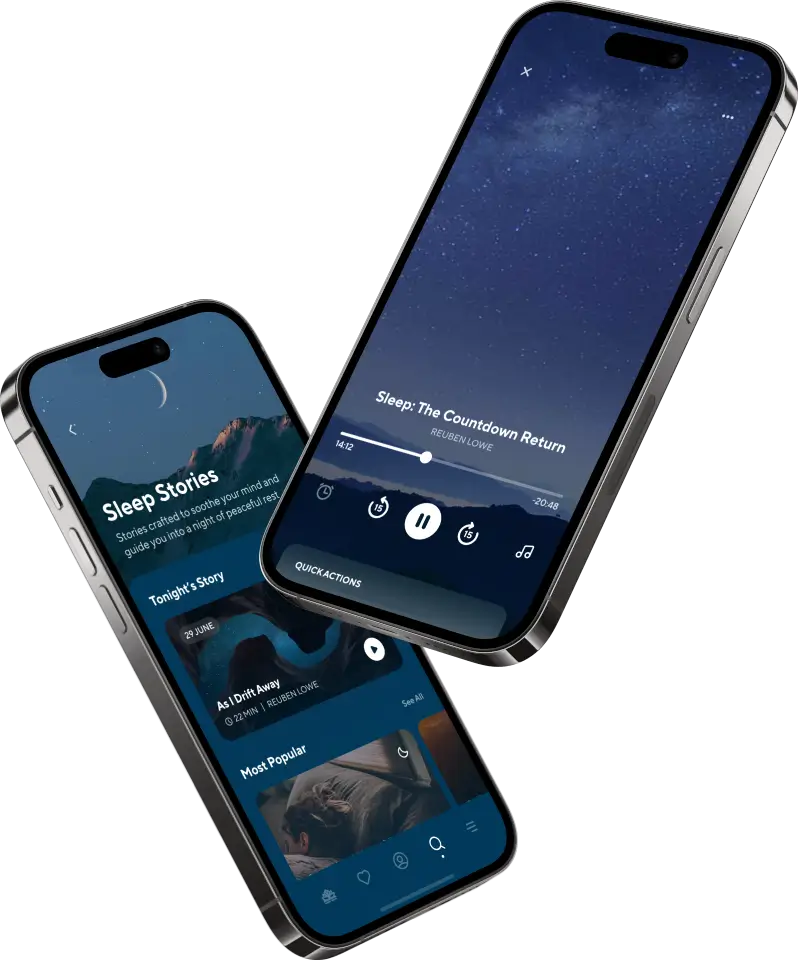
For example: "After I wash my face, I will practice a short guided meditation." Apps like The Mindfulness App offer guided meditations and sleep stories designed specifically for evening relaxation, with over 500 tracks available in 12 languages.
Another idea: "After I get into bed, I will write down one thing I am grateful for from the day." Research shows that practicing gratitude can lower stress levels by 28%.
Evening stacks help shift your brain from a reactive state to a reflective one, promoting emotional balance and setting you up for the next day’s challenges. Keep these habits simple - your evening self is often more tired, so make them easy to stick with.
How to Track and Scale Your Progress
Mindful habit stacking thrives on consistency, not perfection. The idea is to start small enough that success feels inevitable and then track your progress in a way that keeps you motivated.
Start with Micro-Habits
One common mistake is trying to take on too much, too quickly. Instead of aiming for a 20-minute meditation session right away, begin with something that takes less than two minutes. This is where the Two-Minute Rule comes in - it helps you build neural pathways with minimal effort.
For example, instead of deciding to "meditate for 10 minutes after breakfast", you could try "taking three deep breaths after sitting down with my coffee." Once this micro-habit becomes second nature (usually after two weeks, though full habit formation averages 66 days), you can add another layer.
On tough days, scale the habit down even further - for instance, take one conscious breath instead of three. This keeps the momentum going. A helpful rule to avoid losing progress is to never skip twice in a row. Missing one day is just a small bump; missing two days can start to form a new habit of inaction.
Once your micro-habits are in motion, the next step is finding a way to track your progress.
Tracking Methods: Handwritten vs. Digital
Tracking your progress reinforces your commitment and strengthens your habit-stacking routine. The key isn’t which method you choose but how consistently you track. Studies show that simply measuring a behavior increases the chances of sticking with it. So, which approach fits your lifestyle best?
| Feature | Handwritten (Journals/Planners) | Digital (Apps/Trackers) |
|---|---|---|
| Reminders | None; you must check manually | Automated push notifications |
| Analytics | Manual tracking of streaks | Automatic graphs and heatmaps |
| Distractions | Minimal; tech-free ritual | Risk of distractions (e.g., social media) |
| Portability | Limited; left at home, tracking stops | Always accessible on your phone |
| Tactile Satisfaction | Physically checking a box feels rewarding | Tapping a screen may feel less engaging |
| Customization | Fully customizable layouts | Limited by app design |
Interestingly, hybrid users - those who use digital tools for daily updates and paper records for weekly reflection - tend to perform best, with a 71% habit completion rate. This compares to 67% for digital-only users and 59% for those who rely solely on paper.
Tracking your progress doesn’t just confirm your success; it also lays the groundwork for expanding your mindful habits over time.
If digital tools appeal to you, apps like The Mindfulness App offer guided meditations and courses to keep you on track. These resources can make it easier to stay consistent with habit stacking.
"Tracking method mismatch is one of the top three reasons people abandon habit-building efforts within 14 days." – Stanford's Behavior Design Lab
Ultimately, pick a method that feels effortless rather than impressive. If opening an app feels like a chore, grab a pen and calendar. If you’re prone to misplacing your journal, stick with your phone. The best tracker is the one you’ll actually use.
Common Challenges and How to Overcome Them
Building mindful habit stacks can be incredibly rewarding, but like any process, it comes with its share of challenges. The key to success lies in making small adjustments to stay on track and reinforce the habits you've worked hard to establish.
How to Avoid Overwhelm
Trying to tackle too many new habits at once can lead to burnout. In fact, taking on five or more habits simultaneously increases decision fatigue by 73% compared to focusing on just one or two. Think of your willpower as a muscle - it gets tired if overused.
Start small. Pair one anchor habit with a micro-habit. For example, "After I pour my coffee, I will take three deep breaths." Stick with this pairing for 2–4 weeks before adding another habit. On particularly stressful days, scale back to the smallest version of your habit. Once the action feels automatic (which typically takes about 66 days), you can confidently add another layer.
"I recommend shaping a lot because making small changes over time tends to be far less psychologically overwhelming." – Dr. Lauren Alexander, Psychologist, Cleveland Clinic
Another helpful tip: avoid skipping two days in a row. Consistency is key to keeping momentum alive.
Matching Habits with Your Environment
Even the best-planned habit stacks can falter if your environment isn't supportive. A noisy room or a cluttered desk can make meditation or journaling feel like an uphill battle.
Before introducing a new habit, take a moment to evaluate your surroundings. Does your environment naturally support the habit you're trying to build? For instance, if your anchor is "after I close my laptop", but your workspace is disorganized, it might be harder to follow through.
"Creating healthy new habits requires more than sheer willpower – it involves thoughtfully modifying the environment to support desired changes." – Christopher S. Reina, Ph.D., Executive Director of the Institute for Transformative Leadership at VCU
Small changes can make a big difference. Placing visual reminders - like a meditation cushion or a journal near your coffee maker - can prompt you to stick with your habit. And if your routine gets disrupted by travel or schedule changes, choose anchors that work anywhere, like "after I plug in my phone" or "when I close my laptop". These flexible anchors help you maintain your habit stack no matter where you are.
For additional tools to support your mindfulness practice, check out The Mindfulness App (https://themindfulnessapp.com). Their guided meditations and courses are designed to help you navigate challenges and stay consistent with your habits.
Conclusion
Mindful habit stacking isn’t about making drastic changes overnight. It’s about starting small and building steadily. By tying new habits to routines you already follow - like adding a one-minute meditation to your morning coffee - you create a system that aligns with how your brain works. Research shows that people who use specific "if-then" plans are 2 to 3 times more likely to stick to their goals.
Repetition is key to solidifying new habits. As James Clear wisely notes, "Habits need to be established before they can be improved". Focus on one habit stack for 2–4 weeks before introducing another. And when motivation dips, simplify the habit to its bare minimum to keep the momentum going.
The environment you create plays a big role in your success. Simple visual reminders - like placing a journal next to your coffee maker - can mean the difference between staying on track and losing focus. Miss a day? Don’t sweat it. The important thing is to get back to it right away. Missing one day is a slip; missing two can turn into a new (unwanted) habit.
Take time to experiment with different anchors and times to see what works best for your life. There’s no one-size-fits-all solution.
For extra support, you might want to try The Mindfulness App. It offers over 500 guided meditations, sleep stories, and courses in 12 languages, making it easier to integrate mindfulness into your day. Whether you’re looking for a quick meditation to pair with brushing your teeth or a soothing story to wind down at night, the app provides ready-to-use options that simplify your habit-stacking process. Use these tools and insights to start reshaping your daily routine today.
FAQs
What’s the best anchor habit for me?
The best starting point for an anchor habit is something you already do consistently as part of your daily routine. The idea behind habit stacking is simple: you link a new habit to an existing one. For example, you could take a few deep breaths right after brushing your teeth or reflect on what you're grateful for while commuting. The key is to pick a habit that’s already well-established and easy to stick with, making it easier for the new behavior to blend into your routine and eventually feel automatic.
How do I fix a habit stack that I keep forgetting?
To improve a habit stack you often forget, try making the new habit smaller, more specific, and clearly connected to something you already do regularly. Use triggers like visual reminders (e.g., sticky notes or placing items in plain sight) or pair the habit with a consistent activity you never skip. Tackle one small habit at a time - this keeps things manageable and boosts your chances of sticking with it. By keeping the habit simple and tied to a reliable routine, you'll find it easier to stay consistent.
When should I add a second mindfulness habit to my stack?
Once your first mindfulness habit feels like second nature, it’s time to introduce another one. To make this easier, link the new habit to something you already do without thinking - like brushing your teeth, having breakfast, or starting your car. This approach uses existing patterns in your brain, helping the new habit stick more effortlessly and fit seamlessly into your day.