


Mindfulness can transform your workday by reducing stress, improving focus, and helping you stay present. You don't need hours of meditation to feel the benefits - simple practices like setting goals, taking short breaks, and mindful breathing can make a big difference. Here are seven practical steps to integrate mindfulness into your daily routine:
- Set Goals: Define your workday priorities and identify natural break points for mindfulness.
- Start Mindfully: Begin your day with 3–5 minutes of breathing or reflection to set the tone.
- Take Microbreaks: Use short 1–2 minute pauses to reset focus and calm your mind.
- Mindful Lunch: Slow down, savor your meal, and recharge with light movement.
- Stretch Regularly: Incorporate desk stretches or mindful movement to ease tension.
- Use Guided Tools: Leverage apps for quick, structured mindfulness sessions.
- Reflect Daily: End your day by reviewing what worked and adjusting for tomorrow.
Even small actions, like mindful breathing or a short walk, can improve your focus and well-being. Start small, stay consistent, and adapt these steps to fit your schedule.
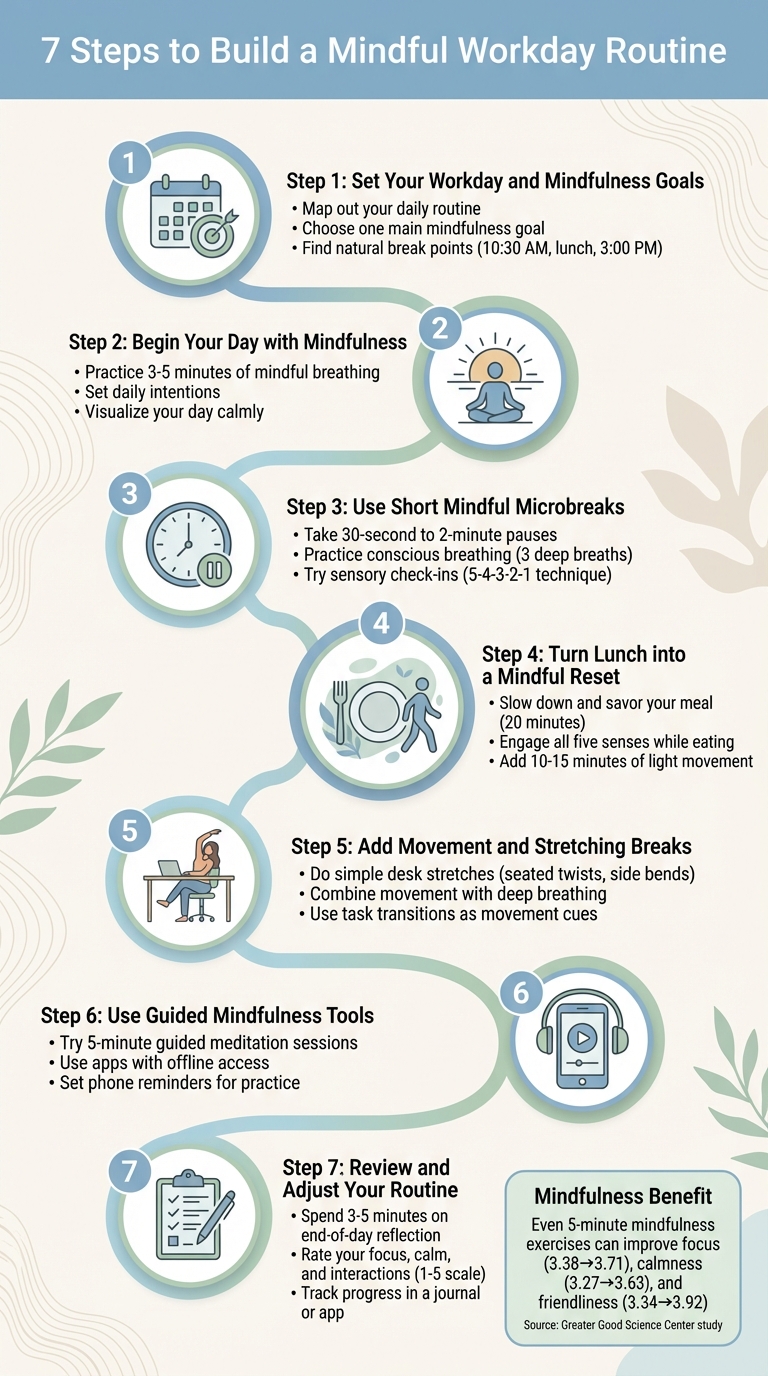
7 Steps to Build a Mindful Workday Routine
How To Apply A Mindful Mindset To Routine Work Tasks?
Step 1: Set Your Workday and Mindfulness Goals
To incorporate mindfulness into your workday, start by understanding your daily routine and defining what you hope to achieve. This step lays the groundwork for building mindfulness into your schedule.
Map Out Your Workday
Take a closer look at your typical day. When do you start work? Are there specific times for meetings, lunch, or wrapping up? By outlining these details, you’ll uncover the natural flow of your day and pinpoint moments where mindfulness can fit seamlessly.
"A mindful workday is intentional: plan your agenda and minimize distractions." - Joe Burton, Founder of Whil
Choose a Mindfulness Goal
Identify one main goal that aligns with your biggest workplace challenge. For instance, if stress tends to take over, focus on staying calm during hectic times. If distractions are your Achilles' heel, work on sharpening your focus. Studies show that short mindfulness practices can improve focus, calmness, and even friendliness over time. Your goal might be as simple as managing emotions, listening more attentively, or staying present throughout the day. Choose what feels most relevant now - you can always tweak it later. This clarity will guide the mindfulness techniques you explore in the next steps.
Find Natural Break Points
Look for natural pauses in your routine - like when you first sit at your desk, mid-morning around 10:30 a.m., lunchtime, or mid-afternoon around 3:00 p.m. These moments are ideal for quick mindfulness practices, helping you reset and recharge. Research suggests taking a 5-10 minute break after every 50 minutes of focused work can improve productivity and give your brain a much-needed rest. Everyday transitions, such as finishing your commute, completing a task, or switching gears between projects, can serve as anchors for mindfulness without disrupting your workflow.
Once you’ve outlined your schedule and set your goals, you’ll be ready to start weaving mindfulness into your workday, one moment at a time.
Step 2: Begin Your Day with Mindfulness
The way you start your morning has a ripple effect on everything - your mood, focus, and drive throughout the day. A study of 151 professionals from various fields revealed that taking time to mentally prepare for the day led to a boost in energy, motivation, inspiration, focus, and even a sense of autonomy. The best part? This doesn’t require a huge time investment. Just 3–5 minutes can set the tone for a more productive and fulfilling day.
Morning Arrival Practice
When you first settle into your workspace, carve out five minutes for a simple mindfulness exercise. Sit comfortably with good posture, close your eyes, and take slow, deep breaths. Focus on your breathing, allowing thoughts to float by without clinging to them.
After a few breaths, set a clear intention for the day. Maybe it’s to stay open-minded, listen attentively, or focus on being present. You can also reflect on meaningful questions like: Why does my work matter? How does it impact others? What’s my main priority today?. This moment of reflection not only connects you to your goals but also helps you visualize yourself tackling your tasks calmly and effectively.
Making It Work Anywhere
Your mindfulness practice can be tailored to fit your environment. If you have a commute, use part of the journey for mindful breathing or setting intentions - these practices don’t require a specific setting. For those working remotely, take a few minutes before diving into emails or meetings. If you're in an office, try arriving a bit earlier to ease into your day.
The key is consistency, not location. Whether you’re in your car, at your kitchen table, or at your desk, these few mindful minutes can establish a sense of calm and focus that stays with you throughout the day.
Step 3: Use Short Mindful Microbreaks
Our brains aren’t wired to stay focused nonstop. In fact, research from Harvard reveals that our minds wander about 50% of the time we’re awake. That’s where microbreaks - short pauses lasting 30 seconds to 2 minutes - come in. These tiny breaks allow your nervous system to reset, helping you respond thoughtfully to workplace challenges instead of reacting impulsively.
The science behind it is compelling. A study with nearly 4,000 participants found that even five-minute mindfulness exercises significantly improved focus. Over time, their average focus ratings increased from 3.38 to 3.71. These quick moments of mindfulness can lower stress hormones, calm your nerves, and help you take a beat before making decisions you might second-guess later.
Here’s how to make the most of these microbreaks.
Microbreak Practice Examples
You don’t need any fancy equipment or a special setup. Start with conscious breathing: take three deep breaths, relax your shoulders, and unclench your jaw. Another option is to count your breaths from one to ten, and if your mind wanders, gently bring it back without judgment.
For a sensory check-in, focus on your surroundings. Identify five things you can see, four you can physically feel, three you can hear, two you can smell, and one you can taste. This exercise pulls you out of your thoughts and into the present moment, which can stop anxiety in its tracks in under a minute. You could also place your hand on your chest and tune in to your heartbeat or breath - this simple gesture activates a calming response.
Once you’re familiar with these practices, try weaving them into your daily routine naturally.
Use Triggers to Build the Habit
Pair mindfulness breaks with actions you already do. For instance, you could take a deep breath every time you open your office door or pause for a moment of conscious breathing when your phone rings. You can also use downtime, like waiting for your computer to boot up, to practice a quick mindfulness exercise.
Set Regular Reminders
To make mindfulness a regular part of your day, set reminders on your phone or calendar for mid-morning and mid-afternoon breathing breaks. Place a small note or object at your desk as a visual cue. If you work with others, consider teaming up with a colleague to help keep each other accountable.
Step 4: Turn Lunch into a Mindful Reset
Your lunch break isn’t just about grabbing a bite - it’s an opportunity to recharge your mind and body for the rest of the day. Instead of eating on autopilot, use this time to pause intentionally. By approaching lunch with mindfulness, you can set yourself up for a more focused and productive afternoon.
Practice Mindful Eating
Mindful eating is all about being present with your meal - paying attention to your body’s hunger cues and savoring every bite. It’s a way to engage your senses and eat with intention.
Start by slowing down. It takes about 20 minutes for your body to register fullness, so chew your food thoroughly and take small pauses between bites. Before diving in, take a moment to focus entirely on your meal. If you’re pressed for time, even dedicating your full attention to the first few bites can make a difference.
As you eat, immerse yourself in the experience. Notice the appearance of your food - the colors, shapes, and textures. Take in its aroma before tasting it. As you chew, pay attention to the flavors that unfold: the sweetness, tanginess, or saltiness. Observe how the sensations evolve as you swallow and your stomach begins to feel satisfied. This focused approach not only enhances your meal but also reinforces mindfulness as part of your daily routine.
"There is tremendous power in bringing our body and mind together. It helps us see that we have a choice: We can actually taste and experience what we're eating, or we can eat unskillfully and miss the whole thing entirely".
Add Light Movement
After finishing your meal, take 10–15 minutes for some light movement to refresh your mind and body. This could be a short walk or simple exercises at your desk. For example, try desk push-ups by placing your hands on the desk, lowering your chest to elbow height, and then pushing back up. Follow up with squats - stand, bend your knees as if sitting in a chair, and engage your core.
If you prefer something gentler, go for a mindful walk. Pay attention to the feeling of your feet connecting with the ground and the rhythm of your breathing. These small movements can help you carry the mindfulness of your meal into the rest of your day.
Adapt to Your Environment
Even if you’re short on time or stuck in a shared workspace, you can still create a mindful lunch experience. Rearrange your space to minimize distractions [27, 31]. Focus on the sensory aspects of your food - its taste, texture, temperature, and smell. If you’re in a shared break room, try sitting at a table and using a plate rather than eating straight from containers. These small adjustments can help you stay present, even in less-than-ideal settings, and keep mindfulness at the heart of your routine.
sbb-itb-bea8dce
Step 5: Add Movement and Stretching Breaks
Spending long hours at your desk can lead to problems like cognitive decline, back pain, and even weight gain. However, taking short movement or stretching breaks throughout your day can do wonders for your mood, focus, and energy levels. These simple activities not only give your body a break but also help create a more balanced and mindful work routine.
Simple Desk Stretches
You don’t need a yoga mat or a lot of space to get started. Here are a few stretches you can do right at your desk:
- Seated Side Bend: Sit with your feet flat on the floor. Raise both arms overhead, then lower one arm toward the opposite side. Hold the stretch for 1–3 breaths and then switch sides.
- Seated Twist: Sit tall and rotate your chest to the right, holding the twist for 1–3 breaths, then repeat on the left side.
- Chest Opener: Scoot to the edge of your chair and interlace your fingers behind your lower back. Push your knuckles away from your body as you lift your chest and roll your shoulders down and back. Hold this position for 3–5 breaths.
- Hamstring Stretch: Place one foot on your desk, keep your back flat, and bend at the hips while reaching for your toes. This stretch targets your hamstrings and glutes.
These stretches are quick, easy, and don’t require any special equipment, making them perfect for a mid-day reset.
Combine Movement with Breathing
Pairing deep breathing with your stretches can make a noticeable difference. As Courtney Fitzpatrick, PT, DPT, from Hinge Health explains:
"Pairing meditation with movement can be even more effective".
Deep, intentional breathing activates your parasympathetic nervous system, which helps your body relax and reduces stress. It can even lower your heart rate and blood pressure. Try matching your breath to your movements: inhale for four counts, exhale for four counts. As you get more comfortable, you can lengthen your breaths while keeping them smooth and steady. This combination doesn’t just ease physical tension; it also helps quiet your mind and keeps you present.
Use Task Transitions as Cues
One of the easiest ways to build movement into your day is to tie it to natural transitions in your workflow. For instance, stand up and stretch after finishing a conference call or before starting a new task. These moments are great reminders to move. Joe Burton, founder of Whil and author of Creating Mindful Leaders, puts it well:
"You would never run for 50 minutes and then just keep running. But we do it with our cognitive abilities every single day; we just sit down and plow through without giving our minds a break so that we can get back in and be more productive".
Step 6: Use Guided Mindfulness Tools
Once you've incorporated movement and stretching into your routine, guided mindfulness tools can take your practice to the next level. These tools provide structure and support, making them especially helpful when you're just starting out or navigating a particularly stressful day. According to research from the Greater Good Science Center, even a quick five-minute mindfulness session can help improve focus, promote calmness, and encourage kindness.
One of the key benefits of guided mindfulness is that it eliminates the guesswork - you simply follow along. A study involving 4,000 participants found that short guided practices significantly boosted focus (from 3.38 to 3.71), calmness (from 3.27 to 3.63), and friendliness (from 3.34 to 3.92). Eve Ekman, Senior Fellow at the Greater Good Science Center, clarifies a common misunderstanding about mindfulness:
"Mindfulness is not about 'clearing the mind,' a common misconception, but about learning to return, over and over, to a chosen point of focus. That act of returning, the practice suggests, is what strengthens attention".
Try The Mindfulness App
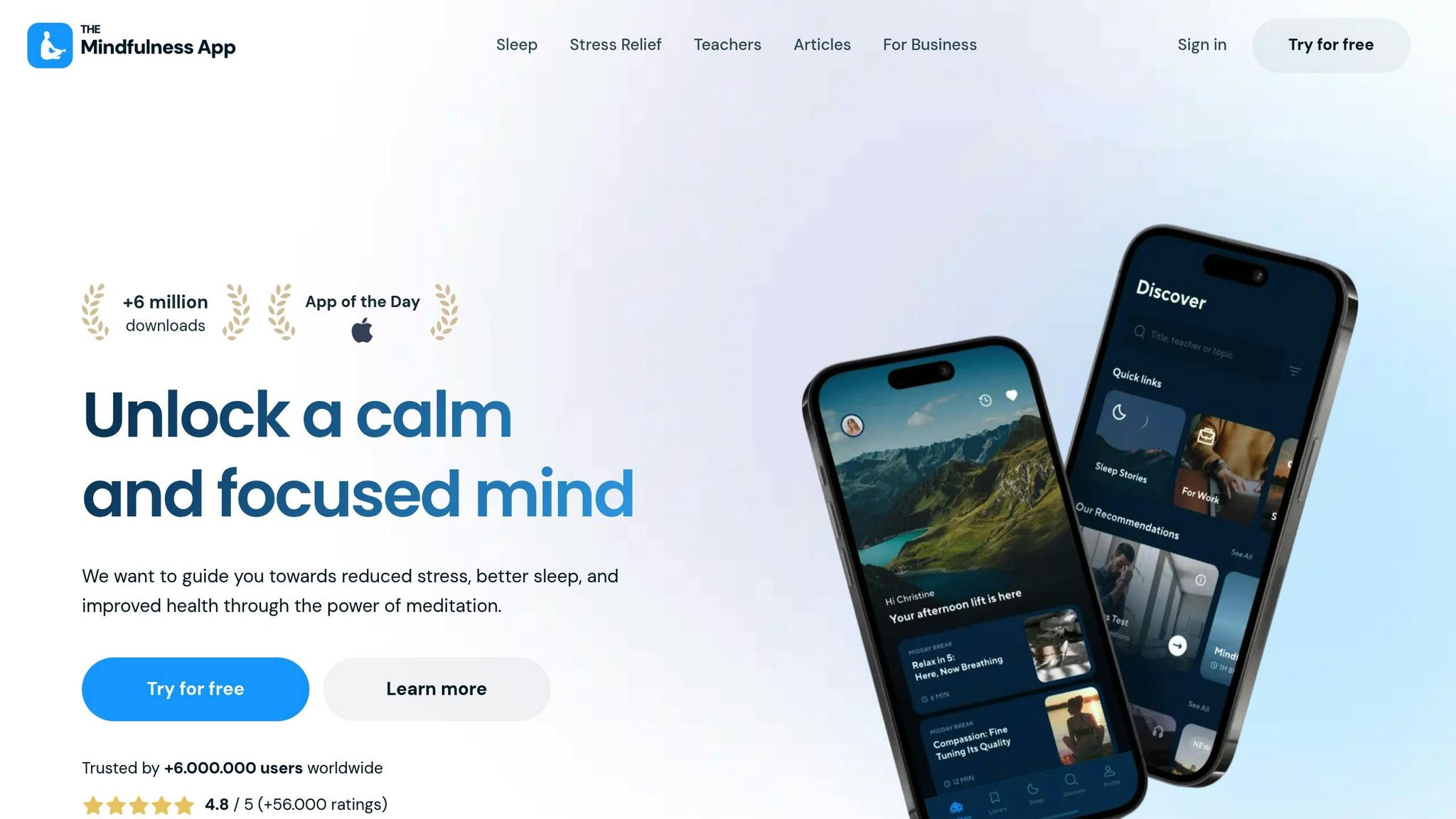
The Mindfulness App is a great tool to enhance your workday mindfulness. It offers over 500 guided meditations, body scans, and sleep-focused tracks designed to reduce stress and improve focus. With options in 12 languages and offline access, you can use it wherever you are - at your desk, in a quiet corner, or even while working remotely. The app features targeted sessions for specific work challenges, like managing stress or boosting concentration. You can start with a 14-day free trial to explore the premium content and discover what fits best into your daily routine. By offering accessible and structured practices, this app complements your self-directed mindfulness efforts.
Tips for Using Guided Practices
To get the most out of guided mindfulness, download your favorite sessions for offline use and set reminders on your phone to schedule brief five-minute practices throughout your day. Headphones are a must in shared spaces - they help you focus and keep your practice private. Even a quick three-minute session can help you reset and regain focus without drawing attention.
Step 7: Review and Adjust Your Routine
Creating a mindful workday routine isn’t a one-and-done deal - it’s something you’ll refine over time. Once you’ve added mindful pauses, balanced meals, and moments of movement to your day, it’s important to step back and see how they’re working for you. Take a few minutes daily to reflect on your mindfulness habits. This reflection can help you pinpoint what’s effective and make small tweaks without throwing off your workflow. Over time, regular self-checks can highlight noticeable improvements in your focus, sense of calm, and how you connect with others.
End-of-Day Review
Wrapping up your day with a short reflection can reinforce the mindfulness benefits you’ve gained. Set aside three to five minutes to rate your overall experience on a simple scale of 1 to 5. Think about how focused or distracted you felt, how calm or tense you were, and whether your interactions leaned more toward being critical or friendly. This quick self-check can uncover patterns and show which practices made the biggest difference. Reflect on specific moments when mindfulness helped you stay grounded - maybe it kept you from getting sidetracked, helped you make a thoughtful decision, or allowed you to remain present during a meeting. Simple questions like “How did mindfulness help me today?” and “What could I improve tomorrow?” can guide this process.
Track Your Progress
To build on your end-of-day review, consider keeping a record of your observations. You can use a notebook, a notes app, or even a spreadsheet to log details about your stress levels, focus, and mood. This makes it easier to spot trends and adjust your routine if certain practices aren’t as effective or if parts of your day feel rushed. Look for signs that your mindfulness efforts are paying off, like sharper concentration, feeling less overwhelmed, handling emotions better, listening more attentively, or noticing fewer physical stress symptoms like tight shoulders. Approach your progress with curiosity, understanding that mindfulness is a gradual journey.
Conclusion
Incorporating mindfulness into your workday doesn’t require a complete overhaul of your schedule. By weaving in small, intentional habits - like setting clear goals, starting your morning with purpose, taking short breaks, resetting at lunch, moving regularly, using tools like The Mindfulness App, and reflecting on your progress - you can bring mindfulness into your daily routine.
Even short moments of mindfulness can make a noticeable difference. Studies show that regular practice reduces stress, helps prevent burnout, and sharpens focus and productivity. It also enhances emotional balance, improves communication, and supports creative problem-solving, all of which contribute to a healthier and more productive work environment. With 26% of workers reporting frequent stress at work, mindfulness offers a practical way to navigate these challenges.
Reflecting on your progress each day can help you see the steady benefits of mindfulness. Start small - try a two-minute breathing exercise before diving into emails or take a mindful walk during your lunch break. Once these habits feel natural, you can gradually add more practices to your routine. Remember, mindfulness isn’t about achieving perfection. Some days will feel harder than others, and that’s okay. It’s about showing up consistently and adjusting as needed. The key is to focus on short, regular practices - they often have a bigger impact than occasional, longer sessions.
There’s no better time to start than now. Take the first step and begin experiencing the benefits today.
FAQs
How can I include mindfulness in my busy workday?
Incorporating mindfulness into your busy workday might be simpler than you think. Use natural pauses in your schedule - like just before diving into emails, between meetings, or when feeling frazzled - as moments to take a step back. Even a few seconds of intentional, focused breathing can ease stress and help you regain clarity.
Kick off your morning with a short guided meditation or a few deep breaths to set a calm, steady tone for the day. Around midday, carve out five minutes for a quick mindfulness exercise, such as paying attention to your breath or doing a simple body scan. Tools like The Mindfulness App offer guided sessions that can fit seamlessly into your day, whether during a lunch break or while commuting.
By weaving mindfulness into your daily routine, even in small, consistent ways, you can boost focus, reduce stress, and feel more grounded throughout your workday.
What are some easy mindfulness exercises I can do at my desk during the workday?
Here are a few easy mindfulness exercises you can do right at your desk to help reset and refocus:
- Three-Breath Reset: Sit in a comfortable position, close your eyes, and take three slow, deep breaths. Inhale through your nose for a count of three, hold for a moment, and exhale through your mouth for a count of three. With each breath, allow yourself to return to the present moment.
- Deep Breathing: Place one hand on your chest and the other on your stomach. Breathe deeply through your nose for four counts, feeling your belly rise, then slowly exhale for six counts. Do this for 30–60 seconds to ease stress and regain focus.
- Quick Body Scan: Choose one part of your body, like your shoulders or hands, and notice any sensations - tightness, warmth, or tingling - without trying to change them. Gradually shift your attention to other areas for 30–45 seconds.
If you'd like extra support, The Mindfulness App offers guided exercises like these that are simple to follow and perfect for a quick mental reset during your workday.
How can mindfulness help improve focus and reduce stress at work?
Mindfulness - staying present and aware without judgment - can be a game-changer when it comes to managing workplace distractions like emails, notifications, and the constant pull of multitasking. Even something as simple as taking a few deep breaths or doing a quick body scan can help calm your mind, sharpen your focus, and bring a sense of clarity to your tasks.
On top of that, mindfulness triggers your body’s natural relaxation response, helping to reduce stress hormones like cortisol and ease physical tension. Even brief moments of mindful breathing or pausing before diving into a task can lower stress levels, lift your mood, and spark creativity. Tools like The Mindfulness App make it easy to incorporate guided meditations and quick exercises into your workday, helping you stay centered, focused, and productive.