

Struggling to focus on important tasks? Meditation can help. By training your attention, meditation improves your ability to concentrate on demanding tasks while tuning out distractions. Even short, consistent sessions can reduce stress, sharpen memory, and boost productivity.
Key Takeaways:
- Meditation builds focus: Redirecting your mind back to a focal point during meditation strengthens mental discipline, which translates to better task focus.
- Preparation matters: Create a distraction-free space, set clear goals, and use tools like the "parking lot" technique to manage stray thoughts.
- Techniques to try:
- Concentration meditation trains your brain to stay on one task.
- Breath awareness clears your mind before starting work.
- Body scan meditation resets focus during breaks.
Quick Tips:
- Start small: 5–10 minutes daily is enough to see results.
- Pair meditation with existing habits (e.g., after morning coffee).
- Use tools like The Mindfulness App for guided sessions.
Meditation isn’t just about relaxation - it’s a practical tool to improve your focus and productivity. Let’s dive into how to make it part of your day.
How to Use Meditation for Task-Specific Focus: A Step-by-Step Guide
10 Minute Guided Meditation for Focus
sbb-itb-bea8dce
Preparing for Your Meditation Session
Getting ready for meditation involves creating an environment that encourages focus. Your surroundings play a big role in how well you can concentrate, so taking a few minutes to set up your space can make a huge difference.
Setting Up a Distraction-Free Space
Pick a specific spot for your meditation - a desk, a cozy chair, or even a corner of your room. Having a dedicated space helps your brain associate that area with focus and calm.
Keep distractions at bay, starting with your smartphone. Simply having your phone nearby, even if it’s turned off, can reduce your ability to concentrate and recall information. Move it to another room, so it’s out of sight and out of mind.
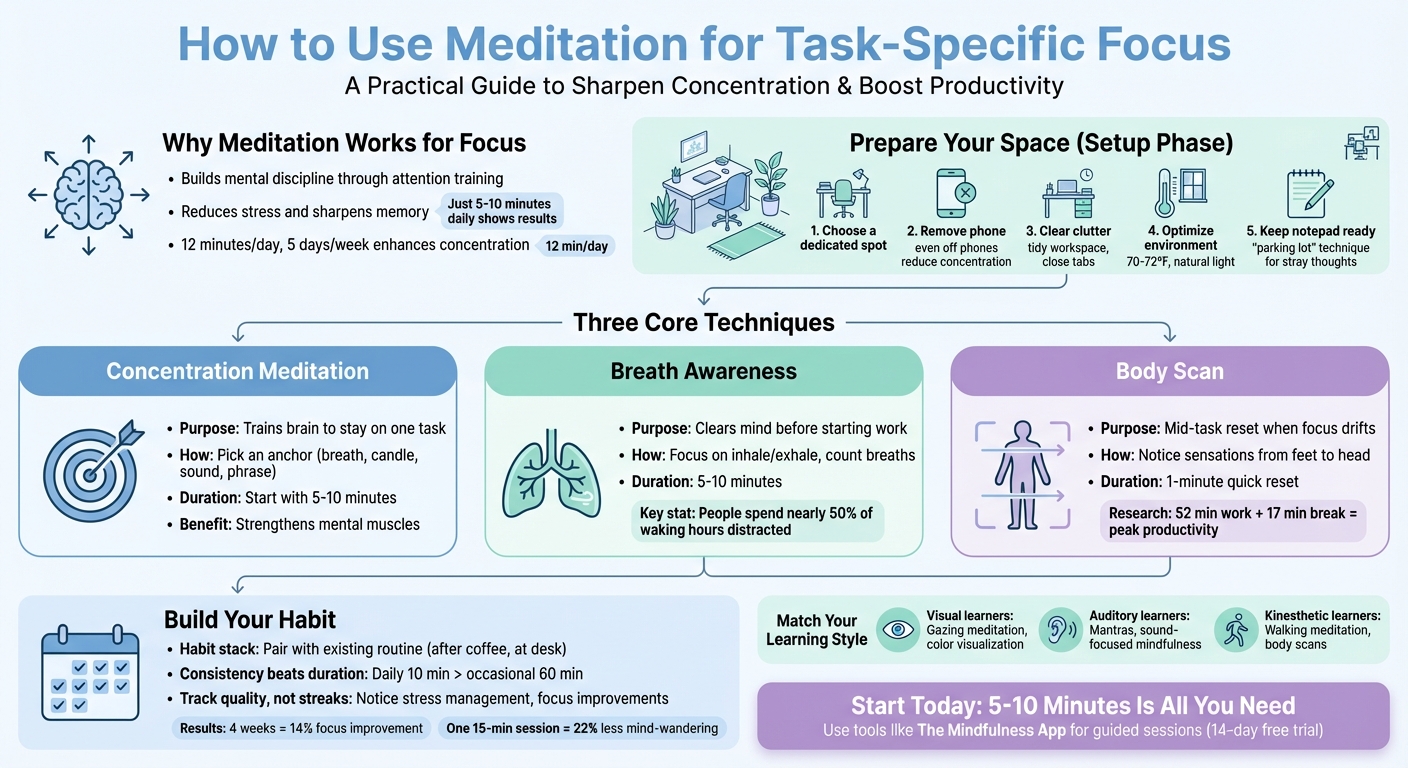
A tidy workspace is another key. Clear away papers, close unrelated browser tabs, and minimize anything visually cluttered. These small changes reduce "visual competition" that can pull your attention away. For comfort, aim for a room temperature of 70–72°F (21–22°C) and let in as much natural light as possible - both help keep you alert and focused.
Lastly, keep a notepad handy for the "parking lot" technique. When random thoughts or tasks pop into your mind during meditation, jot them down quickly. This way, you can let them go without worrying you’ll forget, and your focus stays intact.
Once your space is ready, it’s time to define what you want to accomplish.
Defining Your Focus Goal
Before you start meditating, decide on one specific task to tackle. Make it something that has a clear endpoint - like writing a set number of words, completing a section of a report, or hitting a project milestone.
"Start each meditation session by setting a clear intention related to your productivity goals. This could be as specific as completing a project or as broad as improving overall work efficiency." – Calm Editorial Team
Break your main goal into one to three actionable steps. For instance, instead of saying, "Finish the presentation", try something like, "Draft the introduction slide and outline three main points." Writing these steps down beforehand helps you avoid feeling overwhelmed and gives your mind a clear direction once you transition from meditation to work. A little clarity now means sharper focus later.
Meditation Techniques for Better Focus
Once you've set up a dedicated space and clarified your focus goals, these meditation techniques can help sharpen your concentration. They train your brain to stay locked on a single task, even when distractions try to pull you away.
Concentration Meditation
This method strengthens your ability to focus on one thing at a time. Every time you redirect your attention back to your chosen point of focus, you're giving your mental muscles a workout.
Start by picking an anchor for your attention. It could be the sensation of your breath, the flicker of a candle, a specific sound, or a simple phrase you repeat in your mind. This anchor acts as your "home base" - a place to return to whenever your mind starts to wander.
Find a comfortable, upright position and close your eyes. Focus on your anchor. When distractions pop up, label them (like calling a stray thought "thinking" or "stress about work") without judging yourself, and gently guide your attention back.
Studies suggest that practicing meditation for just 12 minutes a day, five days a week, can enhance your ability to concentrate. If you're new to this, start small with 5 to 10-minute sessions. The quality of your practice matters more than how long you meditate. To make it a habit, try using an "If-Then" reminder, such as: "If I sit at my desk, then I take three deep breaths." A sticky note or a meditation cushion in your workspace can also nudge you to pause and refocus.
"The most important moment in your meditation practice is the moment you sit down to do it. Because right then you're saying to yourself that you believe in change, you believe in caring for yourself, and you're making it real." – Sharon Salzberg, Meditation Teacher
Breath Awareness Meditation for Task Preparation
Before diving into a big project, breath awareness meditation can help clear your mind and prepare you to focus. Find a quiet spot - your desk or a comfy chair works - and sit upright. Close your eyes, take a few deep breaths, and settle into your natural breathing rhythm. Pay attention to where you feel your breath most vividly, like the rise and fall of your belly or the air passing through your nostrils.
Stay focused on each inhale and exhale. Counting your breaths can help keep your mind anchored. It's normal for thoughts about your to-do list or deadlines to creep in - research shows that people spend nearly half their waking hours thinking about things unrelated to what they're doing. When this happens, simply acknowledge the thought and bring your focus back to your breath.
After 5 to 10 minutes, open your eyes slowly and notice how you feel. Avoid checking your email right after meditating; small tasks like that can trigger dopamine loops, which disrupt the focus you've just built. Use an "If-Then" cue to reinforce your practice, like: "If I touch the office door handle, then I take one deep breath." This habit helps prime your mind for deep work. If your concentration fades later in the day, a quick body scan meditation can help you reset.
Body Scan Meditation for Mid-Task Resets
When your focus starts to drift, a body scan meditation can bring you back on track. This technique involves tuning into physical sensations throughout your body, which can help release tension and quiet mental noise.
Try a one-minute reset: start by noticing how your feet feel on the floor, then slowly shift your attention upward - through your legs, torso, arms, neck, and head. If you sense tightness, like in your shoulders or jaw, simply acknowledge it without judgment. Observe the sensation instead of reacting to it.
This practice disrupts the autopilot mode that governs most of our actions (around 95%, according to studies) and activates the part of your brain responsible for willpower and decision-making. It's especially useful during breaks. For example, a 2014 study by the Draugiem Group found that the most productive workers followed a pattern of 52 minutes of focused work followed by a 17-minute break, fully stepping away from their computers during that time.
You can also use simple cues to remind yourself to reset. For instance, take a mindful breath before answering a phone call. These brief check-ins can help you release self-criticism and return to your work with a refreshed and focused mindset, ready to tackle demanding tasks.
Adapting Meditation to Your Personal Style
Meditation is a deeply personal experience - what resonates with one person might not work for another. Different people process the world in different ways: some are drawn to visuals, others to sounds, and some need movement to stay engaged. By tweaking traditional meditation techniques to align with your natural learning style, you can make the practice more effective and enjoyable.
Visual Techniques
If you're someone who responds to visual stimuli - like doodling, charts, or diagrams - gazing meditation might be a great fit. This involves focusing on a fixed object, such as a candle flame or a detailed image, to anchor your attention.
Another option is visualization. For instance, before tackling a daunting project, you could imagine a serene setting, like a tranquil forest or a calm beach. Some people also practice color-based meditations, concentrating on a specific color to maintain focus and calmness.
Auditory Techniques
For those who connect with sound - whether it's through listening to lectures, creating rhymes, or being moved by music - auditory meditation techniques can be incredibly effective. One approach is sound-focused mindfulness, where you meditate in a quiet space but intentionally tune in to ambient sounds like birdsong, the hum of electronics, or even your own breath.
Mantras are another powerful tool. These are simple words or phrases you repeat silently, such as "I am calm" or "Stay present." If external noise is a challenge, try playing calming background music or nature sounds. However, it's important to test whether these sounds help you concentrate or end up distracting you.
Kinesthetic Techniques
If you're a hands-on learner who thrives on movement or physical activity, sitting still for meditation might feel counterproductive. Instead, consider walking meditation, where you move slowly and focus on the sensation of your feet touching the ground with each step. Alternatively, while seated, you could concentrate on tactile sensations, like the texture of an object in your hand or the feeling of air on your skin.
Body scan meditations are especially helpful for kinesthetic learners. This involves paying attention to physical sensations throughout your body, like the support of your chair or the rhythm of your heartbeat. Even these small, mindful actions can help ground your focus before diving into challenging tasks.
"The best mindfulness meditation practice isn't universal - it's personal. Like a perfectly tailored suit, your meditation practice should fit your unique personality, learning style, and lifestyle preferences." – Sarah Thompson, Author
Occasionally, it can be helpful to explore techniques outside your natural preference - such as a visual learner trying auditory meditation. This can encourage mental flexibility and strengthen new neural pathways. By tailoring your meditation practice to your strengths, you can enhance your ability to focus and stay present in the moment.
Building Meditation into Your Daily Routine
Incorporating meditation into your daily life ensures that the focus-boosting benefits become second nature. By practicing consistently, you turn meditation into a powerful tool for improving concentration. The key isn't long sessions but regular ones. Even a daily 10-minute practice can reshape your stress response and improve focus more effectively than occasional hour-long meditations.
Establishing a Regular Practice Schedule
One of the best ways to stick to meditation is by pairing it with an existing habit - a technique called habit stacking. The idea is simple: link meditation to something you already do automatically. For instance, you could meditate right after pouring your morning coffee, shutting down your laptop at the end of the workday, or sitting at your desk.
Transitions in your day are also great opportunities. Think about meditating after lunch, when you arrive at your workspace, or even while waiting for your computer to start up. On especially hectic days, even a one-minute meditation can help maintain your routine.
"The secret lies in removing friction, anchoring the habit, and creating accountability that actually motivates you." – Sarah Thompson, Author, Ahead App Blog
To make things easier, prepare your meditation space ahead of time. Once you've established your routine, take time to assess how it's affecting your focus and adjust as needed.
Tracking Progress and Adjusting Your Approach
When tracking your meditation progress, focus on the quality of your experience rather than just counting streaks. Reflect weekly by asking yourself questions like: Am I catching stress earlier? Do I handle frustration better? Am I more present in conversations? These shifts in your daily life are far more meaningful than the number of consecutive days you've meditated.
Using simple tools like marking a physical calendar can activate your brain's reward system and help you stay motivated. Pay attention to how meditation impacts your work - whether you notice fewer distractions, make decisions more clearly, or feel less mentally drained. Research backs this up: consistent daily meditation over four weeks can improve focus by 14%, and just one 15-minute session can cut mind-wandering by 22%.
As your practice develops, don't be afraid to tweak it. If focusing on your breath feels less effective, try using a different anchor, like watching a candle flame or repeating a meaningful phrase. Adjust your meditation style to fit your needs - use noting techniques when distractions are high or focused attention when tackling analytical tasks. The goal isn't to achieve perfection but to create a practice that genuinely supports your ability to focus when it matters most.
Using The Mindfulness App for Guided Meditation
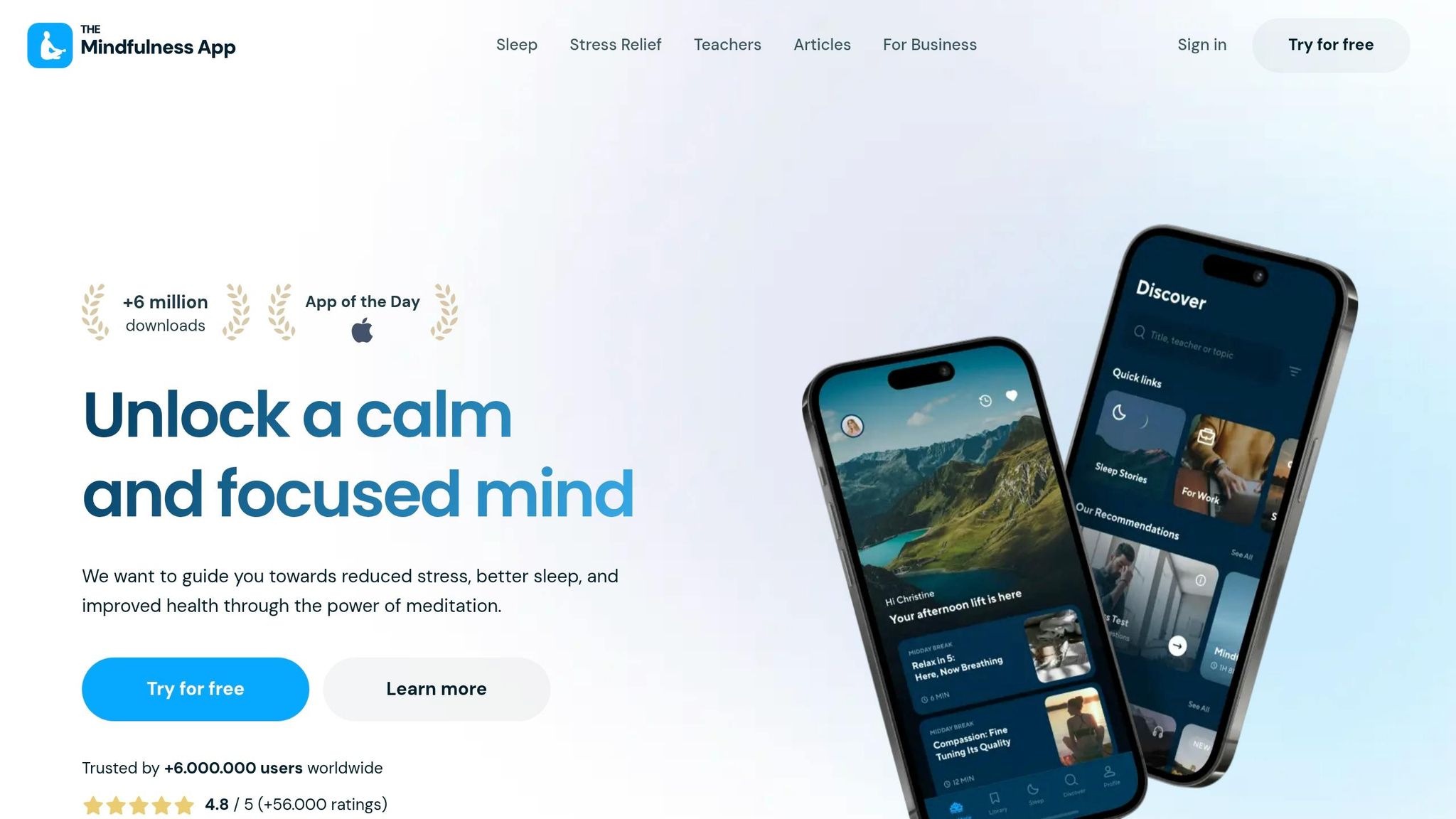
If you're exploring meditation or prefer guided sessions, The Mindfulness App offers a structured way to improve focus and manage stress. With access to over 500 guided meditations, sleep stories, and courses, the app is designed to help with concentration, stress management, and personal development. Plus, it's available in 12 languages, making it accessible to a global audience.
For improving focus on specific tasks, the app includes specialized content like "Focused Attention Meditation" courses. These sessions teach you how to gently bring your attention back to a chosen point of focus when distractions arise. Additionally, practical tools like "Breathe Before Starting" prepare your mind for tasks, while "Breathing Breaks" offer quick resets during your workday. These short, 1–2-minute sessions are easy to incorporate into even the busiest schedules.
The app offers a 14-day free trial, giving you full access to its premium content. This trial period lets you explore various focus-oriented tracks and customize your meditation routine to suit your personal goals. It's a great way to experiment with different techniques before deciding on a subscription.
To make the most of it, try setting aside 5–10 minutes daily - whether as part of your morning meditation routine or between tasks. Beyond its focus-centered content, The Mindfulness App also includes resources for better sleep and personal growth. This highlights the connection between regular meditation, adequate rest, and sustained concentration.
Conclusion
Meditation offers a straightforward way to sharpen focus and enhance productivity. By using the techniques outlined earlier - like breath awareness, body scans, and creating a supportive environment - you can integrate mindfulness into your routine to improve how you approach daily tasks. Think of concentration as a skill you can develop, much like training a muscle, with consistent effort leading to noticeable results over time.
Using methods such as the "noting" technique, where you identify distractions (e.g., "thinking" or "worrying") before bringing your attention back, helps train your brain to handle interruptions more effectively. Even dedicating just 5–10 minutes a day to meditation can make a difference, gradually building a habit that supports both mental clarity and task efficiency.
To get the most out of your practice, set yourself up for success by controlling your environment, defining clear goals for each work session, and using brief breathing exercises between tasks to reset your focus. While it takes time to establish a routine, the benefits - like improved task management, reduced stress, and greater productivity - are well worth the effort.
FAQs
How long does it take to see focus improvements?
You might start noticing better focus with just 5 minutes of daily meditation. That said, sticking with it for several weeks is usually necessary to see more lasting effects. The secret? Consistency. Making it a regular habit is what leads to enduring improvements.
What should I do when my mind keeps wandering?
If you find your mind drifting during meditation or focus exercises, don’t beat yourself up over it. Simply notice the distraction, let it pass without judgment, and gently bring your attention back to your chosen point of focus - whether it’s your breath, a sound, or a mental image. This simple act of redirecting your attention is like a workout for your brain, gradually building your concentration. Over time, this practice not only helps you manage wandering thoughts but also improves your ability to stay present in the moment.
Which meditation style fits my learning style best?
The ideal meditation style often comes down to your personality and what feels most comfortable for you. If you enjoy structure and clear guidance, visualization meditation might be a great fit - it can help you concentrate while easing stress. On the other hand, if you prefer flexibility, mindfulness practices like silent meditation offer a more adaptable experience tailored to your needs.
The key is to choose a method that feels natural and keeps you engaged. When meditation aligns with your preferences, it’s easier to stick with it and gradually enhance your focus and sense of calm.