


Mindful listening helps you focus fully on what you hear - whether it’s a conversation, music, or nature. It improves understanding, reduces stress, and strengthens relationships. Here’s a quick guide to get started:
- What it is: Paying close attention to sounds, words, tone, and body language without distractions or judgment.
- Why it matters: Most people retain only 17–25% of what they hear. Mindful listening bridges this gap, fostering better communication and emotional awareness.
- How to practice:
- Start small: Dedicate 2–5 minutes daily to listening without multitasking.
- Quiet space: Find a calm area free from interruptions.
- Ambient sounds: Notice sounds without labeling them.
- Conversations: Focus fully on the speaker’s words and non-verbal cues.
Use tools like The Mindfulness App for guided exercises or incorporate mindful listening into daily activities like commuting or cooking. Begin with one small habit today to build focus and connection.

4-Step Guide to Practicing Mindful Listening for Beginners
Basic Mindfulness: Listening to Sounds
sbb-itb-bea8dce
How to Prepare for Mindful Listening
Mindful listening thrives on focused attention, and a little preparation can make all the difference. By tweaking your environment and mindset, you can set the stage for distraction-free listening.
Choose a Quiet Space
Your surroundings significantly impact your ability to concentrate. Look for a peaceful, comfortable spot where interruptions are unlikely. Silence your phone and put away any gadgets that might pull your attention elsewhere.
"Try to have conversations in quiet, calm settings. Noise and busy surroundings can be distracting, making it harder to focus on what's being said." – Calm Editorial Team
If you're engaging in a conversation, avoid multitasking. Splitting your attention between tasks can cause you to miss subtle non-verbal cues and emotional nuances. Instead, dedicate your full focus to the person or sounds in front of you.
Begin with Short Sessions
Ease into mindful listening by starting with brief sessions. Aiming for 2 to 5 minutes is a great way to train your focus without feeling overwhelmed.
"Find a quiet place to sit down, turn off any distractions, and take a few breathing exercises to help you relax." – BetterSleep Team
Before beginning, take a few deep breaths to center yourself. If you're feeling particularly stressed or distracted, consider postponing your session until you can be fully present. Once your environment is ready and you've set a manageable session length, you're prepared to dive into mindful listening practices.
Mindful Listening Exercises for Beginners
Now that you’ve set up your environment and prepared yourself mentally, it’s time to dive into some practical exercises. These steps are designed to sharpen your listening skills, starting with tuning into the sounds around you and gradually moving toward more intentional engagement during conversations.
Listen to Ambient Sounds
This exercise helps you notice sounds without attaching labels or judgments. Find a comfortable, upright position and either gently close your eyes or lower your gaze to reduce distractions. Focus on the soundscape around you - pay attention to noises coming from all directions: in front, behind, above, below, and from the sides. Observe how each sound appears, changes, and fades away over time.
"Observe how each sound arises out of stillness. It unfolds and then dissipates back into stillness. Coming and going, constantly changing." – Melli O'Brien, Mindfulness Educator
If you catch yourself categorizing sounds as pleasant or unpleasant, gently guide your focus back to the sound itself. Try to listen as though you’re hearing it for the very first time. You can also experiment with ambient sound scanning - concentrate on one sound for a few seconds, then shift your attention to another. In moments of silence, take a moment to notice the texture of the quiet.
Once you’re comfortable with this, you can bring this same level of awareness into your conversations.
Practice Mindful Listening in Conversations
Conversations provide an excellent opportunity to deepen your practice. Focus your attention entirely on the speaker’s voice. If you notice your mind wandering - perhaps planning your response or drifting elsewhere - gently redirect it back to their words.
Pay attention not only to the words but also to non-verbal cues like body language, facial expressions, and tone. These elements can reveal the speaker’s emotions and enhance your understanding. Show that you’re engaged by maintaining eye contact, nodding, or leaning in slightly.
Consider pausing for three seconds before you respond. This brief silence allows you to fully process what’s been said and helps you respond thoughtfully rather than reactively. Another helpful technique is paraphrasing - repeating back what you’ve heard in your own words. This not only ensures clarity but also signals that you’re genuinely paying attention.
Start small by choosing one regular interaction - like a morning chat over coffee or a dinner conversation - to practice being fully present.
How The Mindfulness App Supports Mindful Listening
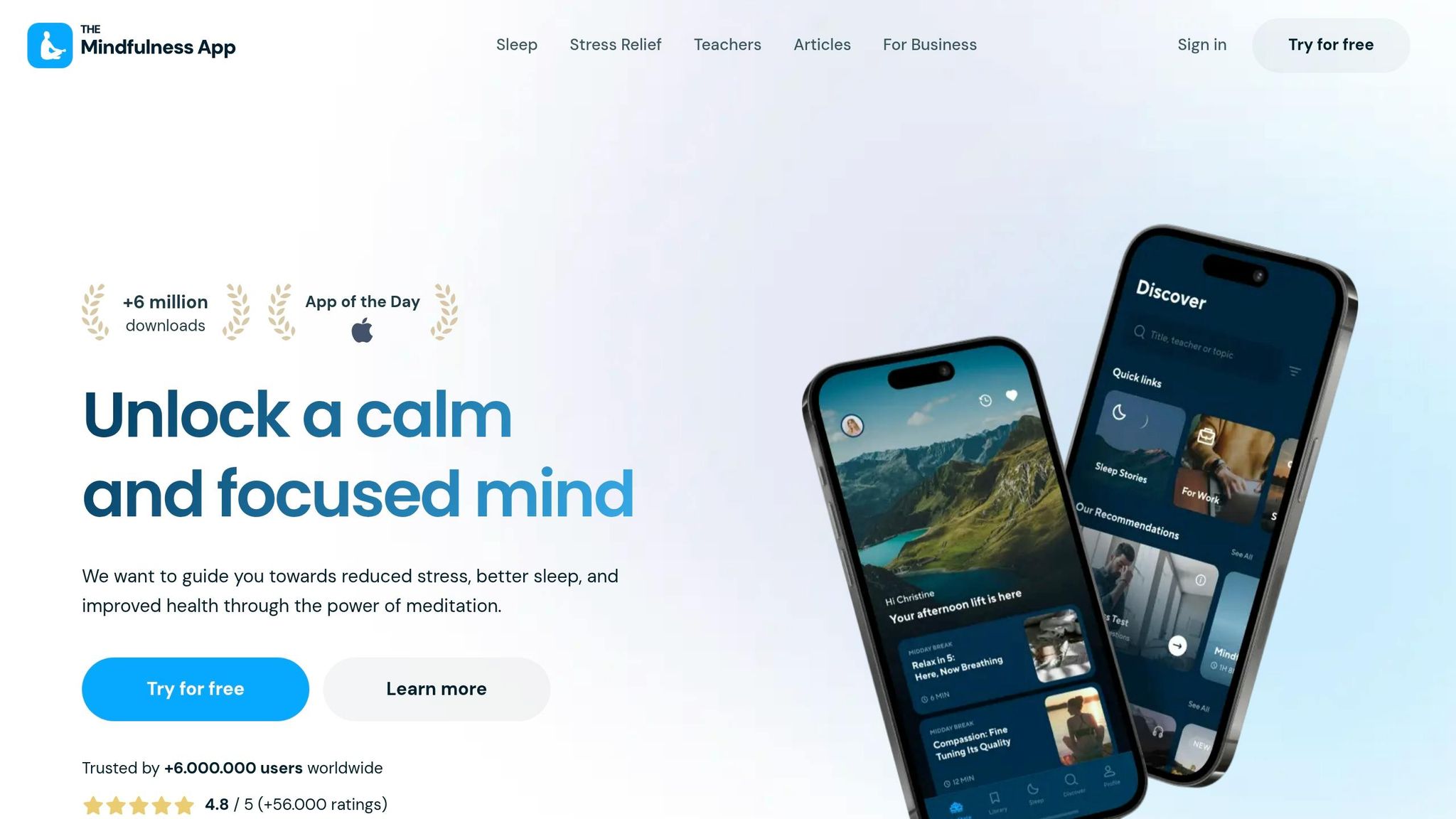
Discover how The Mindfulness App can guide you in cultivating mindful listening habits.
Guided Mindful Listening Tracks
The Mindfulness App provides guided tracks designed to help users, especially beginners, explore sound and silence with curiosity and openness. These exercises focus on training your attention to notice different layers of sound - ranging from internal cues like a growling stomach to the diverse sounds in your surroundings. Sessions are led by seasoned instructors such as Jeff Warren, Tamara Levitt, and Ted Meissner, with durations between 5 and 15 minutes, allowing you to start small and deepen your practice over time.
A standout feature of these tracks is the inclusion of intentional quiet moments. These pauses encourage you to immerse yourself in your environment’s sounds without continuous guidance, enhancing your ability to stay present.
Try the 14-Day Free Trial
With The Mindfulness App’s 14-day free trial, you can access a library of over 500 meditations, sleep stories, and courses. This includes beginner-friendly mindful listening tracks and 30-day foundational programs, giving you the chance to explore various session lengths and teaching approaches without committing upfront. The app is available in 12 languages and works offline, making it convenient to practice mindful listening wherever you are - whether at home, in the park, or on the move.
How to Practice Mindful Listening Daily
Now that you've explored mindful listening exercises, it's time to incorporate this skill into your daily life. The good news? It doesn't require carving out extra time. Instead, you can integrate mindfulness into activities you're already doing.
Add Mindful Listening to Your Daily Routine
Start by choosing one daily conversation to fully engage in. It could be a morning coffee chat, a work meeting, or dinner with family. Focusing on just one interaction a day makes the practice easier to maintain and less overwhelming.
During your commute, turn idle moments into opportunities for mindfulness. Whether you're at a stoplight or waiting for a train, take a minute to simply notice the sounds around you. Don’t judge them as "pleasant" or "annoying." Pay attention to the hum of engines, footsteps, or even the chirp of a transit chime. You can treat these recurring sounds as your mindfulness cue, focusing on them until they naturally fade .
Cooking is another great time for mindful listening. Tune into the sounds of food preparation - the sizzle of a pan, the rhythm of chopping, or the bubbling of water. These simple sounds can draw your attention to the present moment. Engage your other senses too, noticing the colors, textures, and aromas of your ingredients.
You can also use conversation transitions as mindfulness triggers. When someone starts speaking, pause and take a deep breath before responding. This small habit shifts you out of autopilot and into a state of full awareness.
To enhance these practices, pair them with mindful breathing for a deeper connection.
Combine Mindful Listening with Breathing
Your breath is a powerful tool to anchor your attention. If your mind starts to wander during a conversation or while listening to your surroundings, focus on the rise and fall of your chest to bring yourself back .
Try this three-step exercise to sharpen your listening skills. First, observe your mental state without judgment. Second, focus solely on your breath for one minute. Finally, expand your awareness to include the sounds around you. This gradual shift helps you move from internal reflection to active listening.
Box breathing is another helpful technique, especially in stressful situations. Follow a 4-4-4-4 rhythm: inhale for four counts, hold for four, exhale for four, and hold again for four. This pattern can calm your nervous system, making it easier to stay present during heated conversations or in noisy environments.
When a conversation stirs strong emotions, pay attention to your physical responses. Feel your feet on the ground, notice tension in your shoulders, or sense warmth in your face. Take a few deep breaths before reacting. This combination of body awareness and breathing helps you stay grounded and respond thoughtfully instead of impulsively. By practicing these techniques, you'll strengthen your ability to remain present, even in challenging moments.
Conclusion
Mindful listening is something you can start practicing right now - whether you're sipping your morning coffee, sitting in a meeting, or preparing dinner. It’s all about being fully present and paying close attention to the sounds and conversations happening around you.
This practice goes beyond simply improving your hearing. Mindful listening can help you build empathy and even reduce conflicts. A 2016 study revealed that people who engage in mindfulness regularly report much higher levels of relationship satisfaction. It also helps you become more aware of your own emotional responses during conversations.
You don’t need to overcomplicate it. Start with the simple exercises mentioned in this guide - whether it’s tuning in to ambient sounds, listening to music with intention, or giving your undivided attention to one conversation each day. Your mind might wander, and that’s okay. The goal isn’t perfect focus but gently bringing your attention back whenever it drifts.
If you’re looking for extra support, structured tools can make a difference. The Mindfulness App, for example, offers over 500 guided tracks in 12 languages, including sessions specifically for mindful listening. They even provide a 14-day free trial so you can explore the premium library and find what works best for you. Whether you use an app or practice on your own, the key is to take that first step. Pick one exercise from this guide and give it a try - even if it’s just for a minute today.
FAQs
How do I practice mindful listening in a noisy place?
To practice mindful listening in a noisy setting, pick one sound - like the hum of traffic or the murmur of distant voices - and focus on it completely for at least 30 seconds. Pay attention to the sound's characteristics without judging it. If the environment is quiet, simply take a moment to notice the stillness. This approach helps you remain grounded and use the surrounding noise as a way to cultivate mindfulness, even in the midst of chaos.
What should I do when my mind keeps wandering while listening?
It's completely natural for your mind to drift during a conversation. When it happens, simply guide your focus back to the speaker and the moment at hand - without being hard on yourself. Mindful listening is all about redirecting your attention whenever it strays, allowing you to stay engaged and fully present. Skip the self-criticism; this process is just part of gradually improving your focus and attentiveness.
How can The Mindfulness App help me build a daily listening habit?
The Mindfulness App helps you develop a habit of daily listening through guided meditations and mindfulness exercises. These sessions are designed to boost your awareness of the present moment and sharpen your active listening skills. By practicing regularly, you'll train your mind to stay engaged during conversations, minimize distractions, and make mindful listening feel effortless. Over time, this can lead to better focus, stronger communication, and a deeper sense of mindfulness in your everyday life.