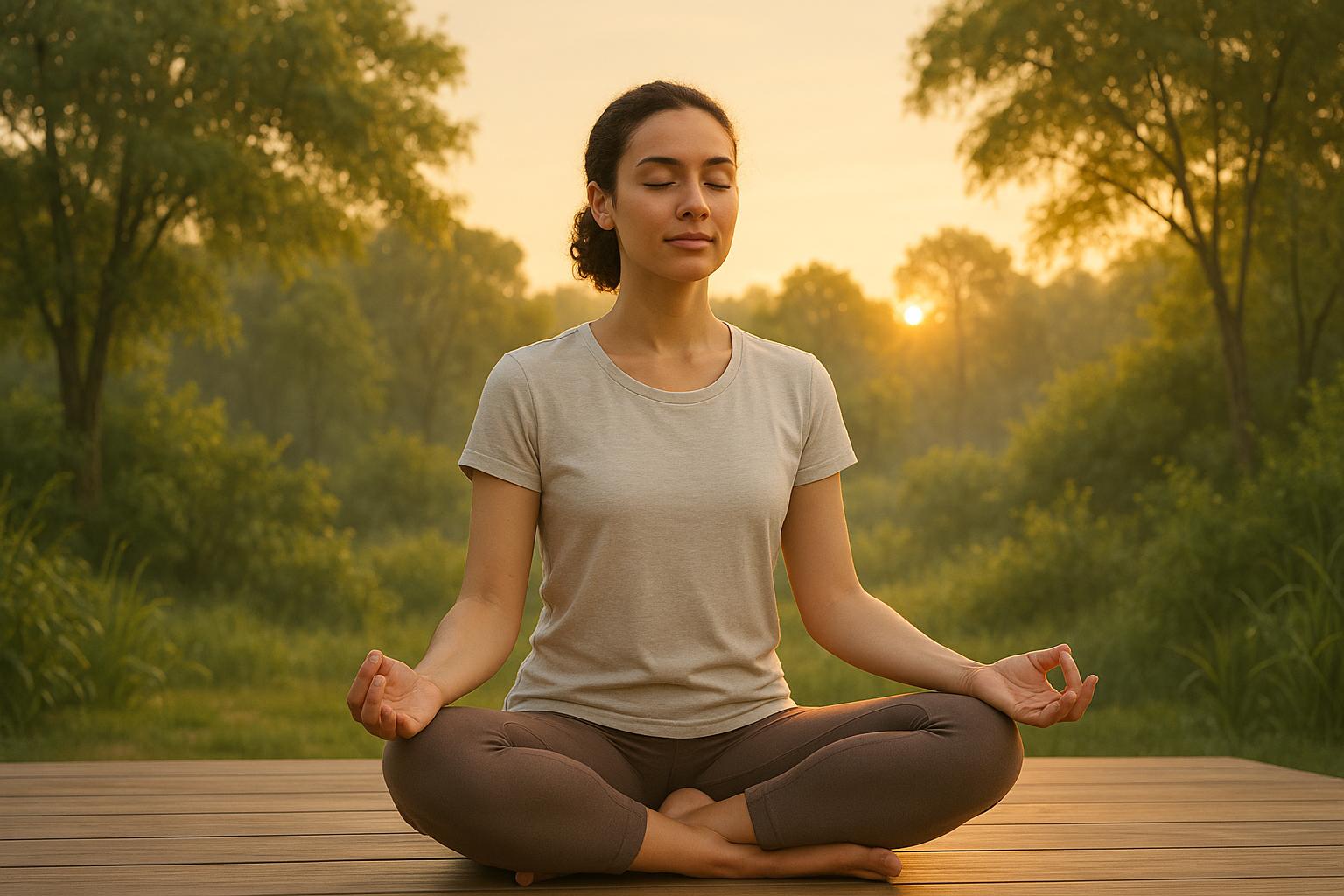

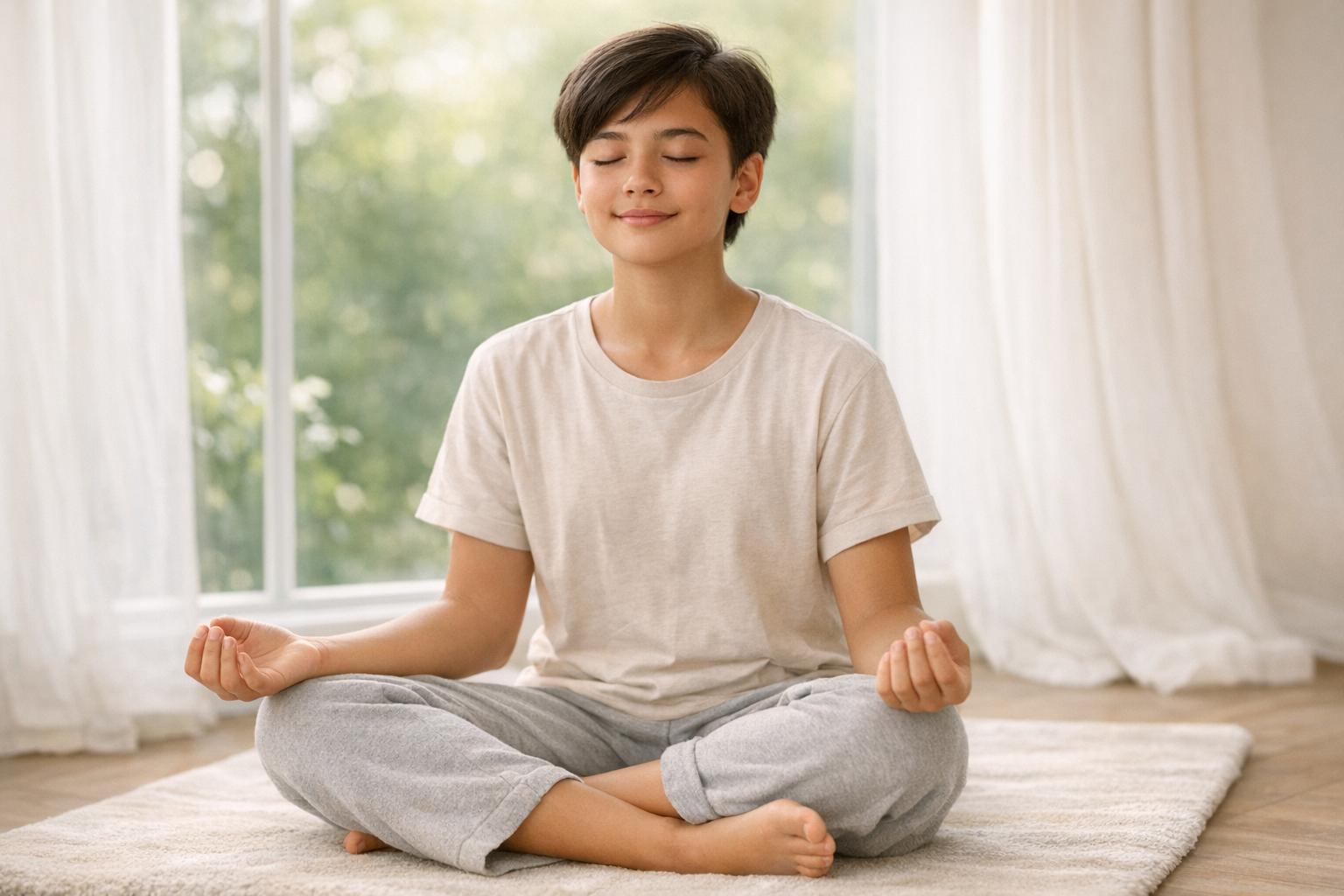
Mindfulness is a simple practice that helps you manage stress by focusing on the present moment without judgment. It calms your mind, reduces stress hormones, and even reshapes your brain to handle challenges better. Research shows mindfulness can:
- Lower stress and anxiety by reducing cortisol levels and calming the amygdala.
- Improve focus, memory, and emotional control by strengthening key brain areas like the prefrontal cortex.
- Enhance sleep quality and reduce physical symptoms of stress, such as high blood pressure.
You don’t need special tools or hours of practice. Techniques like mindful breathing, body scans, and mindful walking can fit into any schedule. Plus, apps like The Mindfulness App make guided meditations accessible for beginners and busy individuals. Studies suggest just 10–20 minutes a day can make a noticeable difference in how you feel and respond to stress.
Mindfulness isn’t just a temporary fix - it creates lasting changes in your brain and body. Start with small, consistent practices to feel calmer, more focused, and better equipped to handle daily pressures.
10-Minute Meditation to Reframe Stress
How Mindfulness Affects the Brain and Stress Response

How Mindfulness Changes Your Brain: Key Regions and Their Benefits
Mindfulness doesn’t just make you feel calmer in the moment - it actually reshapes your brain, altering both its structure and the way it communicates. These changes help you build resilience to stress, offering more than just a temporary sense of relief. Instead, mindfulness creates long-lasting biological shifts that better equip you to handle life’s daily pressures. Here’s a closer look at how this works.
The Parasympathetic Nervous System
When you practice mindfulness, you engage your body’s "rest and digest" system, formally known as the parasympathetic nervous system (PNS). This system serves as a counterbalance to the "fight or flight" response activated by the sympathetic nervous system during stressful situations.
Simple mindfulness techniques like deep breathing or body scans trigger the PNS, leading to slower heart rates, lower blood pressure, and deeper, more relaxed breathing. Dr. Jonathan Greenberg, a postdoctoral research fellow at Massachusetts General Hospital and Harvard Medical School, explains:
"Mindfulness is associated with physical stress reduction markers, such as a lower breathing rate and blood pressure."
But mindfulness doesn’t stop at immediate relaxation. It also recalibrates the HPA axis, which plays a central role in your body’s stress response. This adjustment helps reduce the production of stress hormones like cortisol and adrenaline. Over time, consistent mindfulness practice can lower cortisol levels, reducing inflammation and mitigating the physical toll of stress.
Brain Changes and Emotional Regulation
The effects of mindfulness on the brain are precise and measurable. Studies show that just eight weeks of mindfulness practice can increase gray matter density in areas like the hippocampus, which is crucial for memory and emotional resilience. The hippocampus also helps protect the brain from the harmful effects of chronic stress.
Another key area impacted by mindfulness is the amygdala, your brain’s built-in alarm system. Research from Stanford University in 2010 examined 16 individuals with Social Anxiety Disorder who completed an eight-week Mindfulness-Based Stress Reduction program. Functional MRI scans revealed reduced amygdala activity and enhanced activity in areas linked to attentional control when participants responded to negative self-beliefs. These individuals also reported feeling less negativity and improved self-esteem.
Mindfulness also strengthens the prefrontal cortex, which governs decision-making and emotional regulation, and the anterior cingulate cortex (ACC), which helps you focus attention and manage impulsive reactions. As Christina Congleton, Britta K. Hölzel, and Sara W. Lazar explain:
"The ACC is associated with self-regulation, meaning the ability to purposefully direct attention and behavior, suppress inappropriate knee-jerk responses, and switch strategies flexibly."
Here’s a breakdown of how mindfulness transforms the brain:
| Brain Region | Change Observed | Functional Impact |
|---|---|---|
| Amygdala | Reduced size/reactivity | Decreased fear and stress responses |
| Prefrontal Cortex | Enhanced thickness | Better decision-making and emotional control |
| Hippocampus | Increased gray matter | Improved memory and emotional resilience |
| Anterior Cingulate | Increased gray matter | Stronger attention and self-regulation |
The best part? These changes don’t require years of dedication. Research shows that practicing mindfulness for just 22 minutes a day over several months can significantly reduce amygdala volume. Additionally, mindfulness boosts levels of neurotransmitters like GABA, which helps reduce anxiety, and serotonin, which plays a key role in mood and overall well-being.
Mindfulness Techniques for Daily Stress Relief
Now that we've covered how mindfulness can reshape your brain, let's dive into three practical techniques you can use right away to ease daily stress. These methods require no special tools and can fit into even the busiest of schedules. They tap into the brain's natural ability to build resilience through mindfulness.
Mindful Breathing
Your breath is a powerful anchor that keeps you grounded in the present. By focusing on it, you can break the cycle of stress and activate your body's relaxation response.
To try mindful breathing, find a quiet space and sit comfortably with a relaxed, upright posture. Spend 5–10 minutes paying attention to your breath. Notice where you feel it most vividly - maybe it's the cool air entering your nostrils, the rise and fall of your chest, or the gentle expansion of your abdomen. You can silently say "breathing in" and "breathing out" to help maintain focus. If your mind starts to wander, gently bring your attention back to your breath without judgment.
Meditation teacher Sharon Salzberg highlights the importance of simply starting:
"The most important moment in your meditation practice is the moment you sit down to do it. Because right then you're saying to yourself that you believe in change, you believe in caring for yourself."
Even short sessions can make a difference. Research suggests that meditating for just 12 minutes, five days a week, can improve your ability to focus. For quick stress relief, try the "Stress Breath" technique: exhale audibly, like you're fogging up a mirror. The sound vibrations help stimulate your vagus nerve, which triggers a calming response.
Body Scan Meditation
Body scan meditation is a great way to catch physical signs of stress - like a clenched jaw or tight shoulders - before they turn into bigger problems. It enhances your body awareness and shifts your mind from a stressed "doing" state to a calmer "being" state.
To begin, lie on your back with your palms facing up, or sit comfortably in a chair. Close your eyes and take a few moments to notice your natural breathing pattern. Then, slowly scan your body from head to toe - or vice versa. Start with your toes, moving through your feet, legs, hips, abdomen, chest, back, arms, neck, and finally your face. Pay attention to any sensations in each area, and with each exhale, release any tension you may find.
Studies back up the effectiveness of this practice. In a large study involving 2,239 participants, the body scan exercise showed the biggest reduction in self-reported stress (effect size d = -0.56). Another study revealed that practicing a 20-minute body scan for eight weeks led to a noticeable drop in cortisol levels compared to a control group.
Mindful Walking
If sitting still feels like a challenge, mindful walking might be the perfect alternative. This practice combines movement with mindfulness, helping you balance both mental and physical energy.
Start by walking at a natural pace. Notice the shift as you move from stillness to motion. Focus on how your feet interact with the ground - feel the heel strike, the weight shift, and the toe push-off. Engage your senses by noticing the air on your skin or the sounds around you, but don’t label or analyze them. Periodically check your posture to ensure you're walking in a relaxed and unhurried way. If your mind starts to wander, use the sensation of your feet touching the ground to bring your attention back to the present.
Mindful walking can be done anywhere - whether you're taking a stroll during lunch, walking to your car, or even pacing around your living room. The key is to focus solely on the act of walking, immersing yourself fully in the experience.
Structured Mindfulness Programs: MBSR and MBCT
While quick mindfulness techniques can help with immediate stress, structured programs like Mindfulness-Based Stress Reduction (MBSR) and Mindfulness-Based Cognitive Therapy (MBCT) offer a more in-depth approach to building long-term stress resilience.
What is MBSR?
MBSR, developed by Jon Kabat-Zinn in 1979 at the University of Massachusetts Medical School, is an 8-week program designed to help individuals manage stress and chronic pain. The program includes weekly 2.5-hour group sessions, a one-day silent retreat (lasting about 6–7 hours) between weeks six and seven, and daily home practice sessions of 45–60 minutes.
The program focuses on three main practices: body scanning, sitting meditation, and mindful movement through hatha yoga. Participants are also encouraged to develop seven key attitudes: non-judging, patience, beginner's mind, trust, non-striving, acceptance, and letting go.
MBSR has a strong track record of positive outcomes. A meta-analysis revealed that the program produces a moderately large improvement in mental health (Hedges' g = 0.54) compared to inactive controls. For every 100 participants, 21 experience better mental health outcomes than those receiving standard care. Since its creation, more than 24,000 individuals have completed the program at the University of Massachusetts Center for Mindfulness, and nearly 1,000 certified instructors now teach MBSR in the U.S. and over 30 other countries.
Building on MBSR's foundation, MBCT takes mindfulness a step further by incorporating elements of therapy.
How MBCT Combines Mindfulness and Therapy
MBCT expands on the principles of MBSR by integrating Cognitive Behavioral Therapy (CBT) techniques, making it particularly effective for individuals dealing with recurring depression or persistent negative thought patterns .
The key focus of MBCT is shifting how participants relate to their thoughts. Instead of trying to change what they think, MBCT encourages individuals to view thoughts as temporary mental events rather than absolute truths. This process, known as "de-centering", helps reduce emotional reactivity and interrupts cycles of rumination.
Research highlights MBCT's effectiveness in reducing ruminative thinking and significantly lowering the risk of depression relapse, especially for those with a history of major depression. In fact, the National Institute for Health and Care Excellence (NICE) in the United Kingdom officially recommends MBCT as a preventative measure against depression relapse.
Both MBSR and MBCT require a commitment to daily practice - roughly 45 minutes a day, six days a week. While this may seem like a significant investment, the long-term benefits in managing stress and building resilience are well worth the effort.
sbb-itb-bea8dce
Health Benefits of Regular Mindfulness Practice
Practicing mindfulness regularly can reshape how your body and brain respond to stress, leading to long-term health improvements.
Between 2002 and 2022, the percentage of U.S. adults meditating more than doubled, jumping from 7.5% to 17.3%. This growing interest reflects increasing awareness of mindfulness and its well-documented benefits, backed by a wealth of scientific research. Here’s a closer look at some of the key health advantages mindfulness offers.
Lower Stress and Anxiety Levels
Mindfulness has a remarkable ability to reduce stress and anxiety by calming the amygdala (the brain's fear center) and enhancing the regulatory role of the prefrontal cortex [6, 22, 42].
Mindfulness-Based Stress Reduction (MBSR) has shown anxiety reduction effects comparable to Cognitive Behavioral Therapy (CBT), with a pre-post treatment effect size (Cohen's d) of 1.06. In fact, mindfulness-based approaches are considered as effective as evidence-based therapies like CBT for managing anxiety and depression. A 2014 meta-analysis of 47 trials involving 3,515 participants found moderate evidence that mindfulness meditation improved anxiety (SMD 0.38) and depression (SMD 0.30) within just eight weeks.
"Mindfulness meditation changes our brain and biology in positive ways, improving mental and physical health." – American Psychological Association
Beyond mental health, mindfulness has been linked to physical benefits like lower blood pressure, improved immune function, and symptom relief for stress-related conditions such as irritable bowel syndrome, psoriasis, and Type 2 diabetes [22, 4]. Studies also show mindfulness reduces inflammatory markers like IL-6 and CRP, which are tied to chronic stress and disease [22, 2, 1].
Better Sleep Quality
Mindfulness doesn't just calm your mind - it also helps you sleep better. By reducing stress and nighttime anxiety, mindfulness lowers the physiological arousal that often keeps people awake [4, 1]. It’s no wonder that 92% of mindfulness practitioners use it to relax or reduce stress, with over half specifically aiming to improve their sleep.
A 2019 analysis of 18 studies involving 1,654 participants found that mindfulness meditation significantly improved sleep quality compared to educational treatments. Techniques like the body scan exercise, which encourages you to release physical tension and visualize discomfort leaving your body, make it easier to unwind before bed.
Mindfulness activates the parasympathetic nervous system, counteracting the stress-driven arousal that disrupts sleep. By focusing your mind on the present moment, rather than worrying about the future or dwelling on the past, you create the ideal mental state for restful sleep.
Improved Focus and Productivity
While mindfulness reduces stress, it also sharpens focus and boosts productivity. Research reveals that nearly half of our waking hours are spent mind wandering - a habit closely tied to unhappiness. Mindfulness trains your brain to stay present, cutting down on this mental drift.
"The capacity to keep one's mind focused on the present moment is associated with higher psychological well-being." – Stefan G Hofmann, Ph.D., Professor of Psychology, Boston University
Regular mindfulness practice enhances concentration, clarity, and memory by strengthening neural control [40, 41, 4]. Brain imaging studies show that mindfulness increases both the volume and connectivity of brain regions involved in memory and complex thinking. These changes lead to better decision-making, greater productivity, and improved management of daily tasks.
Mindfulness also offers relief for chronic pain by altering how pain is perceived and increasing tolerance. These benefits are particularly evident for conditions like chronic low back pain and rheumatoid arthritis [22, 41, 4].
| Condition | Benefit |
|---|---|
| Chronic Pain | Reduced disability and improved pain management |
| Insomnia | Better sleep quality compared to educational treatments |
| Type 2 Diabetes | Lower insulin resistance and fasting glucose levels |
| PTSD | Symptom reduction comparable to prolonged exposure therapy |
| Cardiovascular | Noticeable blood pressure reductions in at-risk patients |
| HIV/AIDS | Slower declines in CD4+ T lymphocyte counts |
Consistency is key to reaping these benefits. Even a short daily practice of 5 to 10 minutes can shift your brain from a stress-driven "doing" mode to a more relaxed "being" mode. Apps like The Mindfulness App offer guided meditations and courses - with over 500 tracks - to help you establish and maintain this transformative habit.
Building Mindfulness into Your Daily Routine
Knowing that mindfulness is beneficial is one thing, but actually making it a part of your day-to-day life? That’s where the challenge lies. The good news is, you don’t need hours of free time or a perfect setup. The key is finding small, manageable ways to incorporate mindfulness into your daily rhythm.
Starting with 5-Minute Practices
Short, consistent mindfulness sessions are more effective at forming habits than sporadic, longer ones. Dr. James E. Stahl, a Harvard researcher and internal medicine practitioner, puts it plainly:
"You don't need to enroll in a formal program, or even spend a lot of time practicing - 10 to 15 minutes a day will do. Consistency is the key".
Start your day with a simple practice: take three deep breaths and set an intention, such as “Today I will approach challenges with patience”. This brief mindful moment - less than a minute - can shift your brain out of autopilot mode. That’s no small feat, considering that about 95% of human behavior runs on unconscious patterns.
Need a mid-day reset? Try the S.T.O.P. practice: Stop what you're doing, Take a breath, Observe your thoughts and feelings, and Proceed with awareness. This two-minute technique can be done anywhere - whether you're at your desk, in the car, or between meetings.
Another effective approach is habit stacking, where you tie mindfulness to everyday actions. For instance, say to yourself, “If the phone rings, I’ll take one deep breath before answering,” or “If I’m about to open the breakroom door, I’ll pause for one breath”. These small adjustments don’t take extra time but can help mindfulness become second nature.
Using Technology to Support Your Practice
Your smartphone can be a powerful ally in building a mindfulness routine. Apps make guided meditations easy to access, helping you stay focused, especially when silent practice feels challenging.
The Mindfulness App, for example, offers over 500 tracks, including guided meditations, sleep stories, and structured courses tailored for busy schedules. Available in 12 languages and usable offline, it’s perfect for commuting or traveling. A 2024 study found that just 10 minutes of daily mindfulness app use significantly improved well-being and reduced symptoms of depression and anxiety after 30 days.
Digital tools can also help you stay consistent. Set reminders in your calendar to schedule meditation like any other appointment. Research shows that even a simple 20-minute guided body scan practiced daily for eight weeks can lower cortisol levels - a key stress indicator.
Staying Consistent Over Time
Once you’ve established a routine with small daily practices and digital reminders, consistency becomes more achievable. It’s not about being perfect; it’s about coming back to the practice, even after missing a day. As meditation teacher Sharon Salzberg says:
"The most important moment in your meditation practice is the moment you sit down to do it".
If mornings are hectic, look for 5- to 10-minute windows during the day - like the time you’d usually spend scrolling on your phone or waiting for a meeting to start - and use them for mindfulness.
Visual reminders can also help. Place your meditation cushion or yoga mat somewhere you’ll see it often. Sticky notes can work too, but switch up their color or location weekly to keep them noticeable.
Research from the military suggests that meditating for at least 12 minutes, five days a week, can help maintain focus under stress. However, a meta-analysis of over 200 studies found that frequency matters more than session length - regular practice is what delivers the most benefits.
And if you miss a session? Don’t dwell on it. Acknowledge it and simply pick up where you left off - no guilt required.
Conclusion
Mindfulness isn’t just a passing wellness trend - it’s a scientifically backed approach that can rewire your brain and nervous system to better manage stress. By strengthening your prefrontal cortex and soothing your amygdala, mindfulness builds resilience over time, and this transformation is within reach for anyone, no matter how packed their schedule might be.
What makes mindfulness so practical is its simplicity. You don’t need fancy gear, a perfectly calm mind, or hours of free time to get started. Just five minutes of focused breathing or a quick body scan can engage your parasympathetic nervous system, helping you shift from reacting to responding thoughtfully. As Mindful.org explains:
"Mindfulness gently builds an inner strength, so that future stressors have less impact on our happiness and physical well-being".
The key is consistency. Regular mindfulness practice rewires your brain and reshapes how you respond to stress in daily life. Whether it’s using guided meditations from The Mindfulness App during your morning commute or pausing with techniques like S.T.O.P. between tasks, every mindful moment strengthens your ability to handle challenges. Studies even suggest that mindfulness can lower inflammatory markers, boost immune health, and rival antidepressant medications in treating anxiety.
Why wait? Take a deep breath right now and let mindfulness guide you toward greater calm and resilience.
FAQs
How does mindfulness help the brain reduce stress?
Mindfulness has been found to physically reshape the brain in ways that help manage stress more effectively. By practicing mindfulness regularly, areas like the medial prefrontal cortex, anterior cingulate, and insula - key regions for emotional regulation and self-awareness - become stronger. At the same time, it boosts gray matter in the hippocampus, enhancing memory and improving the ability to handle stressful situations. On the flip side, mindfulness also reduces the size and activity of the amygdala, the part of the brain responsible for fear and stress responses.
These brain changes translate into better stress management. A less reactive amygdala helps lower cortisol levels, the hormone linked to stress, while stronger connections between emotional and control centers improve the brain's ability to regulate fear. The best part? Even short-term mindfulness programs, such as eight-week courses, can lead to noticeable improvements. For those interested in reaping these benefits, The Mindfulness App provides guided meditations and courses aimed at reducing stress and promoting overall well-being.
Can practicing mindfulness for just a few minutes a day really make a difference?
Even carving out just five minutes a day for mindfulness can make a noticeable difference in how you feel. Research highlights that brief but consistent mindfulness practices can lower stress, ease anxiety, and even lift your mood. Plus, it helps clear your mind and sharpen focus, making daily challenges feel a bit more manageable.
Whether it’s deep breathing or a short guided meditation, taking a few moments for yourself each day can have a lasting impact on your mental well-being. The best part? It’s a habit that easily fits into even the busiest of routines.
How can I practice mindfulness with a busy schedule?
Incorporating mindfulness into a packed schedule is simpler than it sounds. Begin with small, manageable moments - spend just 1–2 minutes in the morning focusing on your breathing. Notice each inhale and exhale. You can revisit this practice anytime during the day, whether you're waiting for your coffee to brew or gearing up for your next task.
Throughout the day, try adding a mindful walk by tuning into the sensation of your steps or the natural rhythm of your movement. At lunch, turn your meal into a mindful experience by appreciating the colors, textures, and flavors of your food. If stress starts to creep in, take a moment for a quick body scan. Notice areas like your shoulders or neck where tension might be hiding, and release it with a deep, calming breath.
For extra guidance, The Mindfulness App provides short guided meditations - some as brief as 3 minutes. They're perfect for a coffee break, a quick commute, or a moment to reset. By sprinkling these small practices throughout your day, you can ease stress and stay centered without needing to carve out extra time.