

Body scan meditation is a simple mindfulness practice that helps you become more aware of your body and reduce stress. By focusing on different body parts without judgment, this technique can improve relaxation, sleep, and emotional well-being. It’s a key part of mindfulness programs like Mindfulness-Based Stress Reduction (MBSR) and is backed by research showing benefits such as lower cortisol levels and better stress management.
Here’s what you’ll learn:
- Benefits: Reduced stress and anxiety, improved sleep, and a stronger mind-body connection.
- How to Practice: Focus on each body part from head to toe, noticing sensations without trying to change them.
- Tips for Beginners: Start with short sessions, don’t worry about distractions, and practice regularly.
- Challenges: Address wandering thoughts or physical discomfort by refocusing or breathing into tense areas.
- Tools: Apps like The Mindfulness App provide guided sessions ranging from 3 to 44 minutes for all experience levels.
Body scan meditation is easy to start and requires no special equipment. Whether you have 5 minutes or 20, it’s a practical way to manage stress and reconnect with your body.
Body Scan Meditation - Jon Kabat-Zinn
History and Philosophy of Body Scan Meditation
Body scan meditation gained traction in the United States during the 1970s, thanks to Jon Kabat-Zinn, PhD, a mindfulness expert who saw the potential of ancient meditation practices to tackle modern stress. His work marked a turning point, blending traditional techniques with contemporary stress management strategies.
Kabat-Zinn took these time-honored meditation practices and incorporated them into a clinical framework, which he called Mindfulness-Based Stress Reduction (MBSR). Within this program, the body scan became a key practice, crafted to help reconnect the mind and body - something that often gets disrupted during times of stress. As Dr. Melissa Young from Cleveland Clinic explains:
"It's a practice that originated with the popularization of mind-body stress reduction techniques that mindfulness practitioner Jon Kabat-Zinn, PhD, introduced to the United States in the 1970s".
The philosophy behind body scan meditation sets it apart from many other wellness practices. Instead of pursuing a specific goal - like erasing pain or achieving deep relaxation - the focus is on the experience itself. The practice encourages you to notice how your body feels in the present moment, without judgment or any pressure to change what you observe. This focus on awareness, rather than outcomes, has become a defining feature of its role in mindfulness programs.
This non-judgmental approach has proven particularly helpful in MBSR programs aimed at managing stress-related health concerns. By teaching the nervous system to relax, body scan meditation fosters a mindful way of handling everyday stress.
Benefits of Body Scan Meditation
Body scan meditation has a long history, but its benefits are now backed by measurable health outcomes. This practice helps improve physical, mental, and emotional well-being by activating the parasympathetic nervous system. This shift from the "fight-or-flight" mode to a calmer "rest-and-digest" state reduces cortisol levels and lowers inflammation.
Research highlights that just three weekly 45-minute sessions of guided body scan meditation can significantly reduce stress and anxiety. For instance, a study involving terminal cancer patients in Hong Kong revealed that 90 minutes of this meditation brought noticeable improvements in mental health, leaving participants feeling calm and at peace. Additionally, the practice has earned a 4.7 out of 5 rating from 176 users on Greater Good in Action at UC Berkeley.
Stress and Anxiety Relief
Body scan meditation is an effective tool for managing stress. It guides you to focus on different parts of your body, helping to release unnoticed tension in areas like your jaw, shoulders, or stomach. This process increases your awareness of physical sensations, which can ease tension you didn’t even realize you were holding.
The practice also encourages observing discomfort and negative emotions without judgment, which can reduce the emotional weight tied to anxiety or physical pain. Dr. Melissa Young from Cleveland Clinic explains:
"When you practice this technique and incorporate it into your self-care routine, your nervous system starts to remember how to relax."
Over time, consistent practice strengthens interoception - your ability to sense internal bodily signals. This skill helps you manage emotions and recognize your needs before they become overwhelming. For a quick reset during a stressful day, try a 5–10 minute body scan to ease both emotional and physical tension.
Better Sleep and Relaxation
Body scan meditation is also a game-changer for sleep. A 2024 poll found that 57% of Americans believe they’d feel better with more sleep. Clinical trials at UCLA have shown that mindfulness meditation, including body scan practices, improves sleep quality, especially in older adults dealing with sleep issues.
By helping release physical tension and quiet mental chatter, this meditation provides a calming focus for your mind. Practicing it in bed can naturally transition you from wakefulness to sleep, with falling asleep often signaling a deeply relaxed state.
Mindfulness trainer Kelly Boys describes the process:
"As you gently breathe and move your attention from place to place, you'll notice where tension is hiding. Then, you can give it permission to let go, inviting a sense of lovely heaviness and relaxation."
To use this method for sleep, systematically shift your focus from head to toe, spending 20–30 seconds on each area. Breathe into any tight spots to help release tension.
Stronger Mind-Body Connection
Stress often disrupts the connection between mind and body, but body scan meditation can help rebuild it. By focusing on bodily sensations, this practice is especially helpful for those feeling emotionally overwhelmed or disconnected from their physical selves. It sharpens your ability to notice internal signals - like a racing heart or tight muscles - so you can catch stress early.
Research has shown that 8-week Mindfulness-Based Stress Reduction (MBSR) programs, which include body scan meditation, lead to brain changes similar to those seen in experienced meditators. The Headspace Editorial Team explains:
"The goal isn't to change anything, but simply to notice what's there with openness and care."
This increased awareness is particularly useful for managing chronic pain and reducing tension’s impact. To see results, aim for at least 5 minutes of practice three to six days a week. Longer sessions can amplify the benefits. Up next, discover how to integrate guided body scan meditation into your routine.
How to Practice Body Scan Meditation

Body Scan Meditation Step-by-Step Guide: Head to Toe Technique
Now that you’re familiar with the benefits, let’s dive into how to actually do a body scan meditation. The process is simple, but setting the right tone and environment can make a big difference in how effective your sessions feel. Follow these steps to make it a part of your routine.
Preparing Your Environment
Start by choosing a quiet, comfortable spot where you won’t be interrupted. This could be your bedroom, a cozy corner, or even a chair in a peaceful area. Many people like to lie down for deeper relaxation, but sitting upright in a chair is a good alternative - especially if you’re prone to dozing off.
To minimize distractions, close your eyes and allocate 15 to 20 minutes for the session. If you’re pressed for time, even 5 minutes can be helpful. Before beginning the scan, take three deep breaths: inhale deeply through your nose and exhale slowly through your mouth. This helps settle your body and mind. Dr. Melissa Young, a functional medicine expert at Cleveland Clinic, highlights the importance of this practice:
"Sometimes, we're just so busy that we're not really aware of what's happening in our body. There can be a very big disconnect between the body and the mind, and a body scan meditation is a way to bring those together."
Step-by-Step Instructions
Once your space is ready, follow these steps to guide yourself through the body scan:
- Start with your head and neck. Pay attention to sensations in your scalp, face, and jaw. Spend about 20 to 30 seconds on each area. If you notice tension, breathe into that spot and imagine it softening.
- Shift focus to your shoulders and upper back, then to your chest and belly. Notice how your body feels against the surface you’re sitting or lying on.
- Move to your arms and hands, scanning each arm down to the fingertips.
- Continue to your thighs, knees, and calves, and finally, focus on your feet and toes.
Some people like to picture a soft, warm light moving slowly down their body as they scan. Dr. Young explains that the purpose isn’t to change anything but to build awareness:
"The goal of a body scan is not necessarily to change anything, just to build an ongoing awareness of how you're feeling because, again, we disconnect so much."
When you’ve completed the scan, gently bring your attention back to your surroundings. Take a deep breath, slowly open your eyes, and ease back into your day.
If you’re new to this practice, a few tips can help you stay on track and make the experience more rewarding.
Tips for Beginners
- Don’t worry about a wandering mind. It’s completely normal. If your thoughts drift, simply bring your focus back to the body part you were last scanning.
- Avoid judging sensations. Whether an area feels tense, neutral, or numb, acknowledge it without labeling it as “good” or “bad.” Move on without trying to force a specific feeling.
- Struggling to stay awake? Try sitting upright or practicing earlier in the day instead of right before bed.
- Ease into it. If a full-body scan feels overwhelming, start small by focusing on just one or two areas. Gradually expand as you get more comfortable.
The key is consistency. Aim for a regular practice, even if it’s brief. Over time, this habit can strengthen the connection between your mind and body. Remember, it’s not about perfection - just showing up matters the most.
sbb-itb-bea8dce
Common Challenges and Solutions
Even with the best intentions, you might encounter a few hurdles along the way. The good news? These challenges are completely normal, and there are simple ways to address them.
Refocusing a Wandering Mind
It’s natural for your mind to drift - research suggests people spend nearly 47% of their waking hours thinking about things unrelated to their current activity. If you find yourself mentally planning your next meal or replaying a past conversation, don’t worry. Acknowledge the thought, then gently guide your focus back to the body part you were scanning.
One helpful method is the "Noting" technique: mentally tag the distraction with a single word like "work", "planning", or "worrying." This helps you recognize the thought without getting stuck in it. If you feel completely lost, take a moment to focus on your breath before continuing.
Feeling drowsy? Adjust your posture by sitting upright rather than lying down. You can also try equal breathing - inhale for four seconds, exhale for four seconds - to bring your attention back.
Next, let’s tackle how to handle physical discomfort.
Handling Physical Discomfort
It’s common to experience tension, aches, or restlessness during a body scan. When discomfort arises, resist the urge to shift positions immediately. Instead, try focusing on the area for about a minute, using steady, belly-based breathing. Imagine "breathing into" the discomfort, allowing your attention to settle there.
Visualization can also help. Picture the tension melting away or evaporating with each exhale. If you encounter a spot that feels numb or neutral, simply acknowledge that absence of sensation without trying to force anything.
Interestingly, while many people find body scans relaxing, a 2019 research review noted that some feel heightened anxiety at first, as they become more aware of existing discomforts. If this happens, consider shorter sessions - around five minutes - or focus on "safe" areas like your feet before attempting a full-body scan.
Building a Consistent Practice
Once you’ve worked through these challenges, you’ll be better equipped to establish a regular body scan routine. Remember, consistency is more important than perfection. If a full session feels daunting, start small with just three to five minutes. Pairing your practice with an existing habit - like after waking up, during a lunch break, or before bed - can make it easier to stick with. This "habit stacking" technique blends the practice seamlessly into your day.
Don’t aim for a specific outcome. Some sessions may feel calming, while others might seem neutral or even frustrating. The goal is to simply observe what’s happening in your body without judgment. If you miss a day, no problem - just pick up where you left off. Over time, regular practice helps your nervous system shift more easily from stress to relaxation mode.
Using The Mindfulness App for Body Scan Meditation
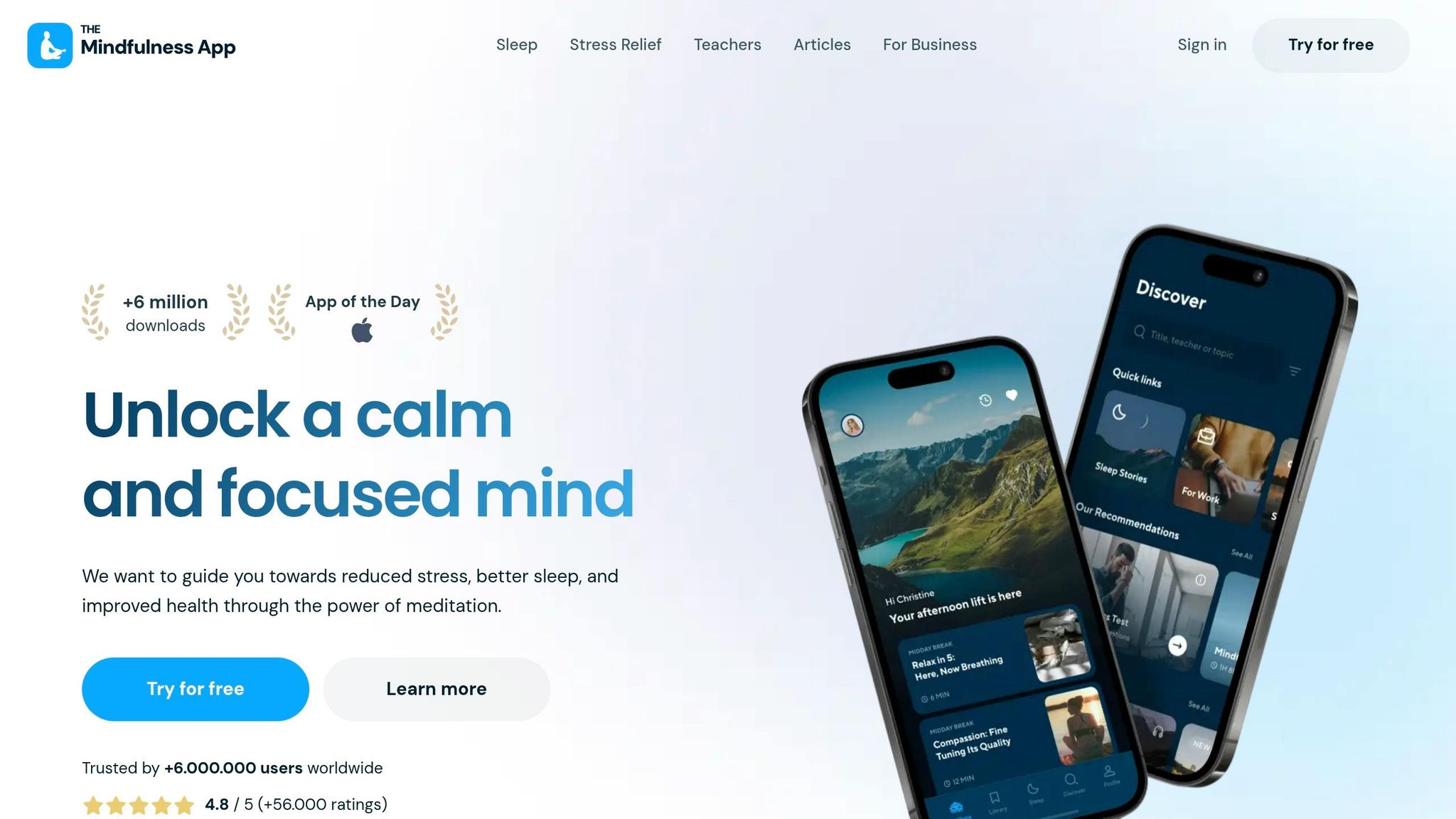
The Mindfulness App makes it easy to incorporate body scan meditation into your routine with guided digital sessions designed to suit various needs.
App Features for Body Scan Practice
This app offers body scan sessions that cater to different schedules and levels of experience. Whether you need a quick 3-minute session for a busy morning, a 10-minute reset during the day, or a longer 44-minute deep practice, you’ll find options that fit your day. Each session is guided by experienced facilitators and mental health professionals, helping you focus on physical sensations while addressing emotional challenges.
In addition to individual body scan sessions, the app incorporates this technique into structured mindfulness programs. These include a 10-day beginner’s course and a 30-day stress management series. Body scan practices are also featured in sleep stories, wind-down exercises, and tension-relieving activities, offering diverse ways to engage with the technique. With over 500 exclusive tracks in 12 languages, the app provides content for anxiety relief, pain management, emotional strength, and better focus. This variety ensures a tailored meditation experience for every user.
Personalizing Your Meditation Experience
The Mindfulness App allows for a high degree of customization. You can choose between fully guided sessions or silent meditations with optional timed bells. To enhance your practice, you can add calming background sounds like rain, forest, or ocean waves, adjusting the volume mix to your liking.
The app also helps you stay consistent by offering personalized reminders. You can set these reminders based on specific times or even locations. Track your progress with personalized stats, bookmark your favorite sessions, and download content for offline use - perfect for when you’re traveling or without Wi-Fi. With over 6 million downloads and more than 180 million "Mindful Minutes" logged, the app has become a trusted tool for building lasting meditation habits.
Getting Started with The Mindfulness App
New users can explore the premium library with a free trial - 14 days for most platforms or 7 days via Google Play. The app’s 10-day introductory course is a great starting point, offering step-by-step guidance on mindfulness and body scanning.
For your first session, try the 3-minute guided body scan. This beginner-friendly option introduces you to the practice by guiding you through each part of your body, spending 20–30 seconds on each area. You’ll observe sensations like tension or warmth with curiosity. If you decide to continue, the premium subscription costs $69.99 annually (about $5.83 per month) or $12.99 monthly, unlocking unlimited access to the app’s content.
Conclusion
Body scan meditation is an easy and effective way to help manage stress. By focusing on different parts of your body from head to toe and observing sensations without judgment, you encourage your body to relax. Over time, this practice can lead to improved sleep, reduced chronic pain, and better emotional balance.
The key to experiencing these benefits lies in consistency. Regular practice can bring noticeable changes in how your brain handles stress and discomfort. Even short daily sessions can improve your awareness of internal sensations, helping you recognize and address tension before it escalates.
Getting started is simple. Begin with just three minutes a day. Choose a time that works best for you - whether it’s in the morning to set the tone for your day, during a midday break to recharge, or at night to wind down for better sleep. As Dr. Melissa Young explains:
"There really isn't a desired outcome... It's all about the process. It's the journey."
Incorporating body scan meditation into your daily routine has never been easier. Apps like The Mindfulness App provide guided sessions and courses tailored to your needs. With options ranging from 3 to 44 minutes and tools to track your progress, you can create a practice that fits seamlessly into your lifestyle. Take the first step today - download the app, try a beginner’s session, and start your journey toward mindfulness.
FAQs
How often should I do a body scan to see results?
For noticeable benefits, try practicing body scan meditation 3 to 6 days a week. Even a quick 5-minute session can make a difference. Staying consistent is the real secret to boosting mindfulness and overall well-being.
Is it normal to feel more anxious during a body scan at first?
Yes, it’s completely normal to feel a bit more anxious at the start of a body scan. It takes time to get used to the practice. As you learn to observe sensations without attaching judgment, that initial anxiety often eases. With consistent practice, it becomes easier to feel at ease and stay present in the moment.
Can I do a body scan if I have chronic pain or injuries?
Body scan meditations can be a helpful tool even if you're dealing with chronic pain or injuries. These guided practices are crafted to create a sense of safety, help you manage discomfort, and interrupt pain-fear cycles. They encourage relaxation and build awareness of your body. The key is to listen to your body and make adjustments as needed to ensure your comfort throughout the practice.