

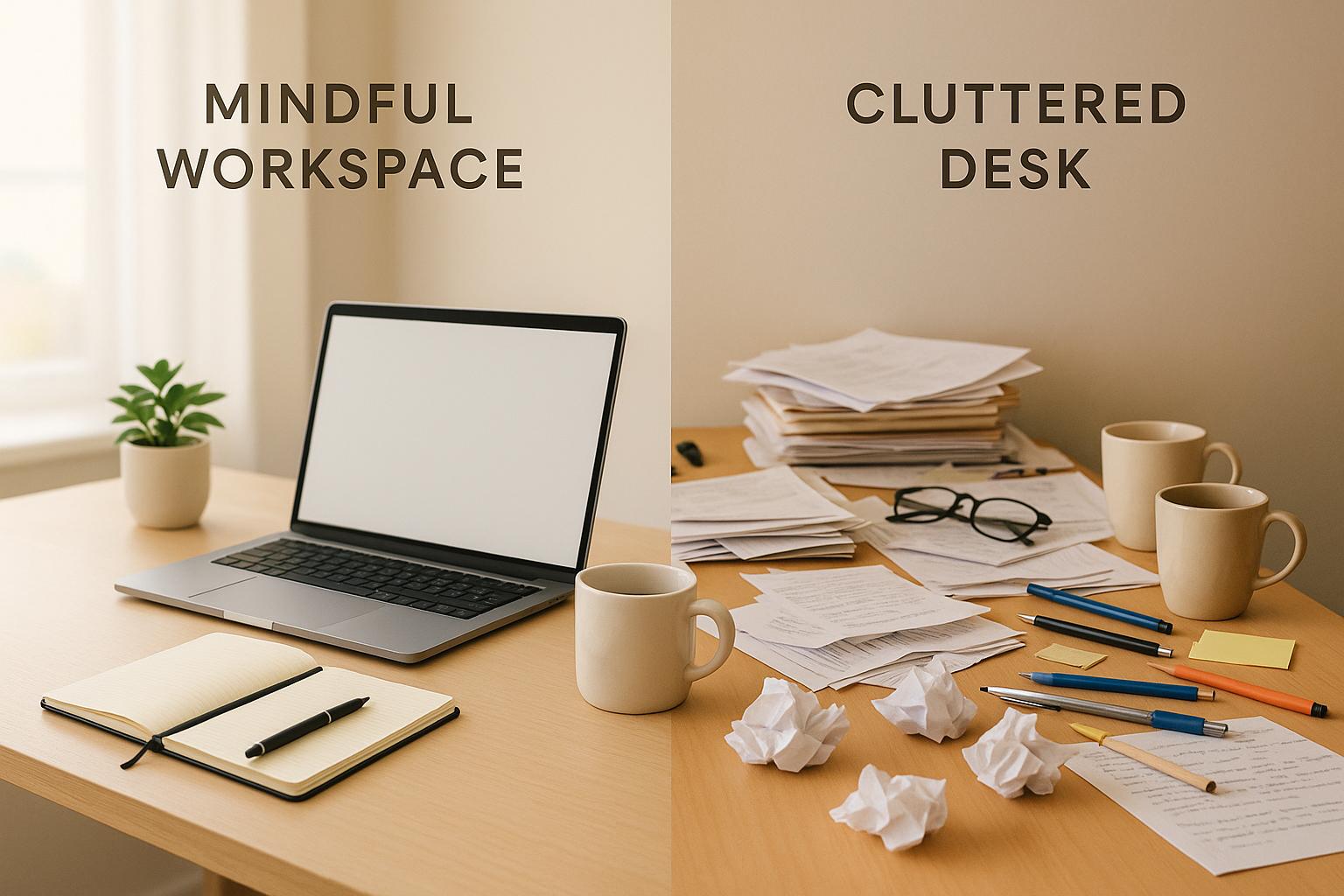
Your workspace impacts your focus, stress levels, and productivity. A mindful desk is organized, calm, and designed to keep distractions at bay, while a cluttered desk creates chaos, mental fatigue, and stress. Shifting to a mindful workspace doesn't require drastic changes - small, intentional steps can transform your environment and improve your daily workflow.
Key Takeaways:
- Cluttered desks drain mental energy, increase stress, and reduce productivity.
- Mindful workspaces promote focus, reduce cortisol (stress hormone), and improve efficiency.
- Workers lose 1–2 hours daily searching for misplaced items in cluttered setups.
- Simple changes, like decluttering, adding plants, or using mindful routines, can make a big difference.
Quick Comparison:
| Factor | Mindful Workspace | Cluttered Desk |
|---|---|---|
| Visual Environment | Clear and organized, reduces distractions | Overwhelming, demands constant attention |
| Focus | Supports sustained concentration | Frequent interruptions disrupt focus |
| Stress | Lowers stress and promotes calmness | Triggers cortisol, increasing anxiety |
| Productivity | Streamlined workflows save time | Searching for items slows progress |
| Creativity | Encourages flexible thinking | Overstimulation hinders ideas |
Transform your desk by decluttering, organizing essentials, and incorporating daily mindfulness practices like short breathing exercises or guided meditations. Tools like The Mindfulness App can help integrate stress-relief techniques into your workday, improving focus and emotional balance.
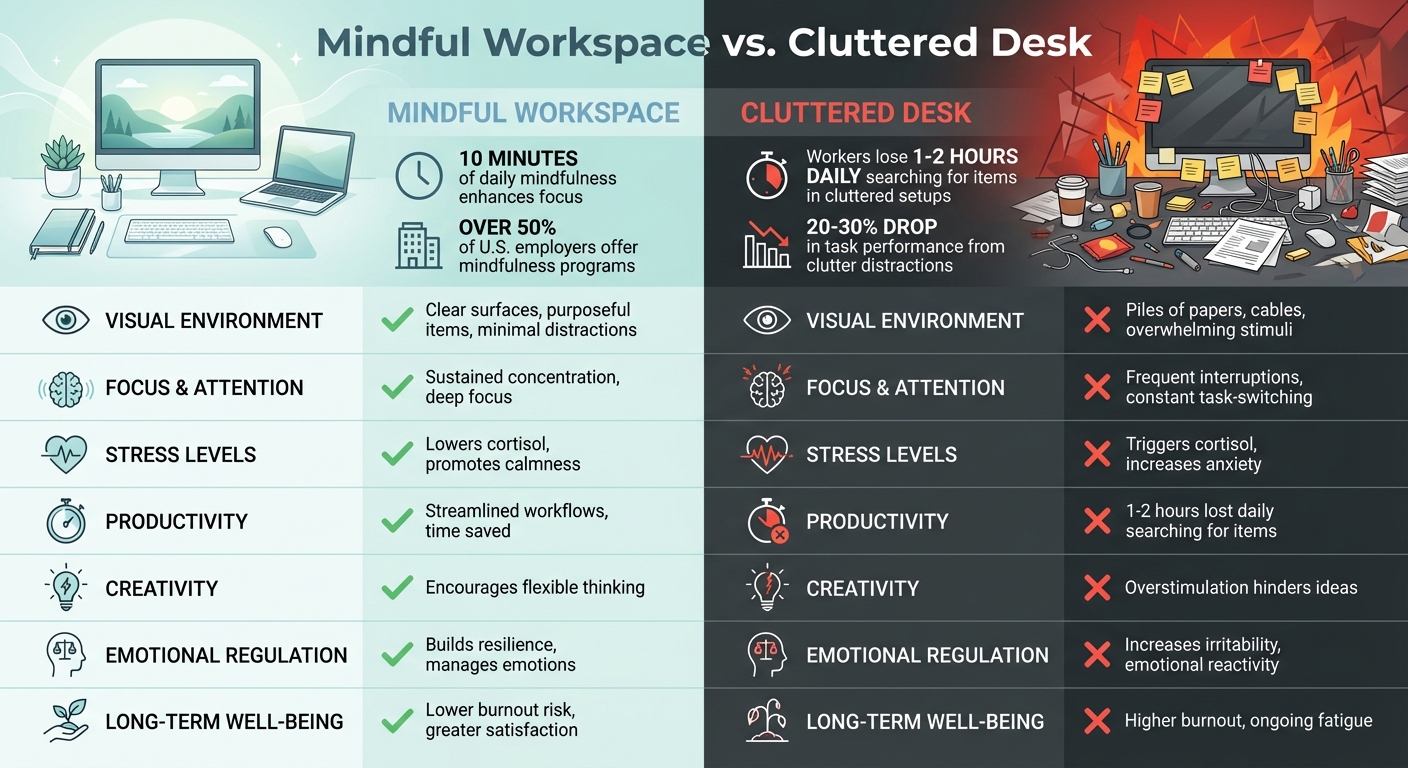
Mindful Workspace vs Cluttered Desk: Impact on Productivity and Stress
How a Cluttered Desk Affects Your Mind and Emotions
Mental Overload and Decision Fatigue
A messy desk bombards your brain with unnecessary distractions. Every item in your field of view fights for attention, draining your cognitive energy. Your brain works overtime to block out irrelevant details, leaving you mentally exhausted and struggling to focus on what matters.
This constant visual clutter also leads to decision fatigue - the mental burnout caused by making too many small, trivial decisions. Should you move that pile of papers? Where’s the document you need? Which pen should you grab? These seemingly minor choices chip away at your mental stamina, making it harder to concentrate on meaningful tasks.
Higher Stress and Anxiety
When your desk is cluttered, your stress levels rise. Research shows that clutter triggers the production of cortisol, the stress hormone. Neurologist Dr. Romie Mushtaq explains that clutter affects the amygdala, the part of the brain responsible for emotional regulation. This disruption makes it harder to stay calm and level-headed.
The constant reminder of disorder can amplify feelings of anxiety. A misplaced document or a messy stack of files can escalate from a minor inconvenience to a source of real frustration. The chaos around you mirrors the chaos within, making it harder to find a sense of peace.
Lower Productivity
Clutter doesn’t just stress you out - it also eats away at your productivity. On average, workers lose 1–2 hours every day searching for misplaced items. In high-stakes environments like healthcare, even brief distractions can cut task performance by 20–30%.
Visual clutter disrupts your focus, breaking your flow state and doubling the time it takes to regain concentration. Every time your eyes wander to that pile of papers or a scattered collection of gadgets, your attention splinters. What could have been a quick task stretches into a drawn-out, tiring process. These setbacks stand in stark contrast to the efficiency and calmness that a well-organized workspace can provide.
The Benefits of a Mindful Workspace
Better Focus and Mental Clarity
A tidy, well-organized desk helps you concentrate by cutting out unnecessary distractions. Mindfulness expert Beverly Walpole suggests regularly reviewing your workspace to remove clutter - a simple habit that strengthens the prefrontal cortex, which plays a key role in managing attention.
The payoff is almost immediate. Research from Hult Ashridge Executive Education reveals that just 10 minutes of daily mindfulness practice can enhance focus and help you stay present, even when faced with interruptions. This practice trains your brain to recognize distractions and quickly redirect attention, making it easier to get more done in less time. The result? Fewer mental roadblocks and more productive hours.
Reduced Stress Levels
A thoughtfully arranged workspace does more than just look appealing - it can actively lower stress levels. While clutter tends to increase cortisol (the stress hormone), a calm, organized environment has the opposite effect. Neuroscience research shows that mindfulness reshapes areas of the brain like the amygdala, which helps regulate emotions and builds resilience to stress.
Dr. Romie Mushtaq describes this as creating "stress brakes" - the ability to handle discomfort without reacting impulsively. It's no wonder that over half of U.S. employers now offer mindfulness programs, as studies consistently link these practices to improved well-being, reduced burnout, and a healthier work environment. Even small additions, like a plant or a personal keepsake, can turn your desk into a calming space that promotes balance rather than chaos.
Increased Creativity and Efficiency
When your workspace promotes mental clarity, your creativity and productivity naturally flourish. By eliminating distractions, you free up mental energy for more important tasks. This extra cognitive space leads to smoother thinking, quicker problem-solving, and faster task completion.
MRI studies have shown that eight weeks of mindfulness training can boost gray matter in brain regions associated with learning, memory, and emotional regulation. Employees often report better teamwork, more innovative ideas, and less exhaustion at the end of the day. An organized desk becomes more than just a functional work area - it’s a launchpad for your best ideas and most efficient work. In contrast, a cluttered desk only adds to the noise and distraction.
5 Easy Tips to Organize and Transform Your Home Office
sbb-itb-bea8dce
Mindful Workspace vs. Cluttered Desk: A Direct Comparison
We've examined the pros and cons of each workspace style, but how do they truly compare when it comes to your daily productivity, stress levels, and focus? Let’s break it down.
Studies reveal that organized, intentional workspaces help cut down on visual distractions, making it easier to focus deeply on tasks. On the other hand, a cluttered desk bombards you with competing stimuli, forcing your brain to constantly switch gears, which can drain your mental energy.
Stress is another area where these two setups diverge significantly. A cluttered desk often serves as a constant reminder of unfinished tasks, adding to your tension and anxiety levels. In contrast, a clean, mindful workspace paired with intentional breaks can lower stress, improve your mood, and build the mental resilience required to tackle daily challenges.
Efficiency is yet another key factor. In a mindful workspace, you’ll spend less time hunting for misplaced items and more time preserving your cognitive energy. Add in meditation or short mindful breaks, and your productivity gets a noticeable boost. Meanwhile, a cluttered desk disrupts your workflow and drains your mental resources, leaving you feeling frazzled.
Comparison Table: Mindful Workspace vs. Cluttered Desk
| Factor | Mindful Workspace | Cluttered Desk |
|---|---|---|
| Visual Environment | Clear surfaces and purposeful items reduce visual distractions | Piles of papers, cables, and clutter demand constant attention |
| Focus & Attention | Minimal distractions support deep, sustained focus | Frequent interruptions and task-switching disrupt concentration |
| Stress Levels | Calming cues and mindful breaks ease stress and anxiety | Disorganization heightens stress and mental strain |
| Productivity | Streamlined workflows and mindful pauses enhance efficiency | Searching for items and cognitive overload slow progress |
| Creativity | A peaceful space fosters flexible, creative thinking | Overstimulation stifles creative insights |
| Emotional Regulation | Mindfulness helps manage emotions and builds resilience | Chaos can increase irritability and emotional reactivity |
| Long-Term Well-being | Promotes lower burnout risk and greater overall satisfaction | Higher burnout risk due to ongoing fatigue and frustration |
Up next, learn actionable steps to transform your workspace from cluttered to calm.
How to Transition from a Cluttered Desk to a Mindful Workspace
Transforming your workspace doesn’t have to be overwhelming. With a few intentional steps, you can move from chaos to calm. This shift can help you enjoy the benefits of a mindful workspace, as highlighted earlier. Start by taking a good, honest look at your desk. Psychologist Beverly Walpole points out that assessing your space can improve both focus and productivity. From there, follow these practical steps to clear the clutter and create a more serene environment.
Decluttering and Organizing Your Desk
Take five minutes to simply observe your desk. Pay attention to what you actually use every day versus what’s just sitting there, adding to the visual mess. To tackle the clutter, sort your items into four categories: keep, trash, donate, or relocate. This simple system can help ease the mental strain that comes with a chaotic workspace.
Once your desk is clear, think about creating distinct zones for different purposes - work essentials, supplies, and even a small area for inspiration. Keeping only your daily must-haves within arm’s reach can cut down on distractions and improve your workflow. The rest? Tuck it away neatly.
To add a sense of calm, consider incorporating a few nature-inspired elements. Plants like succulents or pothos not only freshen the air but can also create a relaxing atmosphere, as supported by research on biophilic design. For better ergonomics, position your monitor at eye level and about an arm’s length away. Use cable clips to organize cords and keep them out of sight.
Once your desk is set up, the key is to maintain it through mindful routines.
Adding Daily Mindfulness Practices
Keeping your workspace organized requires forming small, consistent habits. One idea is to end your workday with a five-minute "mindful reset." As you tidy up your desk, focus on your breathing. This simple practice can help you stay present and prevent clutter from piling up again.
Don’t forget your digital workspace. Try limiting your browser to just one active tab during focused work sessions. A weekly 10-minute session to clean up your desktop or inbox can also make a big difference. These small habits can ease mental strain and help you stay emotionally balanced.
Start your mornings with a quick 2-5 minute breathing exercise before diving into emails. Throughout the day, take mindful breaks every 60 to 90 minutes. Whether it’s standing up, stretching, or practicing a short breathing exercise, these pauses can help refresh your focus and energy.
Using The Mindfulness App for Work Break Meditations

The Mindfulness App is a great tool for weaving meditation into your workday. It offers over 500 guided meditation tracks in 12 languages, with short sessions (5-10 minutes) focused on breathwork and stress relief. These meditations are designed to promote relaxation and even reshape areas of the brain linked to emotion regulation.
Daily mindfulness practices, even brief ones, can significantly lower stress and improve concentration. Dr. Romie Mushtaq explains that these practices act as "stress brakes", helping you manage discomfort without reacting impulsively.
Features like "Quick Breaks" and "Focus Boosters" make it easy to fit meditation into your routine, no matter how busy you are. With a 14-day free trial, you can explore the app’s premium library and experiment with different meditation styles to see what works best for you. The app has already logged over 180 million mindful minutes worldwide and boasts a stellar 4.8 out of 5 rating from more than 56,000 reviews.
Conclusion
Your workspace has more influence on your mindset and productivity than you might think. Studies highlight that a tidy, mindful desk can sharpen focus, reduce stress, and improve overall efficiency. On the flip side, clutter tends to sap mental energy and create unnecessary distractions. Pairing an organized workspace with mindful practices can set the stage for long-term success.
The first step toward a mindful workspace is conducting a quick "audit." Take a moment to identify what’s essential and remove anything that adds chaos. Declutter your desk, perhaps add a soothing touch like a small plant, and make room for brief mindful breaks during your day. These small adjustments can ease tension and help you stay focused.
In fact, regular mindfulness practice has been shown to reshape parts of the brain linked to attention and emotional regulation, essentially creating a mental "brake" for managing stress more calmly.
To make this transition easier, you might want to check out The Mindfulness App. It offers over 500 guided meditations and boasts an impressive 4.8 out of 5 rating from more than 56,000 users. With a 14-day free trial of its premium library, it’s a convenient way to fit mindfulness into even the busiest schedules. Just a few minutes a day could bring noticeable improvements to both your workspace and your workday.
FAQs
How can I create a mindful workspace and move away from a cluttered desk?
Start by tackling just one part of your desk - no need to overwhelm yourself. Dedicate 5–10 minutes to sorting through that section, organizing what’s useful, and letting go of items you no longer need. While you’re at it, try to stay mindful. Focus on your breathing and bring your attention to the task at hand.
Make it a habit to regularly evaluate what’s truly necessary in your workspace. Keep only the items that genuinely support your productivity and sense of well-being. Over time, this thoughtful approach can transform your desk into a more peaceful and focused space, making work feel less chaotic and more intentional.
How can mindfulness improve my workday?
Practicing mindfulness during your workday can make a noticeable difference in how you manage stress, stay focused, and maintain your overall well-being. By cultivating a calm and clear state of mind, you’ll find it easier to tackle tasks, stay productive, and handle challenges with a more balanced approach.
Mindfulness doesn’t just help with work - it can also enhance your sleep quality and support better mental health. This creates a positive ripple effect that benefits both your personal and professional life. Small actions like taking deep breaths, trying short meditations, or stepping away for mindful breaks can significantly improve how you feel and perform throughout the day.
How does a messy desk affect your mental health and productivity?
A cluttered desk isn't just an eyesore - it can actually ramp up stress levels and make it tough to concentrate. That feeling of chaos can quickly turn into frustration, leaving you struggling to focus or think straight.
On the flip side, a tidy and thoughtfully arranged workspace can do wonders for your mindset. It helps create a sense of calm, sharpens your focus, and keeps your productivity on track. Even small efforts to declutter your desk can have a big impact on both your mental well-being and your ability to get things done.