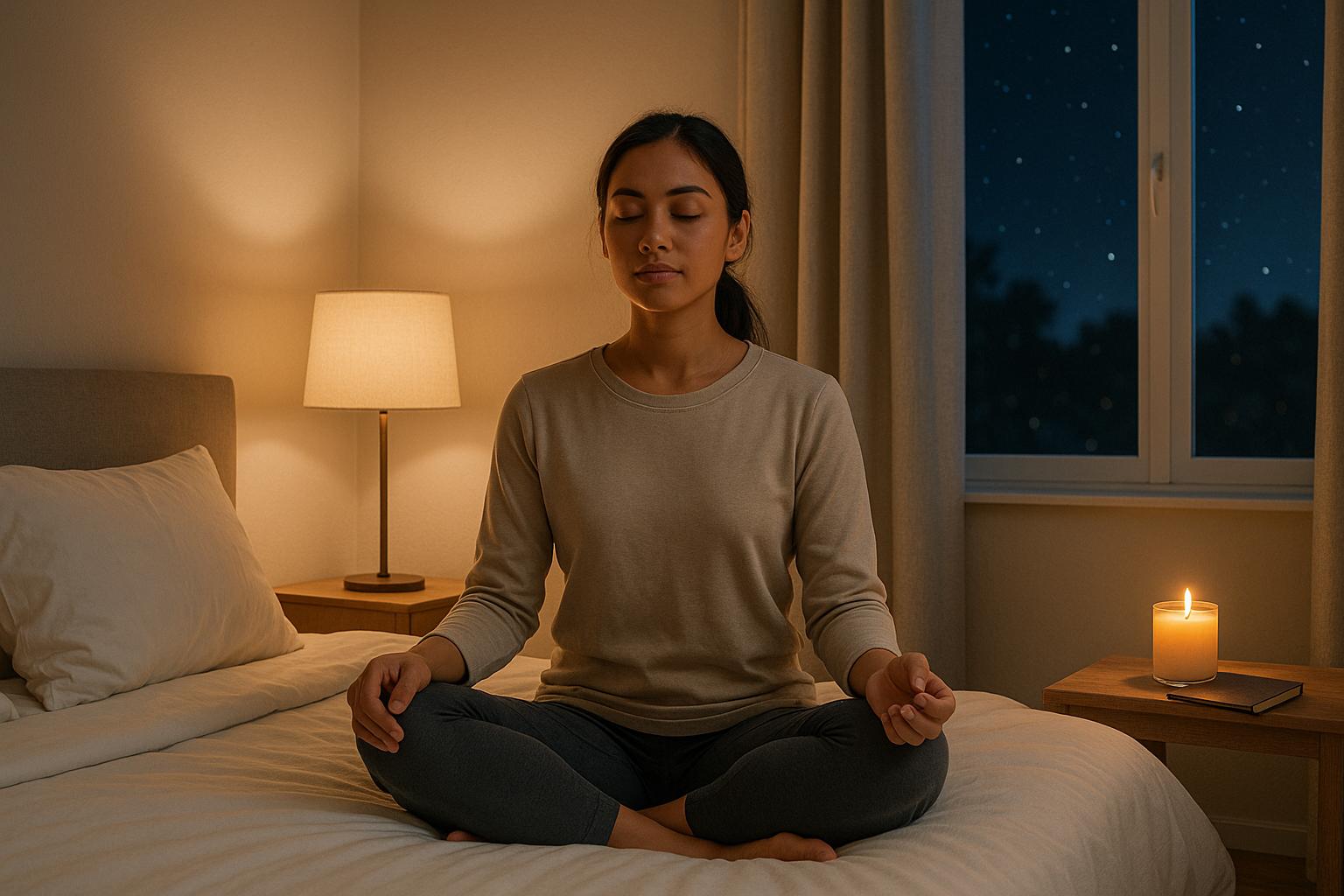


Mindfulness helps you stay present, reduce stress, and improve focus. But building it into a daily habit can feel challenging. This guide breaks it down into four simple steps:
- Set Clear Intentions and Build a Routine: Start with a strong "why" and create a dedicated time and space for mindfulness.
- Start Small and Build Gradually: Begin with 2–5 minutes a day and pair mindfulness with existing habits (like brushing your teeth).
- Track Progress and Stay Motivated: Log your sessions and reward yourself to stay consistent.
- Build Resilience and Get Support: Handle setbacks with self-compassion and lean on tools or communities for encouragement.
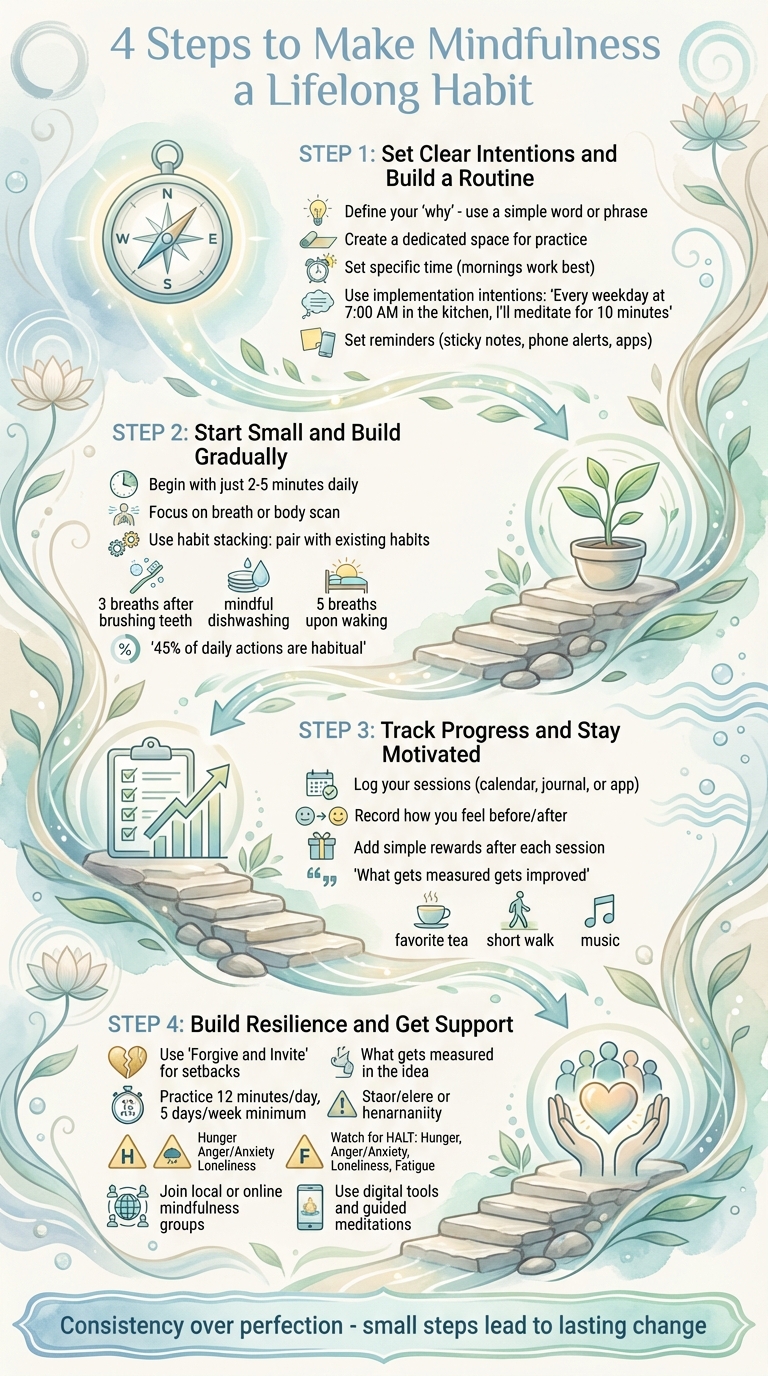
4 Steps to Build a Lifelong Mindfulness Habit
Step 1: Set Clear Intentions and Build a Routine
Define Your Motivation
To stick with mindfulness, you need a clear reason - your "why." Without it, distractions and competing habits can easily take over when life gets hectic. Your motivation serves as a compass, pointing you toward what truly matters.
Here’s an important distinction: goals and intentions aren’t the same. A goal could be something like "meditate for 30 minutes daily", but an intention is more about how you want to be. For instance, you might set an intention such as "embrace calm and peace" or simply "presence". Parneet Pal, Chief Science Officer at Wisdom Labs, puts it this way:
"Setting an intention - keeping those primal motivations in mind - helps strengthen this connection between the lower and higher centers [of the brain]".
Keep your intention simple and positive. A single word or a short phrase works best - something that resonates with you.
Kick off your day by asking yourself questions like: "How do I want to show up today?" or "What quality of mind do I want to nurture?". Writing down one small habit shift in a journal can help sharpen your focus. Studies show that regularly revisiting your intentions and seeking support can significantly boost your chances of sticking with mindfulness over the long haul.
Once you’ve nailed down your intention, it’s time to create an environment that makes practicing mindfulness feel natural and easy.
Create a Dedicated Space and Time
Consistency comes down to removing obstacles. Start by designating a specific spot in your home for mindfulness - a quiet corner, your favorite chair, or even a spot by your bed. This creates a mental association between that space and your practice. Adding a meditation cushion or similar visual cue can reinforce the habit.
Timing matters too. Research suggests willpower is generally stronger in the morning, making early mindfulness sessions a great choice for building habits. Instead of vague plans like "I’ll meditate regularly", try forming what behavioral scientists call "implementation intentions." These are specific, actionable plans that outline where, when, and how you’ll practice. For example: "Every weekday at 7:00 AM in the kitchen, I’ll meditate for 10 minutes". Studies show that sticking to detailed plans like this can help solidify habits in about two months.
To keep yourself on track, set reminders - whether it’s a sticky note, a phone notification, or even an app like The Mindfulness App, which offers guided meditations and alerts. You can also use "if-then" triggers to weave mindfulness into your routine. For instance, "If I touch the office door handle, then I’ll take one deep breath". The idea is to make your practice so easy and accessible that it feels harder to skip than to start.
Step 2: Start Small and Build Gradually
Begin with Short Practices
Mindfulness doesn’t have to be complicated. You can start with just 2–5 minutes of simple practices like focusing on your breath or doing a quick body scan.
Why does this approach work? Short, intentional sessions activate the "slow brain" - the part responsible for executive control - helping you make deliberate choices instead of reacting automatically. These brief moments of mindfulness strengthen neural pathways and conserve your mental energy. As Parneet Pal, Chief Science Officer at Wisdom Labs, puts it:
"The great news is, progress can be made in small steps. The more we activate the slow brain, the stronger it gets."
Even a 15-second pause can encourage neuroplasticity and engage your brain's grey matter. What matters most is consistency, not the length of your practice.
Once you’ve mastered these short practices, you can weave them into your daily life with habit stacking.
Use Habit Stacking
Habit stacking is a simple way to make mindfulness a regular part of your day. By pairing mindfulness with activities you already do, you can turn everyday tasks into natural reminders to practice. Research shows that nearly 45% of our daily actions are habitual, making them perfect opportunities for mindfulness.
Here are a few easy ideas: take three mindful breaths after brushing your teeth, pay attention to the sound and feel of water while washing dishes, or notice the sensation of your feet on the ground while waiting in line. Zindel Segal, a professor at the University of Toronto, suggests starting your day with mindfulness by observing five deep breaths as soon as you wake up - before you even reach for your phone. During meals, try focusing on the taste and texture of the first three bites you take.
You can also turn everyday delays into mindfulness moments. Thich Nhat Hanh, the renowned Buddhist monk, suggests using red traffic lights as a cue to pause, breathe, and relax instead of letting impatience take over. If you need a little extra support, tools like The Mindfulness App offer guided sessions and reminders to help you build these habits seamlessly into your routine.
Trying to Develop A Daily Habit Start Small – With Giovanni Dienstmann
sbb-itb-bea8dce
Step 3: Track Progress and Stay Motivated
To make mindfulness a lasting part of your life, it’s important to track your progress and keep your motivation alive. A little effort in monitoring your practice and rewarding yourself can go a long way in building a sustainable habit.
Log Your Sessions
Keeping a record of your mindfulness sessions can be a game-changer. It not only provides a tangible way to see your consistency but also helps you stay committed. In fact, research suggests that people who track their habits are more likely to stick with them over the long term.
Logging your sessions offers immediate gratification by showing clear evidence of your progress. James Clear, author of Atomic Habits, emphasizes this idea perfectly:
"What gets measured gets improved - tracking creates visual proof of progress."
Choose a tracking method that feels natural for you. It could be as simple as marking days on a calendar, jotting down notes in a journal, or using a digital tool like the streak counter in The Mindfulness App. To make it even more valuable, record how you feel before and after each session. This can help you figure out what works best for you and deepen your practice.
Once you start seeing your progress laid out, it can be incredibly motivating. But to make the habit stick, pairing your practice with small rewards can give you an extra boost.
Add Simple Rewards
Rewards are a powerful way to reinforce good habits. Your brain loves instant gratification, so giving yourself a small treat after each mindfulness session can strengthen the habit loop.
Think of something simple and enjoyable that you can look forward to after practicing. It could be sipping your favorite tea, taking a short walk, or even listening to a song you love. The key is to reward yourself right after you finish, so your brain associates the positive feeling with your mindfulness practice.
Over time, as your practice becomes more ingrained, you’ll find that the act of mindfulness itself feels rewarding. But in those early weeks, these small incentives can make all the difference in helping you stay on track.
Step 4: Build Resilience and Get Support
Even with the best intentions, life has a way of throwing curveballs at your mindfulness journey. The key to building a lasting mindfulness habit often lies in how you navigate these inevitable challenges.
Handle Setbacks with Self-Compassion
Missing a session or falling off track happens to everyone. The important thing is not to beat yourself up over it. Studies show that being overly self-critical can trigger your nervous system's fight-or-flight response, which limits your brain's ability to think clearly and makes it harder to get back on track.
Instead, try the "Forgive and Invite" approach, a strategy suggested by clinical psychologist Elisha Goldstein. When you slip up, forgive yourself for the misstep, reflect on what caused it, and gently invite yourself back to the present moment to start again.
If you're pressed for time, even short mindfulness sessions can make a difference. Research suggests that practicing mindfulness for just 12 minutes a day, five days a week, can improve your focus and attention. You can also incorporate mindfulness into everyday routines - like brushing your teeth, eating a meal, or walking to your car.
It's also worth keeping an eye on what experts refer to as HALT: Hunger, Anger/Anxiety, Loneliness, and Fatigue. These states can sabotage your willpower and make sticking to any habit much harder. If you're struggling to stay consistent, take a moment to check if one of these needs is being neglected.
Pairing self-compassion with external support can help you stay grounded and overcome obstacles.
Use Community and Resources
You don’t have to go it alone. Sharing your mindfulness goals with others can keep you motivated and accountable. Check out local mindfulness groups through platforms like Meetup.com or join online communities where you can connect with people facing similar hurdles. A supportive group not only reinforces the importance of your practice but also gives you a space to celebrate wins and navigate setbacks together.
Digital tools can be lifesavers, especially when your schedule feels overwhelming. For instance, The Mindfulness App offers over 500 guided meditations and courses in 12 languages, providing both structure and variety. These tools act as gentle nudges, reminding you to practice even during your busiest days. Whether you're dealing with a hectic workweek or traveling, having guided sessions readily available can help you stay on track.
The moments when you choose to show up - especially when it's tough - are where meaningful growth begins.
Conclusion
Creating a lasting mindfulness habit isn’t about striving for perfection - it’s about showing up regularly and being kind to yourself throughout the process. The four steps outlined here work together to help you establish a practice that sticks: setting clear intentions ensures your goals align with your daily actions, starting small avoids burnout while building momentum, tracking progress reinforces positive feelings that keep you motivated, and building resilience equips you to handle challenges along the way. Over time, this consistent effort rewires your brain, shifting you away from reactive autopilot behaviors.
A lot of what we do each day happens automatically. The idea isn’t to fight this natural tendency, but to reshape it in your favor. Through regular practice, mindfulness can evolve from a conscious effort into an automatic, almost instinctive response - a new default for your mind.
Interestingly, the toughest moments often lead to the most growth. When you face setbacks, practicing self-compassion helps you return to mindfulness without judgment or frustration. This not only feels nurturing but also keeps your nervous system steady and your motivation intact.
Support plays a big role in making your mindfulness habit stick. Whether it’s joining a local group or using tools like The Mindfulness App - which offers over 500 guided meditations, sleep stories, and courses in 12 languages - having a support system can make all the difference. These resources act as gentle nudges to keep you on track and provide the structure you need.
FAQs
What are some practical steps to make mindfulness a lasting habit?
Making mindfulness a lasting part of your life starts with small, manageable steps that blend seamlessly into your daily routine. Try beginning with something simple, like a brief 5-minute breathing exercise or a short mindful walk. Even starting with just 1 to 3 minutes a day can make a difference, and you can gradually increase the time as it becomes more comfortable.
To keep the habit going, link your mindfulness practice to something you already do, such as brushing your teeth or enjoying your morning coffee. You can also weave mindfulness into everyday moments - pause for a deep breath while waiting in line or pay attention to the sensation of water on your hands as you wash the dishes.
If you need a little extra guidance, tools like The Mindfulness App can be incredibly helpful. It offers guided meditations, short exercises, and mindfulness courses to keep you motivated. With consistency and patience, mindfulness can grow into a natural and fulfilling part of your daily life.
What challenges might I face when building a mindfulness habit, and how can I address them?
Building a mindfulness habit isn’t always smooth sailing. Many people feel pressed for time or struggle to carve out a quiet moment in their busy days. It’s also common to feel frustrated when your mind starts to wander or if you aim too high, like trying to meditate for extended periods right from the start. Add to that the hurdles of inconsistent practice, procrastination, and everyday distractions, and staying committed can feel like an uphill battle.
The good news? You can tackle these challenges with a few simple strategies. Start small - try a quick 3-minute breathing exercise right after brushing your teeth. Use reminders, like sticky notes or phone alerts, to nudge you into action and seamlessly integrate mindfulness into your routine. And when your mind inevitably drifts, just bring it back gently - no judgment necessary. Tools like The Mindfulness App can also lend a hand, offering guided meditations, reminders, and progress tracking to help you stay on track, even on hectic days. With consistent effort, mindfulness can become a natural, effortless part of your daily rhythm.
Why is setting intentions important for building a mindfulness habit?
Setting intentions brings purpose and direction to your mindfulness practice. When you align this habit with what matters most to you, it creates a deeper sense of connection, making it easier to stay committed. Intentions also serve as mental reminders, helping your mind stay focused and fully engaged during each session.
With clear intentions guiding your practice, it becomes more natural to weave mindfulness into your daily life and maintain it as an ongoing habit.